


Listen to the article
President Donald Trump has voiced support for ongoing protests in Iran, promising demonstrators that “help is on the way” in a recent post on his Truth Social platform.
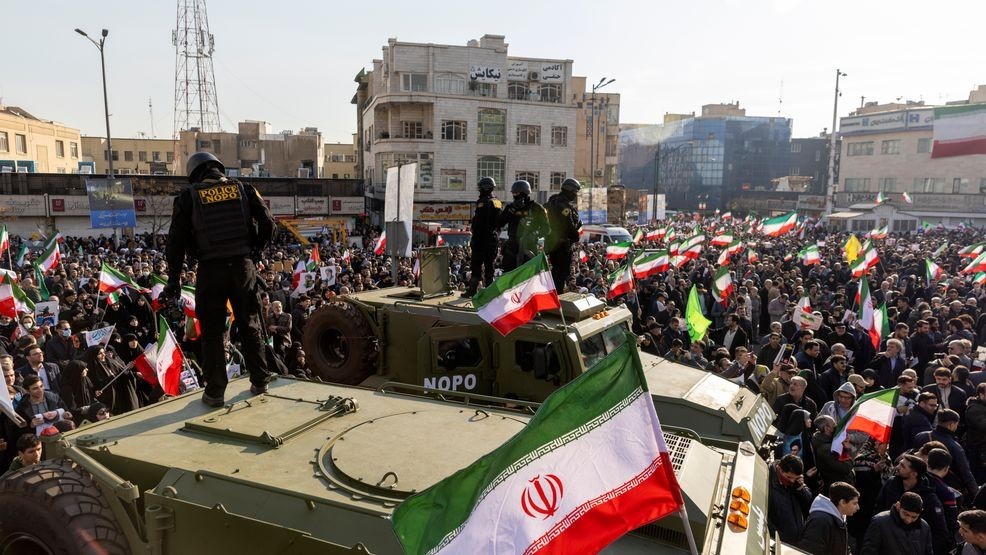
What began as economic protests has transformed into one of the most significant anti-government movements in Iran’s recent history. The demonstrations have spread to all 31 provinces across the country, with protesters directly challenging the authority of Supreme Leader Ayatollah Ali Khamenei and the Islamic Republic’s leadership structure.
According to Reuters, tens of thousands of Iranians have joined the movement. The National Council of Resistance in Iran reports that protests are occurring in at least 190 cities throughout the country. The human cost has been severe, with an Iranian official telling Reuters that approximately 2,000 protesters have been killed since the demonstrations began in December. Human rights organizations claim the toll is even higher, with thousands more imprisoned.
The scale of the current unrest distinguishes it from previous protest movements in Iran. While the country has experienced periodic waves of demonstrations since the 1979 Islamic Revolution, the geographic spread and participation levels of the current protests indicate deeper societal dissatisfaction with the regime.
Iran’s domestic instability carries substantial international implications. As a major regional power, Iran’s internal politics directly impact Middle Eastern security dynamics, global energy markets, and ongoing conflicts across multiple countries.
Security analysts note that while immediate regime collapse seems unlikely, the situation remains volatile. The Iranian leadership faces a complex challenge: maintaining domestic control while simultaneously projecting strength internationally. This balancing act could lead to unpredictable responses both internally and in Iran’s foreign policy.
The protests come at a time when Iran’s regional influence is at a historical high point. The country has established an extensive network of proxy forces across the Middle East, providing financial backing, weapons, and tactical support to allied groups.
Between 2012 and 2018, Iran invested approximately $16 billion supporting the Assad regime in Syria and various allied groups across Iraq, Yemen, Lebanon, and Palestinian territories. This financial commitment demonstrates Iran’s determination to maintain its “axis of resistance” against Western interests and regional rivals.
Hezbollah in Lebanon stands as Iran’s most significant proxy relationship, reportedly receiving around $700 million annually according to State Department estimates. This financial support has helped transform the organization into a powerful political and military force in Lebanon and the broader region.
Beyond financial assistance, Iran provides sophisticated weapons systems, drone technology, and military training to allied groups. The country’s technical expertise has enabled proxy forces to conduct increasingly complex operations throughout the Middle East.
The current protests represent a significant domestic challenge for a regime that has invested heavily in projecting power abroad. Any substantial political change in Iran could reshape the Middle East’s security landscape, potentially altering power dynamics in multiple ongoing conflicts.
Regional observers will be closely monitoring how Iran’s leadership responds to the growing domestic pressure, particularly as the regime balances internal security concerns with its extensive foreign commitments. The situation remains fluid, with implications extending far beyond Iran’s borders.
International responses to the protests have been mixed, with Western nations generally expressing support for demonstrators while regional powers have been more cautious in their public statements. The ultimate outcome of this movement could significantly influence Iran’s domestic trajectory and foreign policy orientation for years to come.
Fact Checker
Verify the accuracy of this article using The Disinformation Commission analysis and real-time sources.

8 Comments
The situation in Iran is clearly very fluid and volatile. It will be critical to closely monitor the developments, the government’s response, and any potential international intervention or assistance to the protesters.
While Trump’s calls for support may be more rhetorical than practical, the scale of the unrest in Iran is undeniable. This could be a pivotal moment in the country’s history, with the potential for far-reaching consequences.
Interesting to see the scale of the protests in Iran, spreading across 190 cities. This appears to be one of the most significant anti-government movements in the country’s recent history. Curious to see how the situation develops and if Trump’s calls for help will have any impact.
The human cost has been severe, with thousands of protesters killed and imprisoned. This highlights the risks and sacrifices these protesters are taking to challenge the authority of the Iranian regime.
While economic factors may have sparked these protests initially, it’s clear they’ve evolved into a broader challenge to the Islamic Republic’s leadership. The geographic spread and persistence of the demonstrations is quite remarkable.
Trump’s vocal support for the protesters is likely more symbolic than substantive at this point. It remains to be seen if any concrete actions will be taken to assist the demonstrators.
The Iranian government’s crackdown on the protests has been brutal, but the movement seems to have a growing momentum. It will be interesting to see if the regime can weather this storm or if significant changes could be on the horizon.
Regardless of one’s political views, the bravery and determination of the Iranian protesters deserves recognition. They are risking their lives to challenge a repressive system.