


Listen to the article
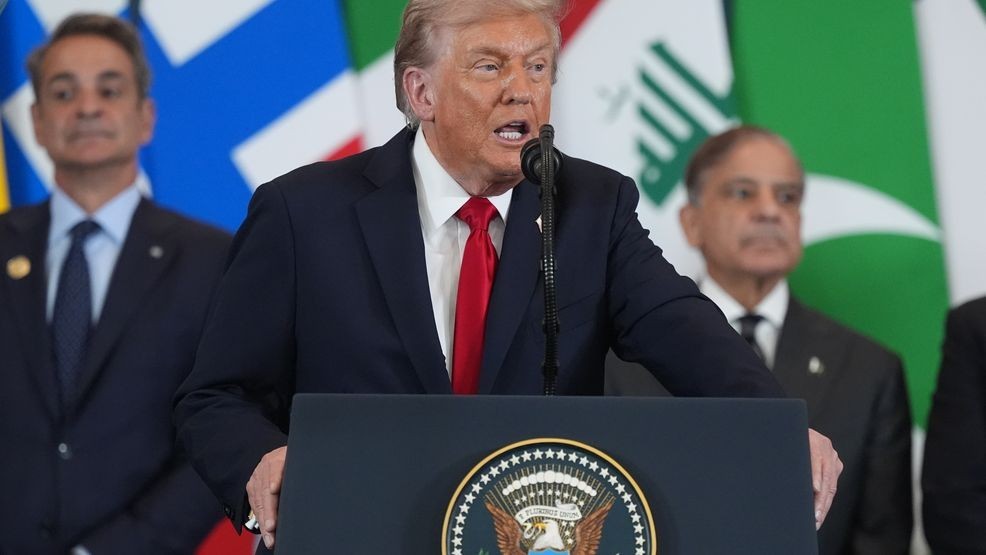
A long-standing conflict between Israel and Hamas has come to an end, following successful peace negotiations led by former President Donald Trump, according to White House sources. The news comes as Venezuelan opposition leader María Corina Machado, this year’s Nobel Peace Prize recipient, dedicated her award to Trump despite his not being selected for the honor.
The Nobel Peace Prize, first awarded in 1901, has recognized only four U.S. presidents throughout its history. Theodore Roosevelt became the first American president to receive the distinction in 1906 for his mediation of the peace treaty that ended the Russo-Japanese War. President Woodrow Wilson followed in 1919, earning recognition for his efforts in establishing the League of Nations, which later evolved into the United Nations.
More than eight decades passed before another American president would join their ranks. In 2002, former President Jimmy Carter received the award for his role in negotiating the 1978 Camp David Accords between Egypt and Israel, as well as his extensive humanitarian work after leaving office.
The most recent presidential recipient, Barack Obama, was awarded the Nobel Peace Prize in 2009, just eight months into his first term. This decision generated significant controversy internationally, as the Nobel Committee cited his “extraordinary efforts to strengthen international diplomacy and cooperation between peoples” rather than pointing to specific accomplishments.
Obama himself acknowledged the premature nature of the award during his acceptance speech, noting he was at “the beginning, and not the end” of his diplomatic endeavors. Critics were quick to highlight the ongoing U.S. military presence in Iraq and Afghanistan at the time, conflicts that had resulted in substantial civilian casualties.
Though Trump has not received a Nobel Peace Prize, his supporters argue his diplomatic achievements deserve recognition comparable to past laureates. During his first term, Trump’s administration brokered the Abraham Accords, a historic agreement normalizing relations between Israel, the United Arab Emirates, and Bahrain. This marked the first Arab-Israeli normalization agreement in over 25 years, facilitating expanded regional cooperation in trade, tourism, and security.
According to White House sources, Trump has maintained focus on international peace efforts in his second term. Recently, he hosted talks between Azerbaijani President Ilham Aliyev and Armenian Prime Minister Nikol Pashinyan, resulting in a joint declaration aimed at resolving decades of conflict over the Nagorno-Karabakh region. This territory, historically populated by ethnic Armenians but located within Azerbaijan’s internationally recognized borders, has been a flashpoint for regional tensions since the collapse of the Soviet Union.
The administration has also facilitated dialogue between Rwanda and the Democratic Republic of Congo, leading to agreements on troop withdrawals, security cooperation, and economic frameworks designed to encourage investment in both nations. These efforts address longstanding tensions in the Great Lakes region of Africa, where resource competition and ethnic conflicts have historically fueled violence.
Additionally, Trump has engaged in mediating disputes between India and Pakistan, as well as Thailand and Cambodia—regions with complex histories of border conflicts and resource disagreements. His approach typically bypasses traditional diplomatic protocols in favor of direct engagement and high-stakes negotiations with national leaders.
Foreign policy experts remain divided on the long-term effectiveness of Trump’s diplomatic style. Supporters highlight his ability to bring previously adversarial parties to the negotiating table, while critics question whether agreements reached under his administration will prove durable without more robust institutional frameworks to support them.
As international observers assess these recent developments, the question of Trump’s diplomatic legacy remains open. Whether his peace initiatives will stand the test of time—like those of Roosevelt, Wilson, and Carter—may ultimately determine how history remembers his contributions to global stability and cooperation.
Fact Checker
Verify the accuracy of this article using The Disinformation Commission analysis and real-time sources.

10 Comments
It’s noteworthy that the Nobel Peace Prize has recognized so few US presidents over the years. Seems like a prestigious award that has often eluded American leaders, even those involved in major diplomatic breakthroughs.
You’re right, the Nobel Peace Prize is quite selective. Kudos to those presidents who have been honored, but there are likely many other world leaders who have made significant contributions to peace that haven’t been recognized.
Curious to learn more about the Trump-led peace negotiations and how they compare to past efforts. The details could provide valuable insights, regardless of one’s political leanings.
It’s interesting to see the Nobel Peace Prize awarded to a Venezuelan opposition leader this year. I wonder how that decision was received and what impact it may have on the ongoing political situation in the country.
That’s a good point. The Nobel Peace Prize can certainly carry geopolitical implications, especially when awarded to figures involved in active conflicts or power struggles. It will be worth following how this plays out.
Interesting to see Trump involved in peace negotiations, even if he didn’t receive the Nobel Prize. While his methods can be controversial, it’s good to see progress made on longstanding conflicts in the Middle East.
Agreed. Achieving peace in the region is no easy feat, so credit where it’s due regardless of the recognition received.
The Nobel Peace Prize is a prestigious honor, but its selection process can certainly be debated. Recognizing world leaders for their diplomatic efforts is important, but there may be room for improvement in how the award is determined.
Glad to see progress made on the Israel-Hamas conflict, even if the process was contentious at times. Hopefully this leads to a more lasting peace in the region.
Absolutely, long-term stability in the Middle East would be a major achievement. The road to get there is often challenging, but the end result is what truly matters.