


Listen to the article
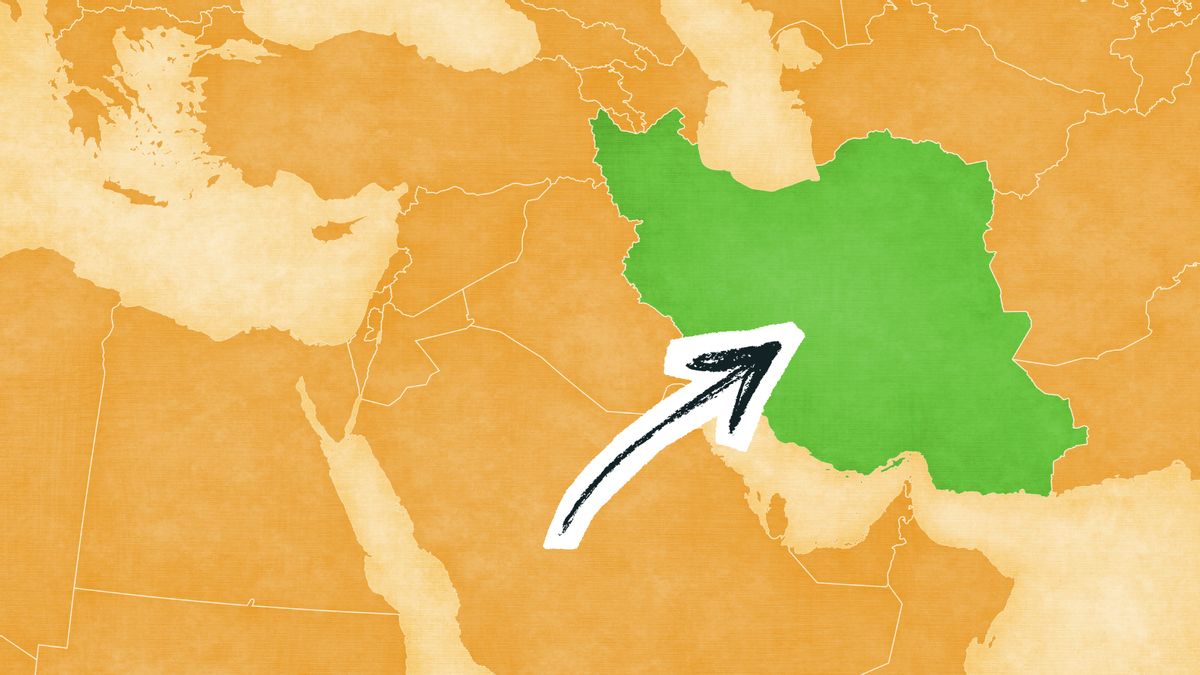
In early 2026, as military tensions escalated between the U.S., Israel, and Iran, a striking statistic resurfaced across social media platforms: only 23% of Americans could correctly identify Iran on a world map. The claim, accompanied by graphics showing maps of the Middle East, quickly gained traction as users wielded it to criticize Americans’ geographical knowledge and political awareness during a critical international conflict.
The widely circulated figure stems from a legitimate survey conducted in January 2020 by Morning Consult in partnership with Politico. However, the social media posts omitted crucial context about who was actually surveyed and under what circumstances.
The 2020 poll surveyed 1,995 registered U.S. voters—not the general American population—shortly after the U.S. drone strike that killed Iranian General Qassem Soleimani, an event that significantly heightened U.S.-Iran tensions. The survey had a margin of error of plus or minus 2 percentage points.
Researchers employed two different maps to test participants’ geographic knowledge. When presented with a global map, 23% of respondents accurately located Iran—the figure most commonly cited online. When shown a more focused map of the Middle East, the success rate improved slightly to 28%.
The study revealed interesting patterns in how participants misidentified Iran’s location. Many confused it with neighboring countries, particularly Iraq, while others placed Iran in regions entirely outside the Middle East. These errors underscore the geographic confusion that often exists even during periods of heightened international conflict.
The distinction between “registered U.S. voters” and “Americans” is significant. The former represents a subset of the population that excludes minors and adults not registered to vote. By framing the statistic as representing all Americans, social media posts have somewhat mischaracterized the study’s findings.
This is not the first research to examine Americans’ knowledge of Iran’s geography. A 2006 National Geographic Society-Roper survey found that 26% of Americans aged 18 to 24 could locate Iran on a Middle Eastern map, suggesting that geographic literacy regarding this region has remained relatively consistent over time despite Iran’s frequent presence in U.S. foreign policy discussions.
The recirculation of the 2020 study data in 2026 coincides with renewed military conflict, demonstrating how such statistics gain new relevance during international crises. Geography experts have long expressed concern about Americans’ limited geographic literacy, particularly regarding regions that feature prominently in U.S. foreign policy.
“Geographic knowledge directly impacts how citizens understand international conflicts and evaluate policy decisions,” explained Dr. Melissa Kimble, a political geography professor at Georgetown University. “When people can’t locate countries involved in conflicts where American military forces might be deployed, it creates a disconnect in public discourse about foreign policy.”
Educational researchers point to declining emphasis on geography in American school curricula as a potential factor. According to the National Assessment of Educational Progress, only about one-quarter of U.S. students demonstrate proficiency in geography, a figure that has remained stagnant for decades.
As international tensions continue to mount in 2026, the resurfaced statistic serves as a reminder of the gaps in geographic knowledge that persist among the American electorate. While the 23% figure comes from a legitimate survey, it’s important to understand its limitations and proper context when evaluating what it tells us about Americans’ geographic literacy.
The claim that only 23% of Americans can identify Iran on a map is mostly true, though it specifically refers to registered voters surveyed in 2020 rather than the entire American population in 2026.
Fact Checker
Verify the accuracy of this article using The Disinformation Commission analysis and real-time sources.

7 Comments
This highlights the importance of looking beyond viral social media claims and examining the original research and methodology. Context is key for understanding nuanced survey findings.
I appreciate the nuanced approach taken in this fact check, going beyond the sensational headline to explore the survey methodology and limitations. Responsible reporting on such issues is crucial.
Interesting to see how the survey results were taken out of context and used to criticize Americans’ geographical knowledge. The specific circumstances and target audience of the poll seem important for proper interpretation.
This fact check provides a helpful reminder to be cautious about viral statistics and claims, especially during times of heightened geopolitical tensions. Digging into the original research is important for understanding the full context.
While the low 23% figure for identifying Iran on a map seems concerning, it’s good to know the survey had a relatively small sample size of registered voters, not the general public. The margin of error is also noteworthy.
Hmm, it seems the viral claim about Americans’ Iran geography knowledge simplifies a more complex picture. The targeted sample and map formats used in the original survey warrant further examination.
I’m curious to learn more about the different map formats used in the survey and how that may have impacted the results. Geographical knowledge can be tricky to assess, especially for less familiar regions.