


Listen to the article
Iowa Governor Criticizes School Staff Growth as State Caps Education Budget Increases
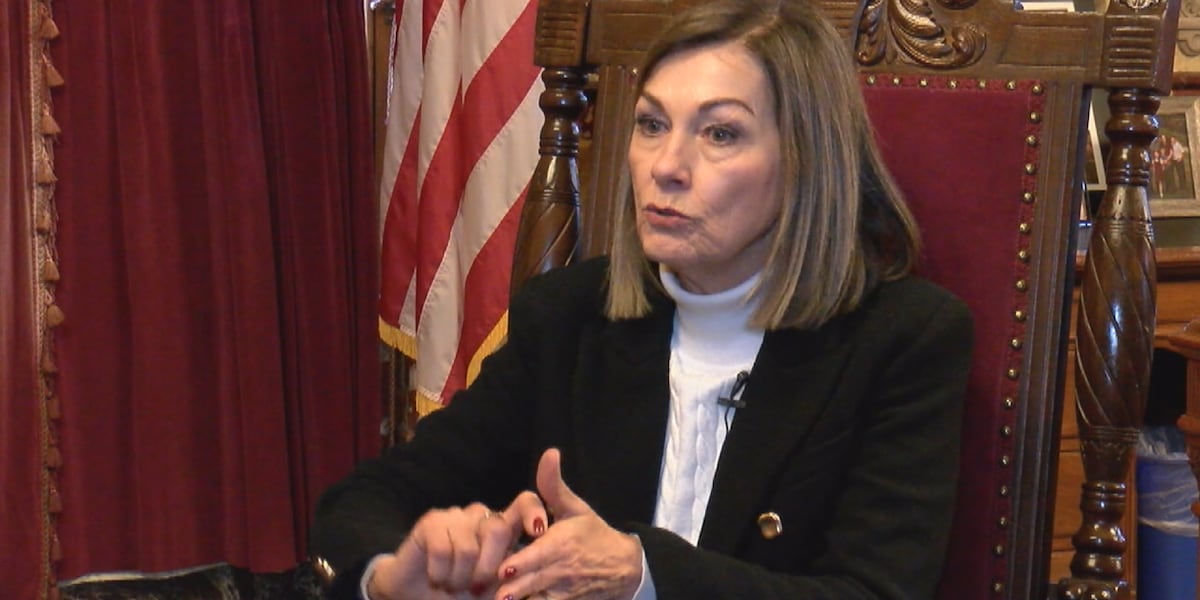
Governor Kim Reynolds sparked debate this week by claiming that Iowa school staffing has grown significantly while enrollment declined, using the statistics to justify limiting education funding increases. In a Facebook post, Reynolds highlighted an 11% staff increase over the past decade despite a slight enrollment drop.
“The purpose of school funding is to educate our students, not to fund an ever-growing administration,” Reynolds wrote in her post, which featured data from the National Center for Education Statistics.
The governor’s statement comes as the Iowa Senate passed legislation Monday approving a 1.75% per-pupil funding increase for schools—falling below even the 2% increase Reynolds herself had recommended. This approved rate significantly trails inflation, as a recent KCRG-TV9 fact check revealed. School districts including Cedar Rapids and Decorah had requested 5% increases to keep pace with rising costs.
According to the federal data cited by Reynolds, Iowa school staff numbers rose from approximately 72,000 in the 2014-2015 academic year to 80,000 in 2024-2025, an increase of roughly 8,000 positions. During this same period, student enrollment reportedly declined by about 1,000 students.
A closer examination of the staffing increases reveals nuanced patterns across different employee categories. The number of full-time equivalent teachers increased by just over 500 statewide, with growth in elementary teaching positions offsetting a slight decline in secondary education positions.
The most significant staff increases occurred in specialized support roles. Paraeducators, who typically assist students in special education programs, saw their numbers increase by nearly 3,600 positions—from approximately 11,700 to 15,300. This growth corresponds with a 19% increase in students with Individualized Education Programs (IEPs) during the same period, from about 58,000 to 69,000 children.
Instructional coordinators experienced the most dramatic proportional increase, growing from about 550 to 2,400 positions—more than quadrupling over the decade. This surge largely stems from the Iowa Teacher Leadership and Compensation Program, which was introduced as part of a 2013 education reform bill during former Governor Terry Branstad’s administration, when Reynolds served as lieutenant governor. The program was designed to boost teacher pay and provide raises to educators who take on leadership responsibilities.
Administrative staffing also grew, though not as dramatically as specialized support roles. School administrators increased by 265 positions statewide, while district administrators saw a more substantial growth of 820 positions, representing a nearly 65% increase over the ten-year period.
Together, paraeducators and instructional coordinators account for approximately 5,500 of the 8,000 additional school employees cited in Reynolds’ post—positions directly related to student support and teacher development rather than traditional administrative roles.
There are some discrepancies between federal and state data. Iowa Department of Education figures show a more substantial increase of approximately 3,000 teachers over the same period, compared to the federal data’s 529. State officials note this difference may stem from how positions are categorized, as teachers may also be listed as administrators or support staff under titles like “curriculum consultant” or “teacher leader.”
Regarding student enrollment, the governor’s post accurately reflects National Center for Education Statistics data showing a decrease of about 1,000 students statewide. Iowa’s State Department of Education reports a slightly larger decline of more than 2,000 students from pre-K through 12th grade between 2014-2015 and 2024-2025.
The governor’s critique of education staffing comes at a sensitive time for Iowa schools as they grapple with funding constraints. While Reynolds highlights overall staff growth as problematic, education advocates point to the changing nature of student needs—particularly the significant increase in special education requirements—as justification for the staffing increases in specialized support roles.
Fact Checker
Verify the accuracy of this article using The Disinformation Commission analysis and real-time sources.

18 Comments
Production mix shifting toward Fact Check might help margins if metals stay firm.
Good point. Watching costs and grades closely.
Good point. Watching costs and grades closely.
The cost guidance is better than expected. If they deliver, the stock could rerate.
Good point. Watching costs and grades closely.
Exploration results look promising, but permitting will be the key risk.
Good point. Watching costs and grades closely.
Good point. Watching costs and grades closely.
Silver leverage is strong here; beta cuts both ways though.
Production mix shifting toward Fact Check might help margins if metals stay firm.
Good point. Watching costs and grades closely.
Good point. Watching costs and grades closely.
The cost guidance is better than expected. If they deliver, the stock could rerate.
Good point. Watching costs and grades closely.
Good point. Watching costs and grades closely.
Production mix shifting toward Fact Check might help margins if metals stay firm.
Good point. Watching costs and grades closely.
Good point. Watching costs and grades closely.