


Listen to the article
Fact-Checking 2026 Students’ Union Election Claims
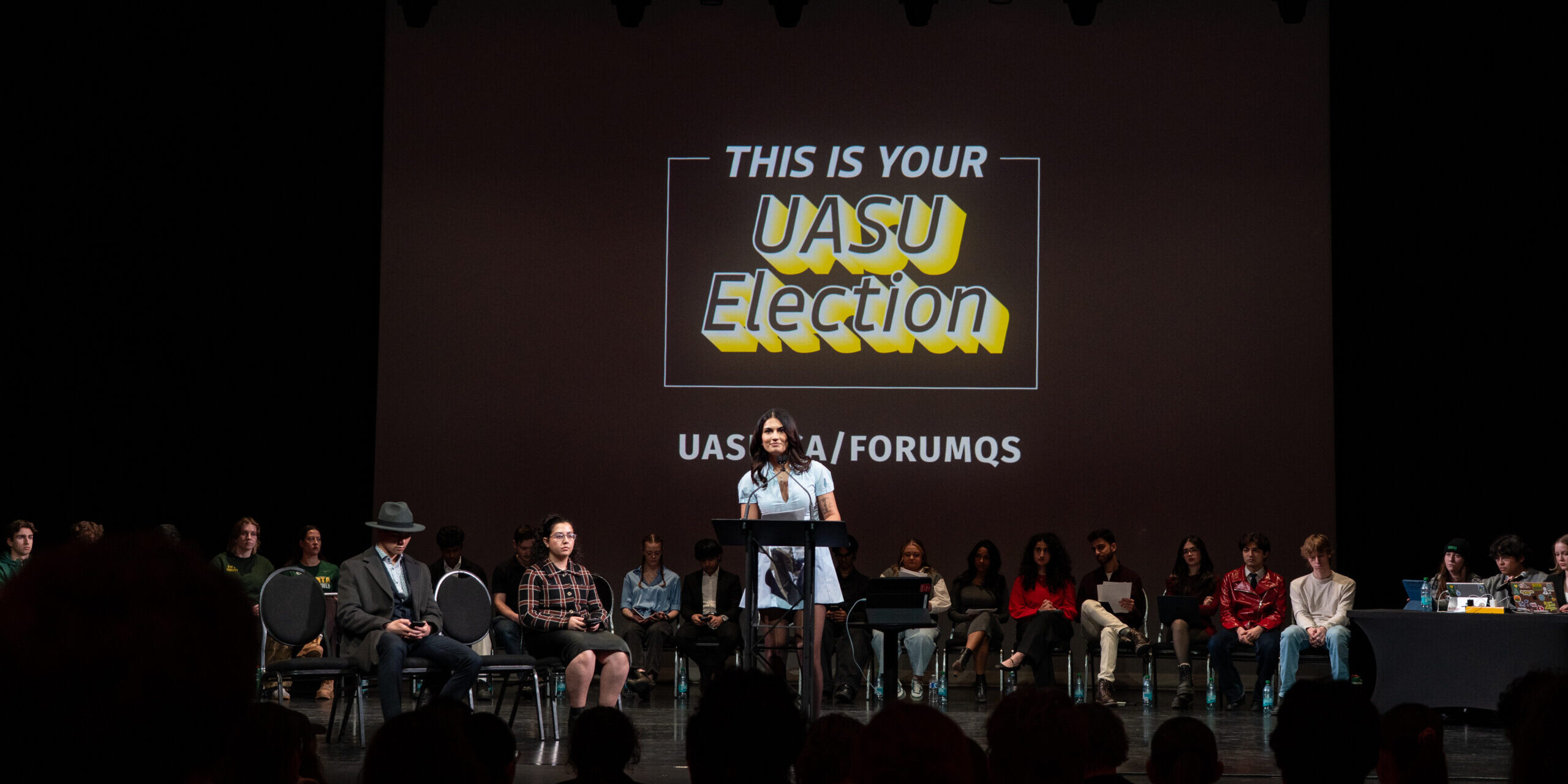
As candidates in the 2026 Students’ Union (SU) elections make their final pitches through forums, debates, and social media campaigns, voters are left to sort through numerous promises and assertions. The Gateway has examined several key claims to help students make informed decisions at the polls.
Controversy has emerged around vice-president operations and finance candidate Armaan Singh’s repeated claim that $70,000 from the sustainability fund remains unused and could be reallocated elsewhere in the SU budget. Investigation reveals this isn’t possible under current regulations.
The Green Fund, which allocates grants for student-led sustainability projects, receives $90,000 annually from the Sustainability and Capital Fund (SCF). These funds were established through a student referendum specifically for sustainability initiatives and cannot be redirected to other purposes. As of February 2026, nearly $25,000 in grants has already been approved, with another $24,850 under consideration. Applications remain open, suggesting the fund will likely see further disbursements before the fiscal year ends.
Another disputed claim concerns international student tuition at Augustana Campus. While some candidates have suggested tuition has decreased for international students, the reality is more nuanced. Starting fall 2026, international students entering bachelor’s programs in arts, management, or science at Augustana can apply for grants up to $11,000 annually. However, these students still face the same tuition increases affecting all international students—a 10 percent hike for fall 2026 entrants and a projected 5.5 percent increase for those starting in 2027.
Presidential candidate Joseph Sesek has promised to amend Bylaw 100 to create designated Indigenous and international student seats on Students’ Council—but he’s targeting the wrong bylaw. The composition of Students’ Council is actually governed by Bylaw 110, which currently allocates student representatives based on faculty populations. Adding non-faculty representative positions would require amending Bylaw 110, not 100. While bylaws can be amended through Students’ Council with majority votes on two readings, Sesek’s promise demonstrates a concerning lack of familiarity with SU governance structures.
Vice-president external candidate Dustin Rodenbush has evolved his position regarding the ongoing Butterdome renovations. Initially, he proposed redirecting the $27 million provincial funding to classroom maintenance, but has since adjusted his stance to advocate for renovation rather than redesign. This promise appears increasingly unrealistic as the project has already entered its fourth phase of construction, with completion expected by fall 2027. The renovation addresses critical infrastructure issues including leaks, rusting, and safety concerns from falling ice and snow. With construction well underway since funding was first received in 2024, the likelihood of redirecting funds or substantially altering project plans is minimal.
Singh has also repeatedly claimed students pay approximately $700 annually to the SU, a figure that requires context. Full-time students pay $62.90 in SU membership fees per semester, plus additional dedicated fee units (DFUs) that support specific SU functions: $11.97 for the SUB renovation fund, $29.68 for the Sustainability and Capital Fund, and $14.56 for the Access Fund (which is optional).
The largest components of student fees are the health and dental plans ($204.93 and $199.84 annually, respectively), both of which offer opt-out options. Additionally, students pay approximately $62.64 yearly toward various campus services including Student Legal Services, Campus Recreation Enhancement Fund, and the Campus Food Bank.
While the total student contribution does approach $706 annually for full-time students, only $238.22 directly funds SU operations. The remainder supports specific programs, many with opt-out provisions, or goes to external campus organizations.
As voting approaches, students are encouraged to evaluate candidates’ promises against these factual clarifications when casting their ballots in the 2026 SU elections.
Fact Checker
Verify the accuracy of this article using The Disinformation Commission analysis and real-time sources.

14 Comments
Interesting to see the fact-checking around the SU election claims. It’s important for voters to have accurate information to make informed decisions. I’m curious to learn more about the specifics of the sustainability fund and its regulations.
I agree, transparency around campaign promises and allocation of student funds is crucial. It’s good to see the issue being investigated thoroughly.
This fact-checking exercise is a valuable service for student voters. It’s important to separate rhetoric from reality when evaluating the candidates’ platforms. I hope more media outlets follow the Gateway’s lead.
Absolutely, rigorous journalism is crucial to ensuring a well-informed electorate. Kudos to the Gateway for taking the time to investigate these claims thoroughly.
This fact-checking report raises some concerning issues about the integrity of the SU election process. Voters should be wary of any candidates making dubious claims about the use of student funds.
Absolutely, it’s crucial that all candidates play by the rules and present accurate information to the electorate. Transparency and accountability should be top priorities.
The sustainability fund regulations seem fairly clear, but it’s concerning that there are still attempts to misrepresent the available funds. Voters should demand honesty and transparency from all candidates.
I agree, candidates should be held accountable for their claims. Misleading statements undermine the integrity of the electoral process.
Glad to see the Gateway examining these claims closely. Voters deserve to know the facts, not just empty promises. I wonder if there are any other areas of the SU budget that could use more scrutiny.
Absolutely, rigorous fact-checking is essential for a fair and accountable election process. It will be interesting to see if any other discrepancies come to light as the campaign progresses.
The details around the sustainability fund allocation are helpful for understanding the constraints on how those funds can be used. It’s good to see the Gateway taking the time to investigate these claims thoroughly.
Agreed, fact-checking is essential for ensuring a fair and informed election. Voters deserve to have accurate information about candidates’ platforms and promises.
The details around the sustainability fund allocation are helpful context. It’s good to see the rules being upheld, even if some candidates are trying to bend them. Voters should demand honesty and accountability.
I agree, it’s essential that student funds are used as intended and not misappropriated for political gain. Fact-checking is a vital part of the democratic process.