


Listen to the article
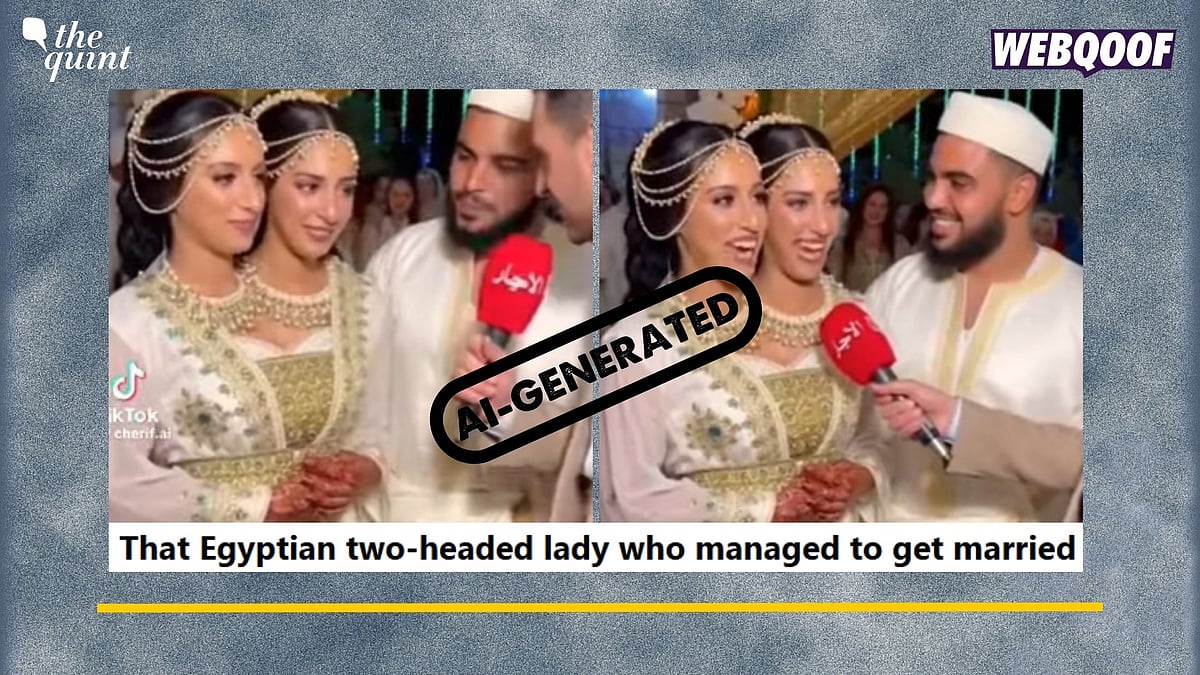
A viral video showing alleged conjoined twins marrying in Egypt has been exposed as an AI-generated fabrication, following an investigation by fact-checkers.
The video, which has been widely shared across social media platforms since late January, depicts female conjoined twins standing beside a man while speaking to a journalist in Arabic. Users sharing the content claimed it showed a “unique” marriage ceremony that took place in Egypt.
Digital forensic analysis has conclusively determined that the footage is artificial. When investigators examined the video frame by frame, they discovered a TikTok watermark attributing the content to an account named “cherif ai” – a clear indication of its synthetic origins.
Further investigation led researchers to locate the original source on TikTok, where the video was initially posted on July 12, 2025. The TikTok account in question, which has amassed 1.4 million likes, explicitly states in its profile description that it specializes in “AI content,” leaving no ambiguity about the nature of its productions.
To verify their findings, analysts submitted the video to Deepfake-O-Meter, a specialized AI detection tool designed to identify synthetically generated content. The tool’s analysis confirmed that the video displays multiple telltale signs of artificial creation rather than authentic footage.
This incident highlights the growing sophistication of AI-generated media and the challenges it presents for information integrity online. Deepfakes – realistic but fabricated videos created using artificial intelligence – have become increasingly prevalent on social platforms, often blurring the line between reality and fiction.
Media literacy experts warn that such content can spread rapidly when it depicts unusual or emotionally engaging scenarios that capture public attention. The supposed marriage of conjoined twins represents exactly the kind of extraordinary situation that tends to generate viral sharing, regardless of authenticity.
The Egyptian government has not issued any statement regarding this specific misinformation, but authorities across the Middle East have increasingly expressed concerns about the spread of AI-generated content that could potentially cause social confusion or promote false narratives about their countries.
Social media platforms continue to struggle with effectively moderating synthetic content. While TikTok’s policy requires users to label AI-generated material – as “cherif ai” did in this case – many deepfakes circulate without proper disclosure, particularly when reposted across different platforms where original attribution is often stripped away.
Digital rights advocates point to this case as evidence of the need for both improved platform policies and enhanced public education around identifying manipulated media. They emphasize that looking for visual inconsistencies, checking original sources, and using verification tools should become standard practice when encountering unusual content online.
As AI technology continues to evolve, distinguishing between authentic and synthetic media will likely become increasingly challenging, underscoring the importance of critical evaluation before accepting or sharing sensational content across digital spaces.
For those uncertain about the authenticity of online content, numerous fact-checking organizations offer verification services to help separate fact from fiction in the increasingly complex digital information landscape.
Fact Checker
Verify the accuracy of this article using The Disinformation Commission analysis and real-time sources.

10 Comments
The rapid spread of this fabricated video highlights the challenges we face in combating misinformation in the digital age. Fact-checking and media literacy are crucial.
While the technology behind this video is impressive, the implications of its spread are concerning. We must remain vigilant and rely on authoritative sources to verify information.
It’s remarkable how convincing AI-generated content can be. This video serves as a wake-up call to be cautious about the information we encounter online.
You’re right. We need to be more discerning consumers of digital media to avoid falling for these types of fabrications.
While this video may have been created with AI, the implications of its spread are real. We need to stay vigilant and fact-check viral content before sharing it.
This is a good example of how social media can be used to amplify false narratives. It’s a sobering reminder of the importance of media literacy and critical thinking.
Absolutely. Fact-checking and media literacy are essential skills in the digital age.
The growing prevalence of deepfakes is a concerning trend. I’m glad the investigators were able to expose this fabricated video, but it highlights the need for better tools to detect synthetic media.
Fascinating how AI-generated content can spread so quickly online. It’s a good reminder to always verify information from reliable sources before believing it.
Synthetic media is becoming increasingly sophisticated, blurring the line between what’s real and what’s not. Fact-checking is crucial to combat the spread of misinformation.