


Listen to the article
Russia’s Kamchatka Hit by Historic Snowstorm, While AI Images Fuel Social Media Confusion
Russia’s far eastern Kamchatka peninsula is grappling with what meteorologists have described as the heaviest snowfall in 60 years, burying vehicles and creating massive snowdrifts that have blocked building entrances across the region.
The extreme weather event, which began earlier this week, has had ripple effects across East Asia, with China and Japan also experiencing disruptions to flights and unusual snowfall as far south as Shanghai. Russian media and online commentators have dubbed the phenomenon a “snow apocalypse.”
Residents of the peninsula have been sharing authentic footage of their snow-clearing efforts, with many forced to shovel pathways from their homes and bring in heavy equipment to clear roads buried under several meters of snow. In the port city of Petropavlovsk-Kamchatsky, locals were filmed walking alongside traffic lights atop snowbanks, with some playfully jumping from the drifts.
“Some vehicles were almost completely submerged, with four-wheel drives struggling for traction or immobilized entirely,” said a local official coordinating snow removal efforts. Emergency services have been working around the clock to maintain essential infrastructure in the region, which is accustomed to harsh winters but has been overwhelmed by the scale of this storm.
Meteorologists attribute the severe weather to waves of Arctic air moving southward. One cold air mass is affecting Eastern Russia and parts of Asia, while another separate system is simultaneously impacting Eastern Europe, creating a rare weather pattern that has intensified snowfall across a vast area.
However, as genuine images of the snowstorm began circulating online, they were quickly joined by a wave of sophisticated AI-generated content that has confused viewers worldwide about the true extent of the weather event.
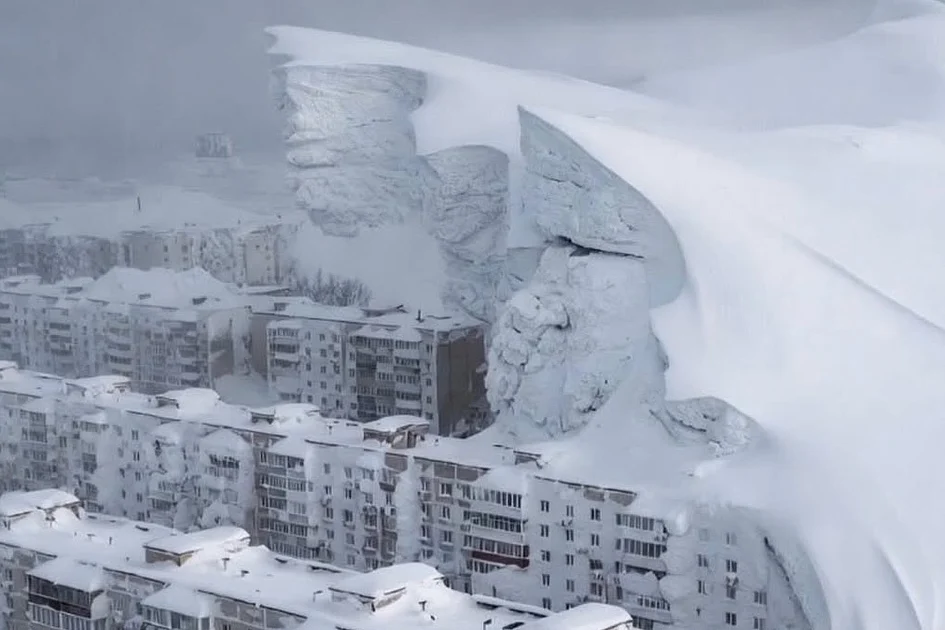
The artificial content depicts fantastical scenes of residents skiing down impossibly steep snow mountains, exiting apartment buildings through windows several stories high, and jumping into vast expanses of snow. One particularly viral video claimed to be “not AI” while showing rows of high-rise buildings nearly engulfed by snow walls as vehicles slowly navigated narrow pathways.
AccuWeather meteorologists were quick to point out telltale signs of AI generation in these more dramatic images. “The small towns in Kamchatka don’t typically have 10-story apartment buildings as depicted in these skiing videos,” noted an AccuWeather analyst. “More importantly, the physics are completely wrong. The snow doesn’t behave naturally, and people are shown moving at impossible speeds without sinking into the snow.”
Genuine Reuters footage from the region presents a more realistic picture of the situation, showing shorter buildings and individual houses typical of smaller Russian towns. While substantial snowbanks are visible blocking building entrances and lower floors, the towering mountains of snow depicted in viral AI content are nowhere to be seen.
The confusion surrounding the Kamchatka snowstorm highlights growing concerns about the spread of AI-generated imagery on social media. As artificial intelligence technologies become increasingly sophisticated at mimicking reality, distinguishing authentic news from fabricated content poses a significant challenge for the public.
“This is a perfect example of how quickly misinformation can spread,” said Dr. Elena Volkova, a digital media expert at Moscow State University. “People see these dramatic images, they’re shared thousands of times, and soon the AI content overshadows the actual event, which is serious enough on its own.”
The Kamchatka weather event serves as both a reminder of extreme climate conditions affecting regions around the world and a cautionary tale about the evolving landscape of digital information. As residents continue to dig out from the genuine snowstorm, the incident underscores the growing importance of critical media literacy and fact-checking in an era of increasingly convincing synthetic media.
Fact Checker
Verify the accuracy of this article using The Disinformation Commission analysis and real-time sources.

21 Comments
Production mix shifting toward Fact Check might help margins if metals stay firm.
Silver leverage is strong here; beta cuts both ways though.
Good point. Watching costs and grades closely.
Good point. Watching costs and grades closely.
Uranium names keep pushing higher—supply still tight into 2026.
Good point. Watching costs and grades closely.
Good point. Watching costs and grades closely.
If AISC keeps dropping, this becomes investable for me.
The cost guidance is better than expected. If they deliver, the stock could rerate.
Good point. Watching costs and grades closely.
Good point. Watching costs and grades closely.
Production mix shifting toward Fact Check might help margins if metals stay firm.
Interesting update on Russian ‘Snow Apocalypse’ Images: Fact-Checking Their Authenticity. Curious how the grades will trend next quarter.
Interesting update on Russian ‘Snow Apocalypse’ Images: Fact-Checking Their Authenticity. Curious how the grades will trend next quarter.
Good point. Watching costs and grades closely.
Good point. Watching costs and grades closely.
Exploration results look promising, but permitting will be the key risk.
Good point. Watching costs and grades closely.
Good point. Watching costs and grades closely.
If AISC keeps dropping, this becomes investable for me.
Good point. Watching costs and grades closely.