


Listen to the article
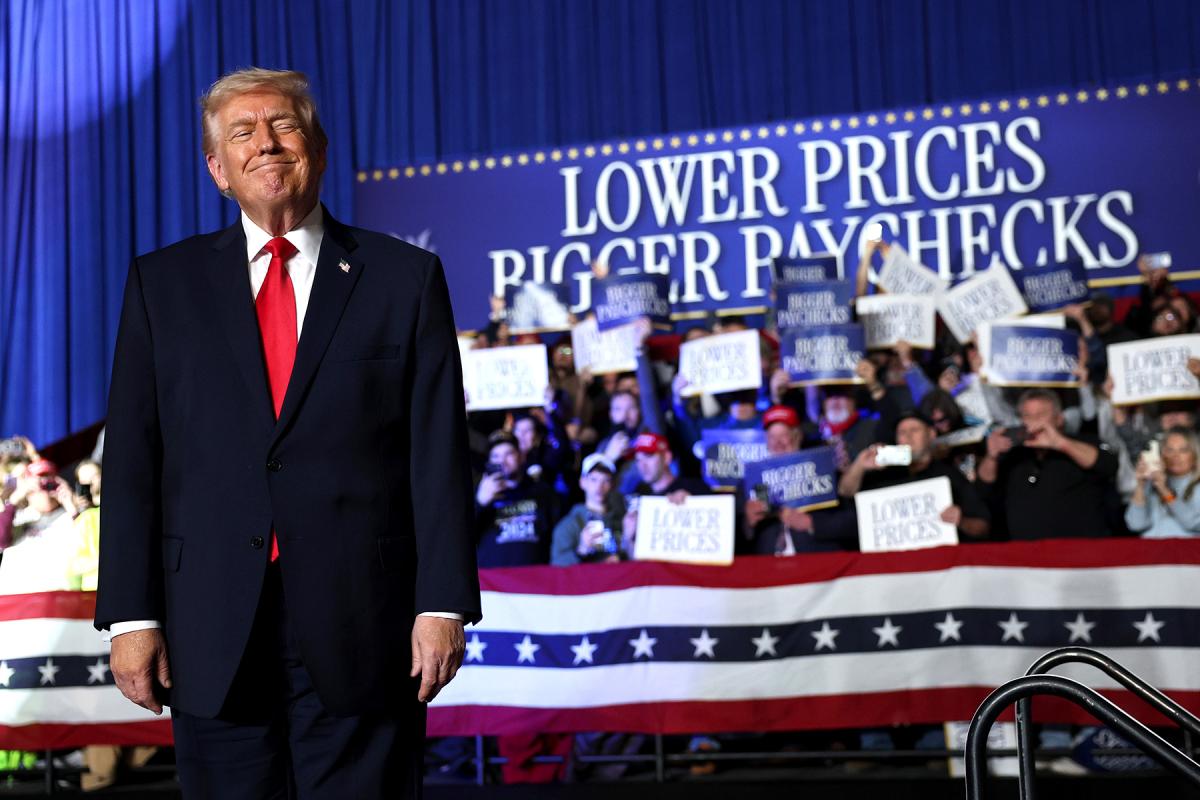
The Trump administration’s bold economic claims are facing increasing scrutiny as Americans continue to experience financial pressure across multiple sectors. Speaking at a recent Iowa rally, President Trump declared, “Just after one year of President Trump, our economy is booming. Incomes are rising. Investment is soaring. Inflation has been defeated.”
The president’s assessment stands in stark contrast to the economic reality many Americans are experiencing. While gasoline prices have decreased significantly compared to last year, other critical costs continue to rise, leaving consumers with mixed economic outcomes.
Trump’s messaging on affordability has been notably inconsistent. After campaigning extensively on making life more affordable for Americans struggling with “Bidenflation,” he recently dismissed affordability as a “fake word by Democrats” at a Detroit event. This contradicted his own November 29th Truth Social post where he proclaimed himself “THE AFFORDABILITY PRESIDENT” in all capital letters.
Energy costs, which Trump promised to slash “by half within 12 months,” have instead increased. Natural gas prices rose 56% last year, while overall energy costs have climbed nearly 6% since Trump took office. The timing couldn’t be worse for millions of Americans facing record-high heating bills during the current Arctic surge affecting much of the nation.
Insurance costs continue to burden household budgets. Auto insurance prices have jumped 12% since 2024, homeowner’s insurance rates have increased 9%, and health insurance premiums are forecasted to surge 18% this year, partly due to changes in Affordable Care Act subsidies.
The president’s claim that grocery prices have “come down very fast” appears selective at best. While egg prices have decreased from pandemic-era highs primarily caused by avian flu, other staples remain expensive. Coffee prices have increased over 30% and orange prices are up 18% since Trump took office. Overall food prices rose almost 3% last year, exceeding the general inflation rate and outpacing price increases during Biden’s final year.
White House Press Secretary Karoline Leavitt recently cited a DoorDash “Breakfast Basics Index” showing price reductions for a specific basket of items, but this narrow metric offers little consolation to most Americans facing broader price increases across their shopping carts.
The administration’s tariff policies have drawn particular criticism for their economic impact. Trump’s Iowa speech celebrated his tariff strategy, but these same policies are costing Iowa importers, including farmers, nearly $100 million monthly—a 304% increase since he took office. Agricultural equipment and supplies have become significantly more expensive, with fertilizer costs rising by $100 per ton in some cases.
America recorded its largest agricultural trade deficit in history last year, with Iowa farmers experiencing sharp declines in crop receipts and increased farm bankruptcies. Approximately 70% of Americans believe Trump’s tariffs have already increased their consumer costs. When Amazon considered transparently displaying U.S. tariffs on imported products, Trump personally contacted Jeff Bezos to express his displeasure, and the company subsequently abandoned the plan.
Economic data provides little support for the administration’s triumphant rhetoric. Real disposable personal income per capita showed minimal change between November 2024 and November 2025. When factoring in tariff impacts, which the Federal Reserve statistics don’t account for, many households may actually be worse off. Yale Budget Lab estimates Trump’s tariffs cost average households $1,800 annually.
Consumer confidence has plummeted to its lowest level since 2014, according to a Conference Board survey. Over half of voters report that Trump has “made life less affordable,” and only 34% approve of his handling of “the cost of living” issues.
As the disconnect between presidential rhetoric and economic realities grows, the administration faces an increasingly skeptical public. For millions of Americans conducting their own daily “fact checks” at grocery stores, gas stations, and when paying bills, presidential assertions about economic success may ring hollow unless their personal financial situations improve.
Fact Checker
Verify the accuracy of this article using The Disinformation Commission analysis and real-time sources.

14 Comments
The volatility in energy and commodity markets is certainly impacting household budgets. While economic growth has been strong, the uneven distribution of those gains is creating real hardship for many Americans. This is a complex issue that requires nuanced analysis.
Absolutely. Balancing economic priorities like growth, inflation, and affordability will be an ongoing challenge. Clear, honest communication from leaders on both sides of the aisle will be key.
Rising energy and commodity prices are certainly creating economic challenges for many Americans. While President Trump touted strong economic growth, the reality on the ground seems more mixed. It will be interesting to see how these dynamics unfold going forward.
You’re right, the economic messaging seems to be at odds with the everyday experiences of consumers. Managing inflation and affordability will be a key test for policymakers.
The mixed economic signals and conflicting messaging around inflation and affordability are certainly concerning. While some economic indicators may be positive, the lived experiences of many Americans tell a different story. Policymakers will need to take a nuanced, fact-based approach to address these complex challenges.
Absolutely. Transparent communication and evidence-based policymaking will be essential as leaders navigate these economic headwinds. Simplistic political narratives are unlikely to resonate if they don’t align with people’s everyday realities.
It’s interesting to see the divergence between the administration’s rosy economic assessments and the challenges many Americans are facing with higher prices. Affordability and cost-of-living issues seem to be a growing concern that will likely shape political narratives going forward.
Absolutely. Navigating these complex economic dynamics will require nuanced policymaking and transparent communication. Simplistic messaging that doesn’t align with people’s lived experiences is unlikely to be effective.
The rising costs of energy, commodities, and other essentials are certainly putting a strain on household budgets. While the economy may be growing in some areas, the uneven distribution of those gains is creating real hardship for many Americans. Policymakers will need to find ways to address these affordability challenges.
Well said. Balancing economic priorities like growth, inflation, and affordability is no easy task. Honest assessment of the tradeoffs and trade-offs will be crucial for developing effective policies that support working families.
The conflicting messaging around inflation and affordability is concerning. While some economic indicators may be positive, the lived experience of many Americans tells a different story. Policymakers need to carefully assess the full range of economic factors impacting households.
Well said. Effective governance requires a clear-eyed view of economic realities, not just political spin. Finding the right policy levers to address rising costs and support household budgets will be crucial.
Affordability is a real concern for many households dealing with higher prices for essentials like fuel and food. It will be important for political leaders to provide realistic assessments and practical solutions, rather than making overly optimistic claims.
I agree, the disconnect between rhetoric and reality is concerning. Transparent and fact-based dialogue is crucial as policymakers navigate these complex economic headwinds.