


Listen to the article
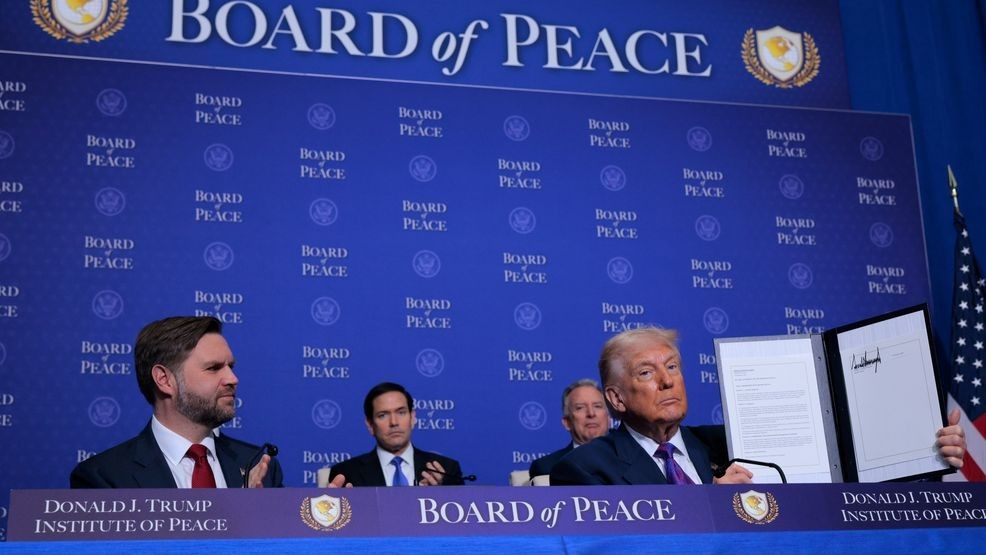
In a significant development for Gaza’s future, President Donald Trump’s newly formed “Board of Peace” has begun discussions on reconstruction efforts for the war-ravaged territory. Meeting in Washington on Thursday, the advisory group addressed the enormous challenge ahead, with President Trump pledging $10 billion in U.S. support while board members reportedly committed an additional $7 billion, according to NBC News.
The financial commitments come as international organizations warn that rebuilding Gaza could require up to $70 billion – a staggering figure for the small coastal enclave measuring just 25 miles long and a few miles wide.
Indonesia has emerged as a potential partner in the stabilization effort, with its military indicating readiness to deploy as many as 8,000 troops to Gaza by the end of June. Indonesian officials told Anadolu Agency these forces could serve in either humanitarian or peacekeeping capacities, signaling growing international involvement in post-conflict planning.
As political frameworks take shape, United Nations assessments reveal the devastating scope of destruction on the ground. Jaco Cilliers, UNDP Special Representative for the Palestinians, reports that approximately 84 percent of Gaza has sustained damage, with destruction reaching as high as 92 percent in parts of Gaza City.
“The level of devastation we’re seeing is unprecedented for such a densely populated area,” said Cilliers. “Almost no part of the territory has been spared.”
A comprehensive damage assessment conducted jointly by the United Nations, European Union, and World Bank estimates that full reconstruction could cost around $70 billion. Of that amount, approximately $20 billion would be needed in just the first three years to begin stabilization and recovery.
These figures reflect not only the cost of rebuilding destroyed structures but also the complex challenges of clearing extensive debris fields, restoring basic utilities, reconstructing critical healthcare facilities, and establishing economic foundations for the territory’s 2.2 million residents.
Despite discussions about long-term reconstruction, UN officials emphasize that Gaza remains in a stabilization phase rather than ready for rebuilding. UNDP teams currently on the ground are prioritizing immediate survival needs: providing clean water, delivering medical supplies, establishing emergency employment programs, removing waste, and clearing rubble to enable aid movement.
“Our immediate focus remains on saving lives and creating minimal conditions for survival,” a UNDP spokesperson explained. “Full-scale reconstruction planning is underway, but implementation depends on sustained peace and access.”
Debris removal operations have already cleared approximately 81,000 tonnes – about 3,100 truckloads – primarily to reestablish access to hospitals and essential public services. However, these efforts represent just a fraction of what will ultimately be required.
Humanitarian agencies continue to face significant obstacles in aid delivery. The International Committee of the Red Cross reports that distribution remains not only difficult but dangerous, with civilians sometimes injured or killed while attempting to reach aid distribution points. UN officials are working to modify delivery strategies to bring supplies directly to communities rather than requiring civilians to travel through unsafe areas.
The Board of Peace initiative comes as Gaza faces both immediate humanitarian concerns and longer-term questions about governance, security arrangements, and economic revival. While the pledged billions represent a significant financial commitment, experts note that effective reconstruction will require not only funding but also sustainable access, security guarantees, and governance frameworks that have yet to be established.
As planning continues in Washington and other capitals, Gaza’s immediate reality remains focused on day-to-day survival, with reconstruction prospects hinging on sustained peace and international coordination.
Fact Checker
Verify the accuracy of this article using The Disinformation Commission analysis and real-time sources.

12 Comments
While the financial commitments are promising, the real test will be in the actual implementation and coordination of the rebuilding process. Transparent oversight and accountability measures will be crucial to ensure the funds are used effectively.
The involvement of the United Nations and local Palestinian authorities will be essential in navigating the complex political landscape and ensuring the reconstruction meets the needs of the local population.
Rebuilding Gaza presents an opportunity to not only reconstruct physical infrastructure but also address underlying social and economic challenges. Focusing on sustainable development and improving the quality of life for residents should be a key priority.
The scale of the destruction in Gaza is truly staggering, and it will take a concerted, long-term effort to fully rehabilitate the region. Maintaining international commitment and support will be crucial to the success of this endeavor.
Rebuilding Gaza will certainly be a massive undertaking, both logistically and financially. The staggering $70 billion price tag is a sobering reminder of the scale of the challenge. Securing sufficient funding from international partners will be critical to the success of any reconstruction efforts.
Indonesia’s potential deployment of 8,000 troops could provide valuable humanitarian and peacekeeping support. Coordinating the various international stakeholders will be key to ensuring a cohesive and effective rebuilding strategy.
The $10 billion in U.S. support and additional $7 billion from other board members is a good start, but it remains to be seen if this will be enough to cover the full extent of the rebuilding required. Careful planning and efficient use of resources will be essential.
Addressing the underlying political and security challenges in Gaza will also be crucial to the long-term success of any reconstruction efforts. Sustainable peace and stability must be the ultimate goal.
Securing the necessary funding is just one piece of the puzzle. Ensuring the efficient and transparent use of these resources, as well as coordinating the various stakeholders, will be critical to the success of the rebuilding efforts in Gaza.
The involvement of Indonesia’s military in a humanitarian or peacekeeping capacity could provide valuable stability and security during the reconstruction process. Their participation will need to be carefully managed to avoid potential tensions.
The devastation in Gaza is a stark reminder of the human toll of conflict. While the financial commitments are a positive step, the true measure of success will be in the tangible improvements to the lives of the local population.
Rebuilding Gaza presents an opportunity to not only restore physical infrastructure but also to address long-standing social and economic inequalities. A holistic approach focused on sustainable development will be crucial.