


Listen to the article
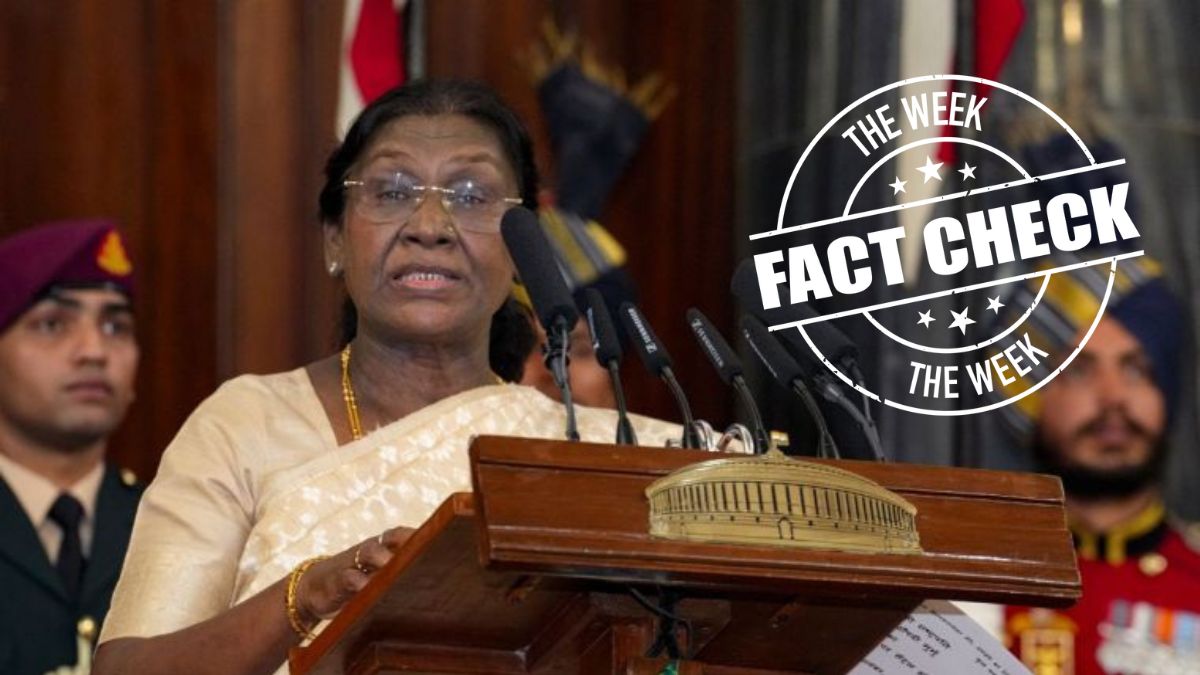
Indian authorities have debunked a deepfake video of President Droupadi Murmu that falsely shows her promoting a suspicious investment scheme promising extraordinary returns. The Press Information Bureau (PIB) Fact Check team has issued a warning about the digitally manipulated footage circulating across social media platforms.
In the fabricated video, an AI-generated version of President Murmu appears to guarantee investors returns of up to ₹70,000 daily and ₹21 lakh monthly on an initial investment of just ₹23,000. These claims, which would represent an implausible return rate of over 9,000% monthly, triggered immediate skepticism among viewers.
“The President of India has NOT endorsed this investment platform/scheme,” the PIB Fact Check team stated categorically in a post on X (formerly Twitter). The agency shared the original, unaltered footage of President Murmu alongside the manipulated version to demonstrate how sophisticated AI technology had been used to create the convincing fake.
The incident marks a concerning trend in the use of artificial intelligence to create misleading content featuring high-ranking government officials. This is not the first such case in recent months. The PIB previously identified a similar deepfake video featuring Union Finance Minister Nirmala Sitharaman, where her likeness was manipulated to promote a fraudulent investment scheme promising daily profits of ₹65,000 and monthly returns of approximately ₹18 lakh on an investment of ₹22,000.
In another instance, Sitharaman was falsely depicted endorsing an investment platform, prompting the PIB to clarify that “Neither the Finance Minister nor the Government of India has endorsed or promoted any such investment scheme.”
Cybersecurity experts have noted that these sophisticated deepfakes represent an evolution in online financial scams. Traditional phishing attempts often relied on poorly constructed websites or emails with obvious grammatical errors, but AI-generated content featuring recognizable public figures creates a more convincing veneer of legitimacy that can fool even cautious individuals.
The videos appear designed to lure unsuspecting citizens into clicking malicious links that could lead to identity theft, financial fraud, or installation of malware. The extraordinary returns promised in these schemes follow a classic “too good to be true” pattern typical of financial scams.
To combat this growing threat, the PIB Fact Check team has issued guidelines urging citizens to exercise caution when encountering investment opportunities online. They recommend verifying all financial claims through official government portals or regulatory bodies like the Reserve Bank of India (RBI) and the Securities and Exchange Board of India (SEBI).
The agency specifically warned against clicking suspicious links shared through advertisements or unfamiliar social media pages. They emphasized that users should never share personal information, banking details, or one-time passwords (OTPs) on unverified platforms. Citizens are also encouraged to report fraudulent advertisements or videos directly to social media platforms to prevent further victimization.
This incident highlights the increasing challenges faced by regulatory bodies and fact-checkers as AI technology becomes more accessible and sophisticated. Financial regulators worldwide have expressed concern that deepfakes could potentially disrupt markets or undermine confidence in financial institutions if used to spread false information about economic policies or corporate announcements.
As these technologies continue to advance, experts suggest that digital literacy and awareness of such scams will become increasingly important for the general public, alongside technical solutions to detect and flag manipulated content.
Fact Checker
Verify the accuracy of this article using The Disinformation Commission analysis and real-time sources.

5 Comments
This is a good reminder of the importance of verifying the source and authenticity of any investment or financial claims, especially those made by public figures. I’m glad the authorities were quick to debunk this fraudulent video and warn the public about it.
It’s concerning to see the proliferation of AI-generated misinformation targeting government officials. This highlights the need for robust fact-checking and media literacy efforts to help the public identify and avoid falling for these kinds of fabrications. Glad the authorities are on top of it.
Interesting to see how AI can be used to create such convincing deepfakes. It’s a double-edged sword – the technology has many legitimate applications, but it can also be exploited to deceive people. Kudos to the fact-checkers for catching this and exposing the manipulated footage.
This is a worrying development, but I’m glad the authorities were quick to address it. The use of AI to create deepfake content is a growing challenge, and we’ll need to stay vigilant to combat the spread of these kinds of manipulated videos and claims. Kudos to the fact-checkers for their work.
Wow, this is a really concerning case of AI-generated deepfake content targeting the Indian President. It’s alarming to see such sophisticated technology being used to spread misinformation and misleading claims. Fact-checking efforts like this are crucial to combat the spread of these kinds of fabrications.