


Listen to the article
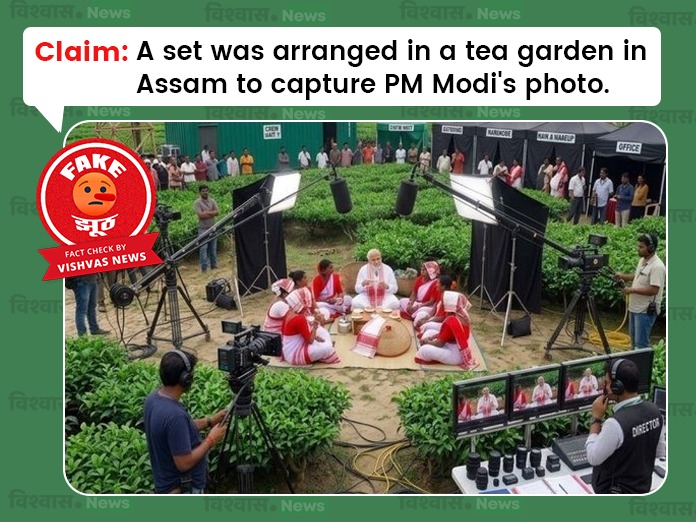
A sophisticated AI-generated photo falsely depicting Prime Minister Narendra Modi at an elaborate photo shoot in an Assam tea garden has been debunked by fact-checkers. The manipulated image, which showed the Prime Minister sitting among cameras, lighting equipment and microphones, was determined to be entirely fabricated.
Vishvas News conducted a thorough investigation after the image began circulating widely on social media platforms, including posts by prominent figures such as former cricketer and Trinamool Congress MP Kirti Azad. The image was shared with captions suggesting an expensive, staged photo opportunity had been arranged during the Prime Minister’s visit to Assam.
Digital forensic analysis revealed several tell-tale signs of AI manipulation. Upon closer examination, investigators identified numerous flaws in the image, including a person with an anatomically impossible half-cut leg, unnatural facial features on the Prime Minister, and text errors in visible posters—common artifacts in AI-generated imagery.
Technical verification through Google’s SynthID detector confirmed the presence of digital watermarks embedded by Google’s AI image generation tools. The system reported “Very High: SynthID confidence,” indicating the image was created using Google’s artificial intelligence systems. A secondary analysis using Hive Moderation technology further corroborated these findings, assessing the image as 99% likely to be AI-generated.
While the circulated image is fake, Prime Minister Modi did legitimately visit Dibrugarh, Assam, on April 1, 2026, as part of his election campaign ahead of the state’s assembly elections. During this visit, he toured a tea garden and met with workers, sharing authentic photos and videos from the event on his official social media accounts.
“This morning at a tea garden in Dibrugarh, I got a glimpse of the culture of the tea garden families. Their contribution to Assam’s progress is incomparable,” Modi wrote on his official X account, accompanied by genuine footage of the interaction.
BJP spokesperson Vijay Sonkar Shastri confirmed to fact-checkers that the viral image was misleading, alleging that opposition parties frequently create and share such AI-generated content to damage the Prime Minister’s reputation.
The incident highlights the increasing sophistication of AI-generated disinformation and the challenges it presents during politically sensitive periods such as election campaigns. While AI detection tools successfully identified this particular fake, the convincing nature of such manipulated media and its rapid spread across platforms remains concerning for electoral integrity.
As digital manipulation technologies continue to advance, the incident underscores the growing importance of robust fact-checking mechanisms and media literacy among the public to discern authentic content from sophisticated fabrications, particularly during election seasons when disinformation campaigns tend to intensify.
The creator of the initial viral post has been identified as a Facebook user from Kolkata with approximately 7,000 followers who regularly shares politically charged content.
Fact Checker
Verify the accuracy of this article using The Disinformation Commission analysis and real-time sources.

8 Comments
I appreciate the detailed forensic analysis that exposed the technical flaws in this AI-generated image. Staying vigilant against manipulated media is key to maintaining the integrity of our public discourse.
This is a prime example of how advanced AI can be misused to create false narratives. The ability to rapidly identify and debunk such fabrications is essential to upholding the truth.
It’s disheartening to see political figures amplifying these types of doctored images. Fact-checking and media literacy efforts are crucial to combat the spread of disinformation, especially as the technology becomes more sophisticated.
Interesting to see the sophisticated AI manipulation techniques being used to spread misinformation. Good to see the fact-checkers were able to uncover the fabrication so quickly.
The circulation of this AI-generated fake image highlights the urgent need for improved digital literacy and fact-checking protocols, especially when it comes to politically charged content.
This is a concerning trend, using AI to create false narratives and spread misinformation. It speaks to the need for greater digital literacy and critical thinking skills among the public to identify these types of fabrications.
I’m glad the authorities were able to identify the digital watermarks and other technical flaws that exposed this as an AI-generated fake. It’s crucial to stay vigilant against such deceptive tactics.
Absolutely. With the rapid advancements in AI, we’ll likely see more of these types of manipulated images and videos being used to mislead the public. Rigorous fact-checking is essential.