


Listen to the article
Digital Manipulation Misleads: Obama Never Bowed to Iran’s Supreme Leader
Claims circulating on social media suggesting that former US President Barack Obama bowed before Iran’s Supreme Leader Ayatollah Ali Khamenei have been proven false following a comprehensive investigation into the image’s origins.
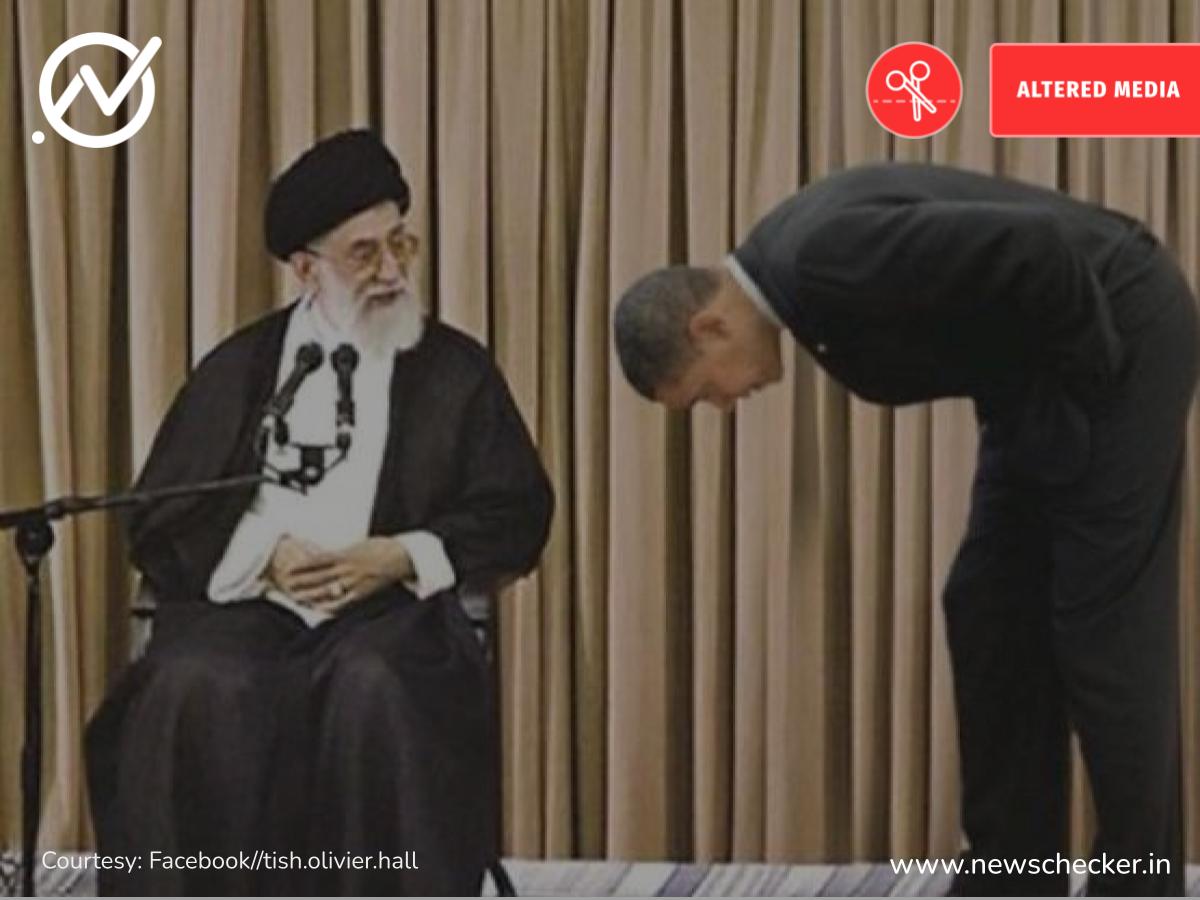
The doctored photograph, which has gained traction across multiple platforms, purports to show Obama in a deep bow before Khamenei, seemingly implying subservience or undue respect toward the Iranian regime. The manipulated image has fueled political narratives critical of Obama’s foreign policy approach toward Iran during his presidency.
Research reveals the viral image is actually a sophisticated composite of two entirely separate photographs taken years apart and in completely different contexts. The image of Obama was originally captured on May 8, 2009, in the Oval Office and shows the former president bending down to interact with a child – specifically the son of a White House staffer. The authentic photograph was shared by Obama himself on his official Facebook page on April 16, 2010, and remains archived in official White House photography collections.
Meanwhile, the portion of the image featuring Ayatollah Ali Khamenei comes from Iran’s presidential inauguration ceremony on August 3, 2005, in Tehran. The original photograph, distributed by AFP and Getty Images, shows Khamenei alongside then-incoming President Mahmoud Ahmadinejad and other Iranian officials during the formal government transition.
This case represents a growing trend of manipulated images being used to create misleading political narratives in the digital space. Relations between the United States and Iran were indeed a significant focus during Obama’s presidency, particularly surrounding the 2015 nuclear deal formally known as the Joint Comprehensive Plan of Action (JCPOA).
The Obama administration’s diplomatic approach toward Iran marked a notable shift in US foreign policy, attempting engagement rather than isolation. This strategy drew both praise from supporters who viewed it as pragmatic diplomacy and criticism from opponents who considered it too conciliatory toward the Iranian regime.
Digital manipulation of images involving political figures has become increasingly common as social media platforms allow rapid dissemination of misleading content. According to a 2023 study by the Digital Forensics Research Lab, politically motivated image manipulation increased by 37% during the past three years, with international relations being a primary target area.
“These digitally altered images exploit existing political divisions and prey on confirmation bias,” explains Dr. Claire Wardle, co-founder of the Information Futures Lab at Brown University. “People are more likely to believe and share content that aligns with their existing worldview, even when the content itself is fabricated.”
The spread of such manipulated media comes at a particularly sensitive time in US-Iran relations. Following the collapse of the nuclear agreement under the Trump administration and continuing tensions under President Biden, narratives around historical US-Iran engagement remain politically charged.
Social media platforms have implemented various measures to combat misinformation, including labeling manipulated media and reducing the visibility of content flagged by fact-checkers. However, the viral spread of such content often outpaces verification efforts.
Media literacy experts recommend that users exercise caution when encountering politically charged imagery online, particularly those depicting unusual or historically significant moments that haven’t been widely reported by mainstream news organizations.
Fact-checking organizations continue to play a crucial role in investigating and debunking such misleading content before it can significantly impact public discourse or reinforce false narratives about diplomatic history.
Fact Checker
Verify the accuracy of this article using The Disinformation Commission analysis and real-time sources.

10 Comments
It’s disappointing to see a doctored image like this being spread around. Fact-checking is so important in the age of digital manipulation and misinformation. I’m glad the origins of this image have been thoroughly investigated and debunked.
I appreciate the detailed investigation that uncovered the truth behind this manipulated image. It’s a sobering reminder of the need for increased media literacy and fact-checking, especially around sensitive geopolitical issues.
I appreciate the thorough investigation that went into debunking this false claim. Maintaining integrity and trust in our political discourse is so important, especially when it comes to sensitive foreign policy issues.
Absolutely agree. Spreading misinformation, even inadvertently, can have serious consequences. Fact-checking is crucial to upholding transparency and accountability in the digital age.
I’m glad the truth has been exposed about this doctored photo. In an era of heightened political tensions, it’s crucial that we rely on verified facts rather than sensationalized misinformation.
Wow, what a sophisticated digital composite. It’s concerning how easily images can be manipulated these days to push certain political narratives. Kudos to the researchers for getting to the bottom of this and exposing the truth.
This is a good example of why we should always be skeptical of viral images, especially those that seem designed to elicit an emotional response. Fact-checking is essential to combat the spread of digital disinformation.
This is a great example of why we need to be extremely cautious about the images and information we encounter online. It’s a good reminder to always verify the source and authenticity of any viral content before believing or sharing it.
This is a timely reminder of the need for media literacy and critical thinking when consuming online content. It’s all too easy for doctored images and false narratives to go viral these days.
You’re right, we have to be vigilant consumers of information in the digital age. Kudos to the researchers for taking the time to thoroughly investigate the origins of this manipulated image.