


Listen to the article
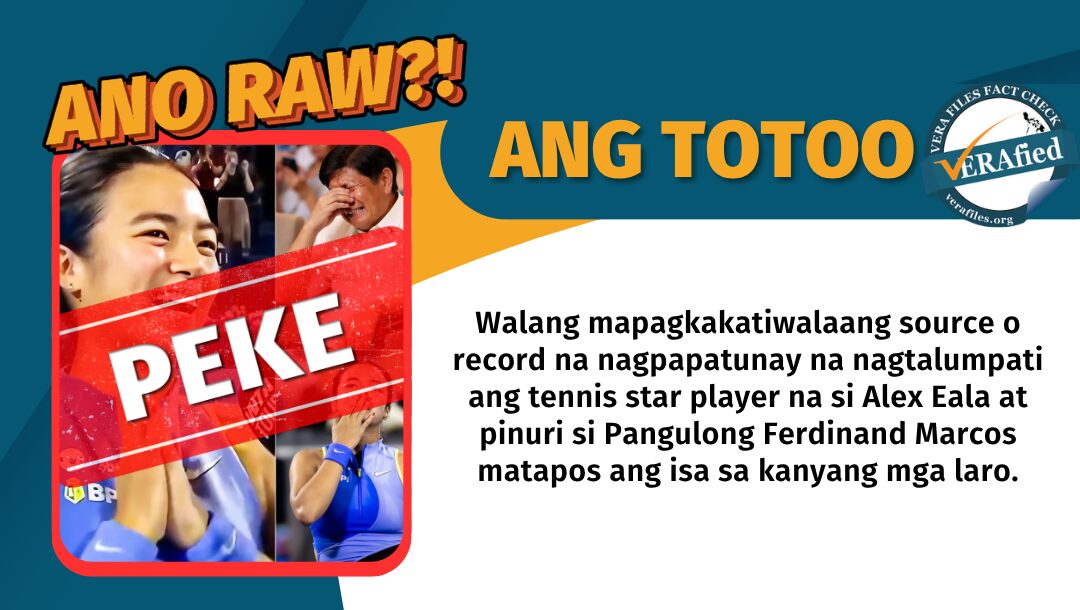
In a wave of digital misinformation, two Facebook pages have published fabricated claims that Filipino tennis star Alex Eala delivered an emotional speech praising President Ferdinand Marcos Jr., allegedly moving him to tears. Fact-checkers have confirmed this narrative is entirely fictitious.
The posts, published on March 5 and 9 by pages named “Tennis Plus” and “Tennis Now Insight,” feature a graphic containing photos of both Eala and Marcos alongside a fabricated quotation. The manufactured quote portrays Eala speaking with “a trembling voice” about how Marcos “taught the entire Philippines what resilience means, what national pride means.”
Investigation revealed the photos of Eala used in the posts were actually taken during the Women’s Tennis Association 125 Philippine Women’s Open quarterfinals at the Rizal Memorial Tennis Center in Manila on January 29. Meanwhile, the image supposedly showing President Marcos in tears was determined to be artificial intelligence-generated, with AI detection tools Hive Moderation and SightEngine indicating a 99.9% probability the image was AI-created.
The posts link to external websites containing an elaborate fictional narrative describing a scene where “President Ferdinand Marcos Jr. sat there, gripping the armrest tightly” before breaking “down in sobs in front of thousands of spectators and television cameras” following Eala’s supposed speech.
Reality tells a different story. No credible news organization has reported such an encounter between Eala and Marcos. Furthermore, Eala did not have any matches on the dates when these posts were published. Her first match at the Indian Wells Open occurred on March 6, when she defeated Dayana Yastremska. Most recently, Eala lost to Karolína Muchová in the Miami Open on March 23.
This is not the first time Eala has been the subject of misinformation. Her rising profile in international tennis has made her an attractive target for Facebook pages seeking to generate high engagement through fabricated content. The tennis star herself has acknowledged this problem, stating after a game at the Philippine Women’s Open: “That’s not really under my control. I don’t have power over what other people post. I am aware that there have been a lot of fake news articles.”
The relationship between Eala and Marcos in reality appears to be the inverse of what was portrayed in the fake posts. Rather than Eala praising Marcos, it has been the president who has recognized Eala’s athletic achievements on the international stage.
The fabricated posts have gained significant traction on social media, collectively accumulating over 11,300 reactions, nearly 500 shares, and more than 1,200 comments as of the time of reporting. “Tennis Plus” currently has approximately 44,000 followers, while “Tennis Now Insight” has about 22,000.
This incident highlights the ongoing challenge of misinformation on social media platforms, particularly content created to exploit public figures’ popularity for engagement. Digital literacy experts continue to advise users to verify information through multiple credible sources before accepting emotional or sensational claims, especially those featuring political figures.
The proliferation of AI-generated imagery adds another concerning dimension to the spread of false information, as detection tools become increasingly necessary to distinguish between authentic media and sophisticated fabrications.
Fact Checker
Verify the accuracy of this article using The Disinformation Commission analysis and real-time sources.

18 Comments
Social media often amplifies false narratives, so it’s reassuring when reliable sources step in to set the record straight. Maintaining journalistic integrity is vital.
Well said. Fact-based reporting is a crucial counterweight to the deluge of online misinformation these days.
Interesting claim, but good to see the facts debunked. It’s important to verify viral stories these days before spreading them further.
Agreed, fact-checking is crucial to combat misinformation. Kudos to the investigators for uncovering the truth.
It’s worrying to see the lengths some will go to create misleading content. Kudos to the fact-checkers for their diligence in uncovering the truth. This highlights the need for media literacy and critical thinking when consuming news and information online.
Fabricated stories like this one erode public trust. I’m glad the truth was revealed through thorough investigation. Fact-checking is a vital service that helps keep the record straight and combat the spread of misinformation.
While emotional speeches can be powerful, it’s important not to let fabricated narratives cloud the reality. This case demonstrates the value of rigorous fact-checking to separate fact from fiction, even in the digital age.
It’s disappointing to see fabricated claims gain traction, but I’m glad the Philippine president’s office was able to swiftly debunk this particular falsehood.
Absolutely. Proactive fact-checking and corrections are essential to protecting the integrity of public discourse.
While emotional stories can be compelling, it’s important to apply healthy skepticism and rely on authoritative sources. This debunking serves as a good reminder.
Agreed. Verifying claims, especially those involving public figures, should be standard practice before amplifying them online.
This fact check highlights the need for media literacy and critical thinking when consuming news, especially on social media platforms. Kudos to the investigators.
Well said. Developing the ability to discern truth from fiction is a crucial skill in today’s information landscape.
The use of AI-generated images to bolster false claims is particularly concerning. I appreciate the effort to debunk this viral misinformation and provide the factual details. Maintaining integrity in public discourse is crucial.
It’s concerning to see how easily misinformation can spread, but this debunking demonstrates the importance of rigorous fact-checking. Diligence is key.
Absolutely. Maintaining high journalistic standards is essential to combating the proliferation of false narratives online.
Interesting fact-checking on the viral claim about the Philippine President’s reaction. It’s good to see the details debunked, as misinformation can spread so easily these days. This serves as a reminder to be cautious about unverified social media posts.
The use of AI-generated images to spread false narratives is concerning. Fact-checking is crucial to counter such fabrications and maintain trust in public figures and institutions. This case shows the importance of verifying information before sharing it.