


Listen to the article
Philippine Medical Center and Malacañang Debunk Fabricated Presidential Health Document
St. Luke’s Medical Center has forcefully denounced a falsified medical document circulating online that purports to show test results for President Ferdinand Marcos Jr. The hospital issued a statement on January 28 declaring the document “fake and fabricated,” as the unauthorized report gained traction across multiple social media platforms.
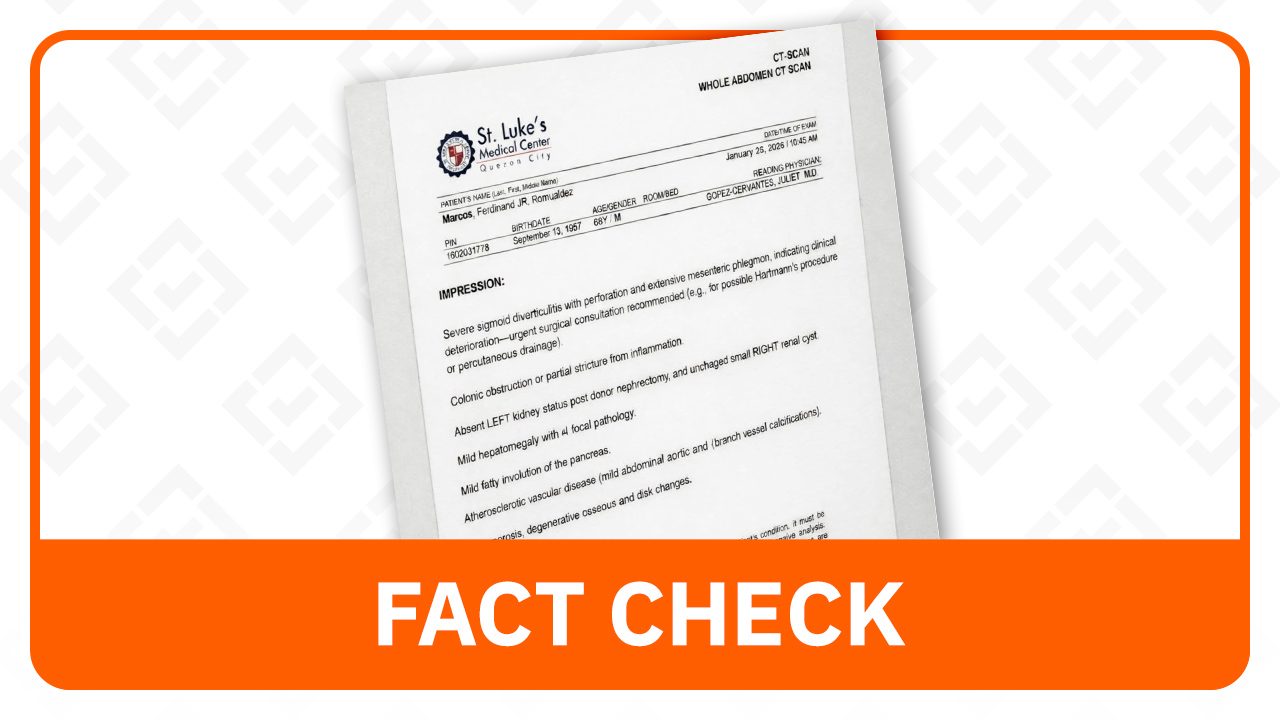
The fraudulent document, which featured St. Luke’s letterhead alongside President Marcos’ biographical information, claimed to show test results indicating a diagnosis of “severe sigmoid diverticulitis.” The forgery spread rapidly on Facebook and X (formerly Twitter), with some posts garnering thousands of interactions before authorities responded.
The Presidential Communications Office (PCO) quickly addressed the misinformation, stating that the circulating test results are “fake, is not the result of any legitimate medical examination, and does not reflect the President’s health.” The PCO’s statement included screenshots of several now-inaccessible social media posts containing the fabricated document, including shares by former broadcaster Jay Sonza and a Facebook user named Maricar Serrano, whose post was subsequently shared by columnist Bobi Tiglao.
The fake document emerged following a legitimate health incident involving the President. PCO Undersecretary Claire Castro had previously confirmed that Marcos spent a night at St. Luke’s on January 21 for “medical observation as a precautionary measure” after experiencing discomfort. The President later acknowledged having diverticulitis, an inflammatory condition affecting pouches in the large intestine’s lining.
Malacañang has emphasized that despite this diagnosis, President Marcos is “okay and back at work in the Palace” and fully capable of performing his official duties. The Palace’s swift response underscores the administration’s concern about health-related misinformation targeting the country’s leadership.
The Philippine National Police Anti-Cybercrime Group has launched an investigation to identify those responsible for creating and distributing the falsified medical report. The circulation of fake medical documents carries potential legal consequences under Philippine laws concerning fraud, forgery, and cybercrime.
This incident highlights the growing challenge of health-related misinformation in the Philippines, particularly when it targets public figures. The rapid spread of the document across multiple platforms demonstrates how quickly false information can propagate through social networks before fact-checking mechanisms can respond.
Major Philippine news outlets including Rappler, Inquirer.net, Philstar.com, Manila Bulletin, GMA Network, and ABS-CBN News have reported on St. Luke’s public advisory debunking the fake document, helping to counter its spread with accurate information.
The case represents part of a broader pattern of health-related misinformation in the Philippines. Fact-checking organizations have previously identified numerous false claims about health products and treatments, as well as sophisticated scams using artificial intelligence to falsely depict public personalities endorsing particular medical products.
Medical experts note that while diverticulitis is a common condition, particularly in older adults, unauthorized speculation about a public official’s health status can lead to unnecessary public concern and potentially impact governance if misinformation spreads unchecked.
As the investigation continues, the incident serves as a reminder of the importance of verifying information from official sources when it comes to sensitive matters such as the health of government officials.
Fact Checker
Verify the accuracy of this article using The Disinformation Commission analysis and real-time sources.

8 Comments
I’m curious to know more about the motivations behind this fabricated medical report. Was it an attempt to undermine the president’s credibility? Regardless, it’s a dangerous precedent that needs to be strongly condemned.
It’s troubling to see how quickly misinformation can spread, especially when it involves sensitive personal information. I commend the medical center and government for their swift response to address this issue.
This is a concerning development, but I’m glad the authorities are taking action to address it. Maintaining the integrity of public health information is vital for maintaining trust in the government.
This is a disturbing development, and I’m glad the authorities are taking it seriously. Maintaining transparency and accuracy in medical information is crucial for public trust and wellbeing.
Wow, this is really concerning. Fabricating medical records is a serious breach of trust. I’m glad the Philippine authorities were quick to denounce this fraudulent document and set the record straight.
This kind of deliberate disinformation is really worrying. I hope the perpetrators are held accountable. Transparency and honesty in public health matters should be a top priority.
It’s good to see the authorities taking this seriously and debunking the fake document. Maintaining public trust in medical institutions and government is crucial, especially during these challenging times.
It’s alarming to see how easily misinformation can spread these days. I hope the perpetrators of this forgery are identified and held accountable. Accurate and reliable health data is crucial for the public.