


Listen to the article
Peru has reversed a controversial policy that classified transgender individuals as having mental illnesses, following significant public backlash. The policy, which was part of an insurance law approved in May 2024 under former President Dina Boluarte’s administration, was officially rescinded in June.
The insurance law had categorized those who identified as transgender, along with “cross dressers” and others with what it termed “gender identity disorders,” as individuals diagnosed with “illnesses” eligible for mental health services through both public and private insurance providers.
After the policy’s implementation sparked widespread criticism from human rights organizations and LGBTQ+ advocacy groups, Peru’s Health Ministry issued a clarification on May 11. The ministry stated that its intention in updating the Essential Health Insurance Plan was to ensure comprehensive access to mental health coverage, not to stigmatize gender identity.
“A person’s sexual orientation and gender identity do not in themselves constitute a physical or mental health disorder and, therefore, should not be subjected to treatment or medical care or to so-called conversion therapies, as established by Ministerial Resolution,” the Health Ministry emphasized in its statement.
The ministry further affirmed its position that gender and sexual diversity are not illnesses, expressing “respect for gender identities, as well as our rejection of the stigmatization of sexual diversity in the country.”
Despite this clarification, criticism continued, leading to the complete reversal of the policy. On June 25, 2024, the health ministry officially announced it would no longer list transgender individuals as suffering from mental disorders. The announcement was formalized through a press release published on the ministry’s website.
This policy reversal aligns Peru with international medical standards. Most countries follow the World Health Organization’s International Statistical Classification of Diseases and Related Health Problems (ICD-11), which was updated in 2022 to remove transgender identities and related conditions from the category of mental health disorders. The WHO’s decision reflected growing scientific consensus that gender diversity is a natural aspect of human variation rather than a pathological condition.
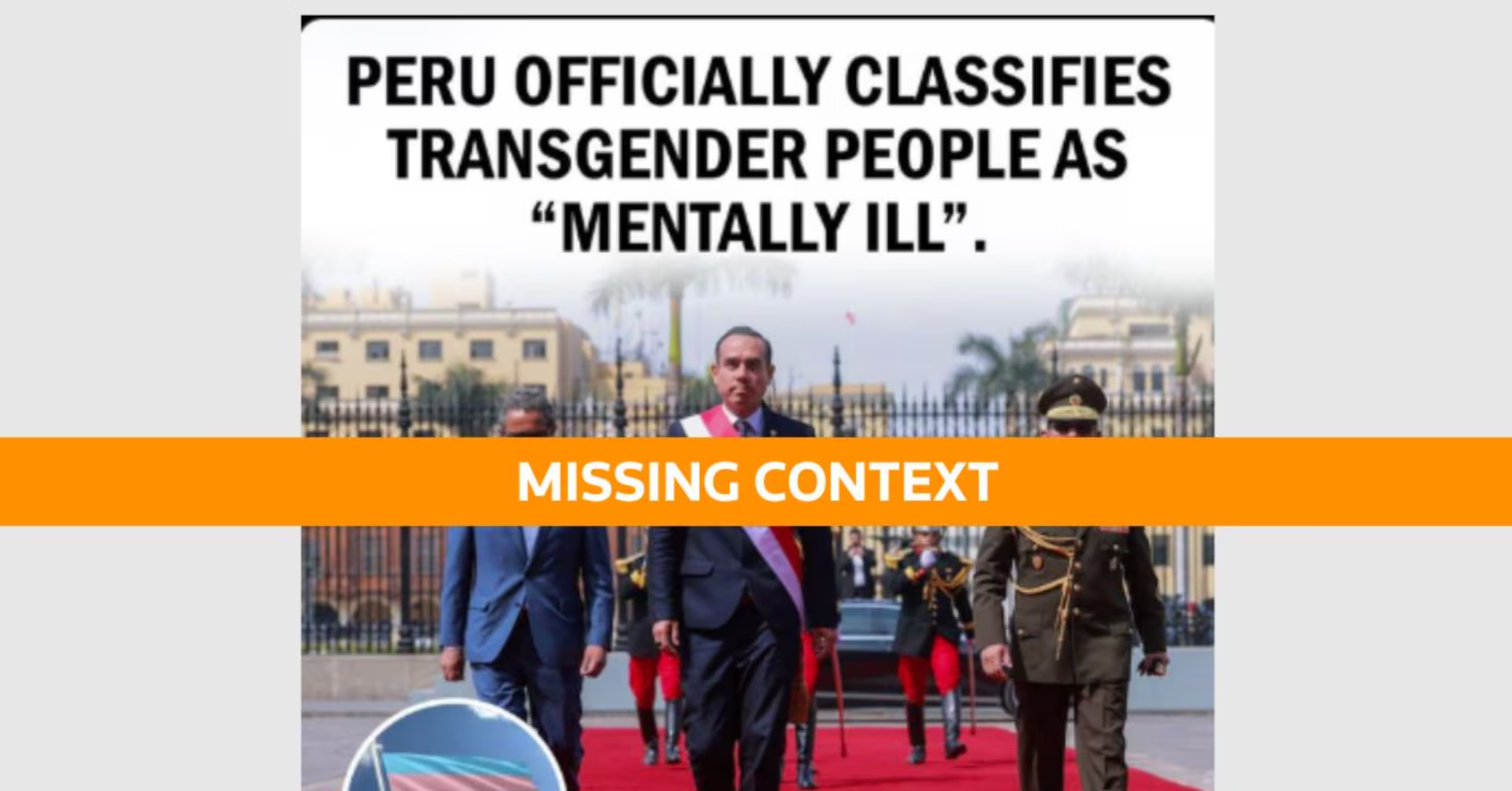
The controversy gained additional attention on social media when posts circulated showing Peru’s current President Jose Jeri alongside claims about the transgender policy. However, there is no evidence that Jeri, who took office following his swearing-in ceremony on October 10, had any involvement with the policy, which was both implemented and reversed before he assumed the presidency.
The policy’s brief implementation and subsequent reversal highlight Peru’s evolving stance on LGBTQ+ rights. The country has historically maintained conservative positions on issues of gender and sexuality, influenced by strong religious traditions. However, global trends toward greater recognition of gender diversity have created pressure for policy reform.
Human rights organizations have welcomed the reversal but note that Peru still lags behind many of its Latin American neighbors in comprehensive protections for LGBTQ+ individuals. Countries like Argentina, Uruguay, and Colombia have implemented more progressive legislation recognizing gender identity rights.
When contacted by reporters, Peru’s Ministry of Health did not respond to requests for additional comment on the policy reversal or plans for future reforms related to transgender healthcare access.
The incident serves as a reminder of the ongoing tensions between traditional values and evolving international standards on gender identity in many parts of Latin America, where policy changes often occur in response to public pressure rather than proactive government initiatives.
Fact Checker
Verify the accuracy of this article using The Disinformation Commission analysis and real-time sources.

18 Comments
Peru’s decision to remove transgender status from the mental illness classification is a significant victory for the LGBTQ+ community and human rights. This is an important step forward.
I applaud the Peruvian government for listening to the concerns of advocates and making this much-needed policy change.
Classifying transgender people as mentally ill was an egregious violation of their human rights. Peru’s reversal of this policy is a welcome and long-overdue development.
I hope this paves the way for further legal protections and social acceptance of the transgender community in Peru.
This is a positive development, but ongoing efforts are needed to address the deep-rooted discrimination and marginalization that transgender people face in Peru and beyond.
I hope this leads to greater access to healthcare, legal protections, and social acceptance for transgender individuals in Peru.
This is an important step forward for transgender rights in Peru. Removing the classification of transgender identity as a mental illness is a significant milestone in promoting equality and reducing stigma.
I’m glad to see Peru taking action to align its policies with international human rights standards on gender identity.
Removing the stigma of mental illness from transgender identity is critical for advancing equality and human rights. Peru deserves praise for this progressive policy change.
I hope this sets a positive example for other countries in the region to follow suit and update their own outdated policies.
Classifying transgender identity as a mental illness was misguided and harmful. I’m glad the Peruvian government has corrected this policy and recognized that gender identity is not a disorder.
This change will help ensure transgender individuals in Peru have access to appropriate healthcare without discrimination or stigma.
Reclassifying transgender identity as a normal variation of human experience, not a mental illness, is an important step. Kudos to Peru for taking this principled stand.
This decision aligns with the World Health Organization’s removal of ‘gender identity disorder’ from its list of mental health conditions in 2019.
While this is a positive development, more work remains to fully protect the rights of transgender people in Peru. Ongoing advocacy and vigilance will be needed to address deep-seated societal prejudices.
I hope this policy shift leads to greater acceptance and support for the transgender community in Peru going forward.
It’s heartening to see Peru take this important step. Recognizing that gender identity is not a mental illness is fundamental to respecting the dignity of transgender individuals.
This move brings Peru’s policies more in line with contemporary scientific understanding and human rights norms.