


Listen to the article
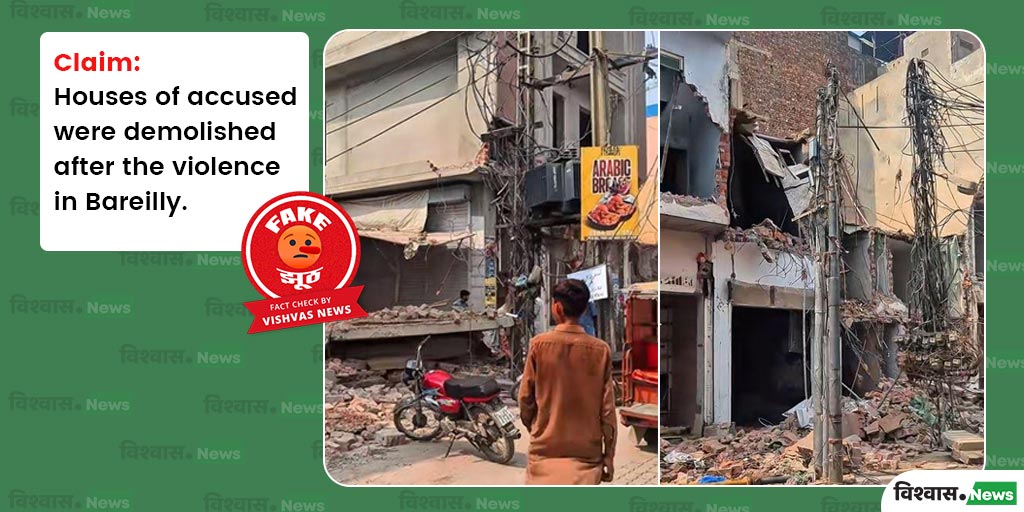
A viral video claiming to show the demolition of houses belonging to those involved in recent violence in Bareilly, Uttar Pradesh, has been debunked by fact-checkers as misleading and false.
The footage, which depicts a row of damaged houses along a roadway, has been circulating widely on social media platforms in the wake of sectarian tensions in the north Indian city. One Facebook post sharing the video claimed, “Bareilly’s market has been cleaned up so much. Perhaps even the earring that fell many years ago will be found now” – implicitly suggesting authorities had carried out demolition operations targeting those involved in the violence.
However, an investigation by Vishvas News has conclusively determined that the video has no connection to Bareilly or any enforcement actions in Uttar Pradesh. The footage actually originates from Pakistan’s Punjab province, specifically the city of Deepalpur, where local authorities conducted operations against illegal encroachments in August of this year.
Multiple lines of evidence confirm the video’s true origin. The investigative team found the same footage on various social media platforms, including Facebook and TikTok accounts, dating back to August 21-23, with captions specifically mentioning Deepalpur, Pakistan. Further verification came from the Tehsil Press Club Deepalpur, which uploaded related footage on August 22.
According to Pakistani media reports, the demolitions shown in the video were part of a significant operation by local administration and security forces targeting illegal encroachments on Main Bazaar Galla Road in Deepalpur. Authorities had reportedly warned shopkeepers to adhere to an 11-foot limit for their structures, and when compliance wasn’t forthcoming, demolition actions were initiated. The authenticity of this context was independently confirmed by a Pakistani journalist contacted during the investigation.
The misattribution of the video comes against the backdrop of actual tensions in Bareilly, Uttar Pradesh. On September 26, clashes erupted between locals and police following Friday prayers, reportedly related to proposed protests concerning “I Love Muhammad” posters that had been cancelled. This violence resulted in multiple injuries and led to the registration of 10 FIRs against hundreds of unidentified individuals.
In response to these incidents, Bareilly authorities have indeed taken enforcement actions against properties connected to Ittehad-e-Millat Council chief Maulana Tauqeer Raza Khan and his associates. According to The Economic Times, officials used bulldozers to take action against properties belonging to Mohsin Raza, sealed his resort, and closed a marriage venue. Reports indicate that 62 people have been arrested in connection with the violence, and properties valued at approximately 150 crore rupees (1.5 billion rupees) have been seized.
The circulation of misleading content like this video highlights a concerning pattern in the aftermath of communal incidents in India. Vishvas News has fact-checked several other misattributed videos being shared in connection with the Bareilly violence. The Facebook page that shared this particular misleading post, “Divya Kashi,” has over 5,000 followers and regularly posts content aligned with specific ideological viewpoints.
This case underscores the importance of critical media literacy and fact-checking in today’s information landscape, particularly following incidents that inflame communal tensions. The deliberate mislabeling of footage from another country to suggest punitive actions against certain communities can potentially exacerbate existing social divisions and contribute to further unrest.
Fact Checker
Verify the accuracy of this article using The Disinformation Commission analysis and real-time sources.

14 Comments
I’m glad the fact-checkers were able to trace the origins of this video and debunk the misleading claims. It’s a good reminder to be cautious about taking social media posts at face value, especially when they involve sensitive political issues.
Yes, responsible reporting and fact-checking are essential to prevent the spread of misinformation, which can have real-world consequences.
This is a timely reminder of the need for vigilance when it comes to online content. The ability to quickly verify the origins and accuracy of viral videos is essential to prevent the spread of harmful misinformation.
Absolutely. Fact-checking should be a reflex, not an afterthought, when it comes to sensitive or politically charged issues on social media.
The prevalence of misinformation online is a major challenge that requires vigilance and concerted efforts to address. Kudos to the fact-checkers for their diligence in tracing the origins of this misleading footage.
Definitely. Responsible journalism and public awareness campaigns are crucial to combating the spread of misinformation in the digital age.
Interesting to see how misinformation can spread so quickly online. It’s important to verify the facts behind viral videos before jumping to conclusions. Fact-checking is crucial in these situations.
Absolutely, verification is key. Jumping to conclusions based on unverified footage can lead to the spread of harmful narratives.
It’s disheartening to see how easily false narratives can gain traction on social media. This incident underscores the importance of media literacy and critical thinking when consuming online content, especially around sensitive issues.
Agreed. We all have a role to play in being more discerning and fact-checking claims before sharing or amplifying them online.
This is a concerning example of how social media can be used to spread disinformation, even across international borders. It highlights the need for greater media literacy and critical thinking when consuming online content.
Agreed. Fact-checking and verifying the source of information should be a reflex, especially for sensitive or politically charged issues.
The debunking of this misleading video is a testament to the importance of investigative journalism and fact-checking in the digital age. It’s crucial that we all remain critical consumers of online content to prevent the proliferation of misinformation.
Well said. Responsible reporting and media literacy are essential tools in the fight against the spread of disinformation, which can have serious real-world consequences.