


Listen to the article
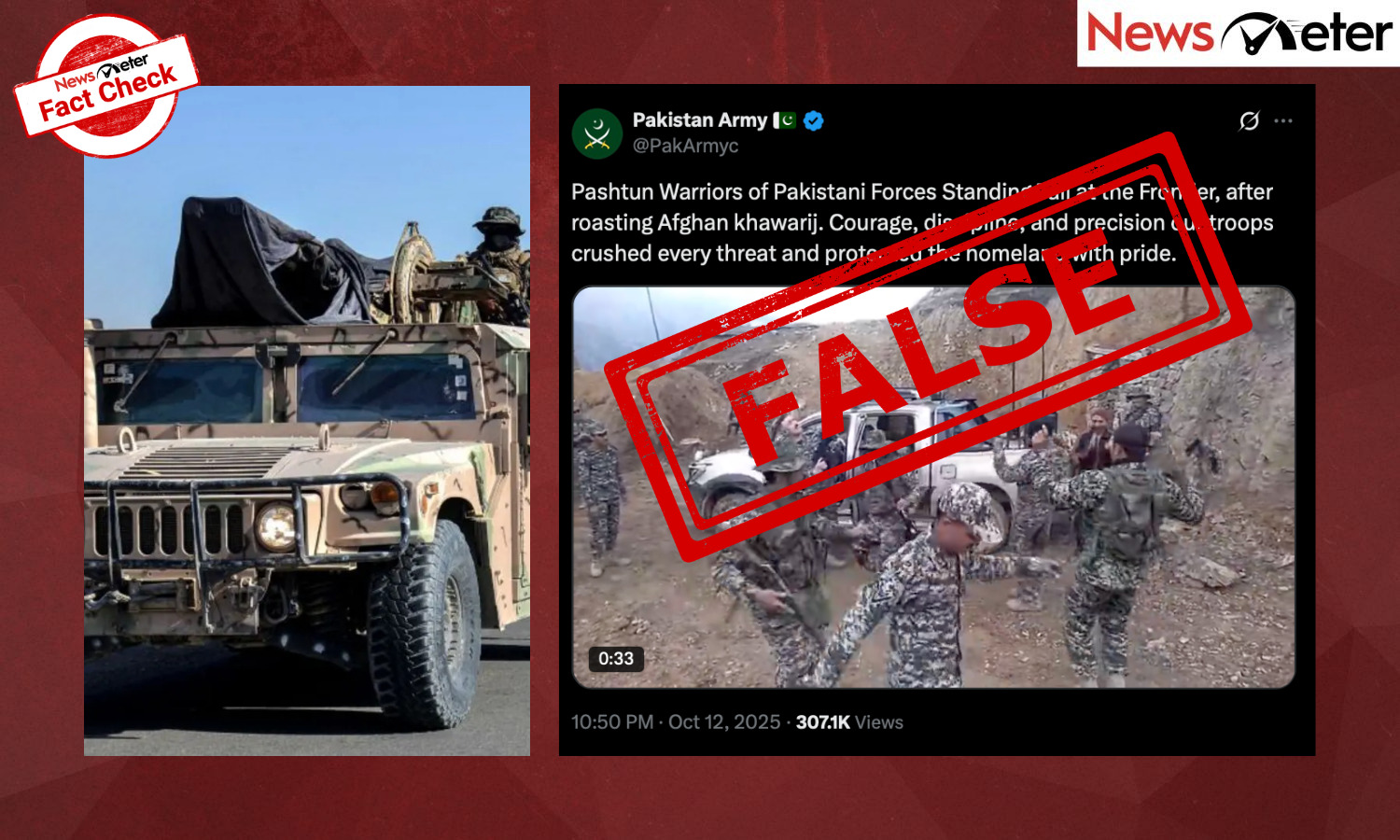
A video circulating on social media purportedly showing Pakistan Army soldiers celebrating during the current Afghanistan-Pakistan border conflict has been debunked as misleading, according to fact-checkers.
The footage, which shows uniformed soldiers dancing enthusiastically near a vehicle in rugged terrain with a Pakistan flag visible, has gained significant traction online in recent days. One popular share on X (formerly Twitter) carried the caption: “Pashtun Warriors of Pakistani Forces Standing Tall at the Frontier, after roasting Afghan khawarij. Courage, discipline and precision, our troops crushed every threat and protected the homeland with pride.”
However, an investigation by NewsMeter has revealed that the video predates the current tensions by several years. Through reverse image searches of key frames from the clip, researchers discovered that the same footage has been online since at least March 2020, appearing in a YouTube video titled “Alak Nare chinaar dae. Pakistan Army dance with officers.”
The discovery highlights a common phenomenon during periods of geopolitical tension, when social media users frequently repurpose old content to fit current narratives, either intentionally to spread misinformation or inadvertently through failure to verify sources.
The Afghanistan-Pakistan border, known as the Durand Line, has been a flashpoint for tensions between the two countries for decades. Recent escalations have drawn significant international attention, creating fertile ground for the spread of misinformation that can potentially inflame tensions further.
Military analysts note that the relationship between the two nations has grown increasingly complex since the Taliban’s return to power in Afghanistan in 2021. Pakistan has accused Afghanistan of harboring terrorist groups that launch attacks on Pakistani soil, while Afghanistan has complained about border fencing and restrictions on movement.
Dr. Ayesha Siddiqa, a security analyst specializing in South Asian geopolitics, explained in a recent interview with an international news outlet that “the recycling of old content with new, provocative captions is particularly dangerous in this region, where public sentiment can quickly translate into political pressure on governments.”
No credible reports or official statements from either country’s military or government sources have indicated any celebratory events by Pakistan Army personnel along the border during the current standoff.
The misattributed video emerges at a time when both countries have engaged in diplomatic negotiations to ease tensions, with international stakeholders urging restraint. Military movements along the border remain closely monitored by regional and international observers concerned about stability in the region.
This incident underscores the importance of media literacy and source verification, particularly during periods of heightened geopolitical tension. Social media platforms have implemented various fact-checking mechanisms, but misleading content still frequently reaches wide audiences before being debunked.
Digital rights advocates emphasize that consumers of news should be particularly vigilant about claims regarding military actions or celebrations, as these can have outsized impacts on public perception and potentially affect diplomatic relations.
The Pakistan Army has not issued any official comment on the circulating footage, though military spokespersons from both countries have repeatedly called for responsible reporting during the ongoing situation.
While the border situation remains fluid, fact-checkers continue to monitor and address misinformation that could potentially exacerbate tensions between the neighboring countries.
Fact Checker
Verify the accuracy of this article using The Disinformation Commission analysis and real-time sources.

13 Comments
This highlights the need for nuanced analysis of military-related videos and social media posts. Jumping to conclusions without proper verification can lead to the spread of misleading narratives, even if unintentional.
Absolutely. Responsible reporting and fact-checking are essential to avoid fueling tensions or propagating false information, especially in sensitive geopolitical contexts.
Interesting to see the background on this video. It’s important to verify the context of media during periods of geopolitical tension to avoid spreading misinformation. Fact-checking is crucial for understanding the full story.
Agreed, it’s a good reminder to be cautious about the origin and timing of online content, especially when it seems to align with current events. Maintaining accuracy is vital.
The debunking of this video serves as a valuable lesson in the importance of fact-checking and maintaining a skeptical yet balanced approach to consuming and sharing information, particularly on sensitive topics.
This is a valuable case study in the challenges of navigating online media during periods of conflict. The ability to quickly verify the provenance of content is crucial for maintaining accuracy and preventing the spread of misinformation.
Agreed. In today’s information landscape, it’s critical that we approach viral content, especially around sensitive topics, with a discerning eye and a commitment to fact-checking before sharing or amplifying it.
This is a timely reminder of the need for nuanced, well-researched analysis when it comes to media coverage of military and geopolitical issues. Fact-checking and contextual understanding are essential for avoiding the spread of misleading narratives.
Agreed. In an era of rapid information sharing, the ability to carefully verify the origins and accuracy of content is a critical skill for both media professionals and the general public.
This case highlights the need for media consumers to be vigilant and to seek out authoritative sources when evaluating the authenticity of online content, especially during periods of heightened geopolitical tensions.
Absolutely. The ability to critically analyze and verify the context of viral media is a crucial skill in an age of widespread information sharing and potential misinformation.
While the initial video may have seemed compelling, the fact-checking process that uncovered its true origins is a testament to the importance of rigorous journalism and a willingness to question surface-level narratives.
The debunking of this video is a good lesson in the importance of contextual research and due diligence when it comes to viral content. It’s a cautionary tale about the risks of rushing to share or amplify unverified information.