


Listen to the article
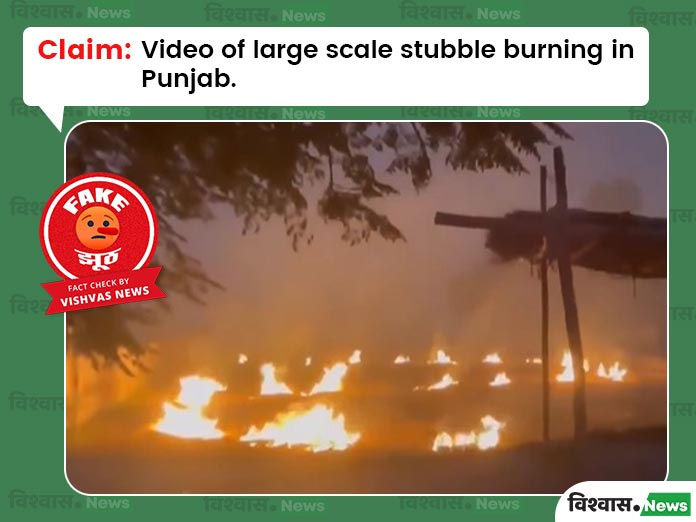
A recent viral video purportedly showing large-scale stubble burning in Punjab has been debunked as misleading by fact-checking organization Vishvas News. The video, which has been circulating on social media platforms since October 22, 2025, falsely claims to show current agricultural burning contributing to Delhi’s deteriorating air quality.
The investigation revealed that the footage is actually from November 2024 and shows stubble burning in Dagru village of Punjab’s Moga district. The video was originally published by news agency ANI on November 1, 2024, and was subsequently aired on NEWS9 Live’s YouTube channel the same day.
The misleading post, shared by Facebook user ‘Dhiraj Kumar’ to his 62,000 followers, attempted to connect the year-old footage to the current post-Diwali pollution crisis in Delhi. The caption accompanying the video specifically criticized the Aam Aadmi Party government in Punjab for allegedly failing to control farm fires.
“This type of misinformation is particularly concerning because it exploits legitimate environmental concerns to create political narratives,” said a spokesperson from an environmental monitoring organization who requested anonymity. “Air quality after Diwali is always a sensitive issue in the National Capital Region, and using outdated footage only complicates the public’s understanding of current conditions.”
Current data paints a different picture than what the viral post suggests. According to a report published in Dainik Jagran on October 24, 2025, while stubble burning incidents have increased recently, the total number this season is approximately 70 percent lower than the previous year. The report noted that until October 22, 2025, stubble burning had been recorded at significantly fewer locations compared to the 1,581 sites documented during the same period in 2024.
Manpreet Maliana, Dainik Jagran’s correspondent from Moga district, confirmed to Vishvas News that the viral video is indeed from the previous year and not representative of the current situation.
The timing of this misleading content coincides with the annual pollution spike that affects Delhi and surrounding areas after the Diwali festival. Delhi’s air quality typically worsens during the winter months due to a combination of factors including reduced wind speed, falling temperatures, festival-related activities, and agricultural burning in neighboring states.
Environmental experts have repeatedly emphasized the need for year-round pollution control measures rather than seasonal blame games. “The air quality issue in Delhi-NCR is complex and requires coordinated efforts across state boundaries,” explained Dr. Ravinder Singh, an environmental scientist at the Delhi Pollution Research Institute. “Misleading videos like this one shift focus away from collaborative solutions and toward political finger-pointing.”
This incident highlights the growing challenge of misinformation surrounding environmental issues. Fact-checkers and media literacy advocates stress the importance of verifying the authenticity and recency of content before sharing, particularly during periods of heightened environmental concern.
Vishvas News, which conducted the fact-check, is a signatory of the International Fact-Checking Network’s code of principles and regularly investigates viral claims related to current events and public interest topics.
The misleading video has reached thousands of viewers since being posted, demonstrating how quickly outdated content can be repurposed to support contemporary narratives, particularly around recurring seasonal issues like air pollution in northern India.
Fact Checker
Verify the accuracy of this article using The Disinformation Commission analysis and real-time sources.

20 Comments
This is a clear case of misinformation being used for political purposes. We must be vigilant in verifying the facts, especially on sensitive environmental issues that impact public health. Spreading unverified content does more harm than good.
I agree. Using old footage to criticize current policies is misleading and undermines efforts to find real solutions. Fact-based discussions are essential for making progress on complex environmental challenges.
This is a concerning case of misinformation. It’s important to verify the facts before spreading viral content, especially on sensitive environmental issues. Fact-checking is crucial to avoid misleading the public.
I agree. Spreading unverified information, even with good intentions, can undermine legitimate efforts to address real problems like air pollution.
Fact-checking is crucial to counter the spread of misinformation, especially on issues like air pollution that have serious public health consequences. Spreading unverified content, even with good intentions, can do more harm than good.
Well said. Responsible reporting and a commitment to verifying facts are essential to having constructive dialogues on environmental issues. Misinformation only serves to muddy the waters and distract from finding real solutions.
This is a concerning example of how misinformation can distort the public’s understanding of real-time environmental issues. Fact-checking and responsible reporting are essential to having constructive dialogues and finding effective solutions.
Well said. Spreading unverified content, even with good intentions, can do more harm than good. We need to be vigilant about separating fact from fiction, especially on sensitive issues like air pollution that have serious public health impacts.
While stubble burning is a serious issue, using outdated footage to criticize current policies is counterproductive. We need constructive discussions based on verified information to find effective solutions.
Absolutely. Fact-checking and responsible reporting are key to having meaningful dialogues on environmental challenges facing the region. Misinformation only serves to muddy the waters.
While stubble burning is a real problem, using misleading footage to criticize current policies is counterproductive. We need fact-based discussions and collaborative efforts to address these complex environmental challenges effectively.
I agree completely. Rigorous fact-checking and responsible reporting are crucial to ensuring the public has accurate information to engage with these important issues. Spreading misinformation, even inadvertently, can undermine legitimate efforts to find solutions.
While stubble burning is a real concern, spreading misleading information does nothing to solve the problem. We need fact-based dialogues and collective action to address complex environmental challenges effectively.
Well said. Responsible reporting and a commitment to verifying facts are crucial to having constructive discussions on sensitive issues like air pollution. Misinformation, even with good intentions, can do more harm than good.
Using outdated footage to criticize current policies is misleading and counterproductive. Fact-based discussions and collaborative efforts are crucial to addressing complex environmental challenges like agricultural burning and air pollution.
I agree completely. Rigorous fact-checking and a commitment to responsible reporting are essential to ensuring the public has accurate information to engage with these important issues. Misinformation only serves to undermine legitimate efforts to find solutions.
It’s concerning to see old footage being misrepresented as current events. This type of misinformation can distort the public’s understanding of real-time issues facing the region. Rigorous fact-checking is needed to counter these trends.
I share your concerns. Spreading misinformation, even inadvertently, can undermine legitimate efforts to address complex environmental problems. Fact-based dialogue is crucial.
Misleading videos like this make it harder to have a constructive dialogue on complex issues like agricultural burning. We need to be vigilant about separating fact from fiction, especially on social media.
Well said. Fact-checking and responsible reporting are essential to ensuring the public has accurate information to engage with these important environmental challenges.