


Listen to the article
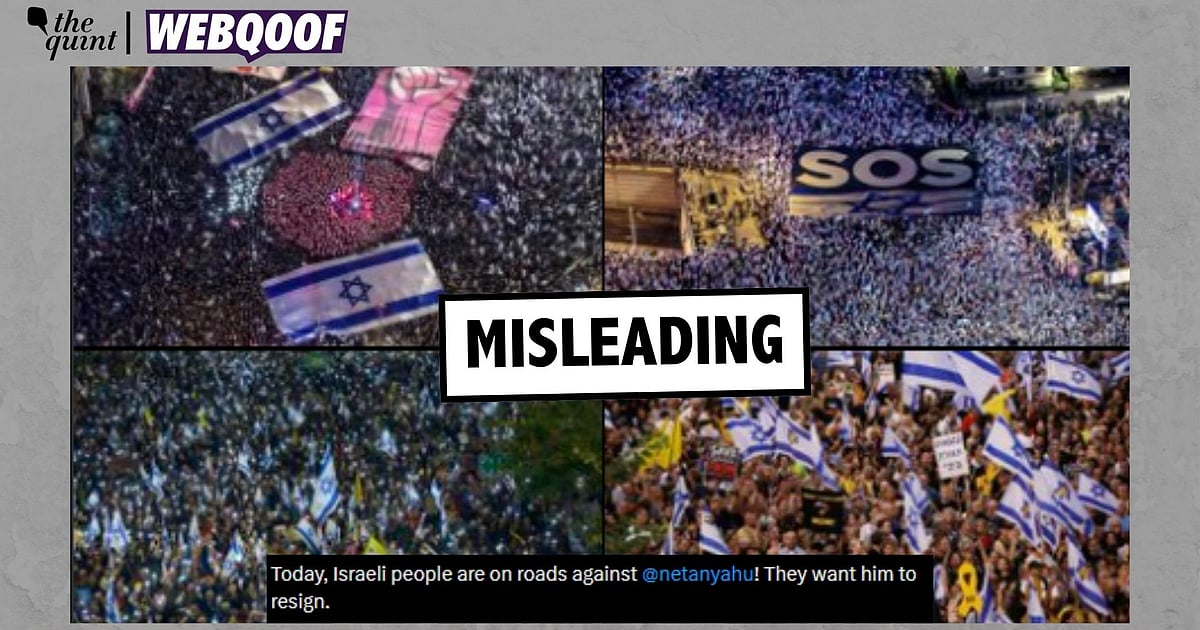
In a thorough examination of widely circulated imagery purporting to show recent demonstrations against Israeli Prime Minister Benjamin Netanyahu, fact-checkers have determined that all four photos in question are from earlier events and not connected to current protests.
The images, which gained significant traction across social media platforms in recent days, have been misleadingly presented as evidence of growing international opposition to Netanyahu’s policies regarding the ongoing conflict in Gaza. However, digital forensic analysis and reverse image searches reveal that the photos date back to various periods, some from protests that occurred years ago.
One particularly viral image showing a large crowd of demonstrators was traced back to 2019, when protests focused on entirely different political circumstances. Another photograph, depicting protesters holding signs with Netanyahu’s face crossed out, originated from a 2021 demonstration related to corruption allegations against the prime minister, long before the current military operations began.
This pattern of repurposing old visual content to support current narratives highlights the increasingly complex information landscape surrounding the Israel-Hamas conflict, which has been characterized by substantial misinformation from all sides.
Social media platforms have struggled to contain the spread of such misleading content, with algorithms often amplifying emotional or controversial posts regardless of their accuracy. The images in question collectively received hundreds of thousands of engagements before being identified as misleading.
Media experts note that the verification challenge is compounded by the genuine protests against Netanyahu that are occurring globally. Legitimate demonstrations have taken place in various cities, with participants expressing concerns about the humanitarian situation in Gaza and the Israeli government’s military response following the October 7 attacks.
“When real events are happening, it creates fertile ground for misinformation,” explained Dr. Maya Kornberg, a researcher specializing in political communication at the Oxford Internet Institute. “People see these old images, and because they align with something that is genuinely occurring, they’re less likely to question their authenticity or timing.”
The Israeli-Palestinian conflict has historically generated intense information warfare, with supporters on both sides often sharing content without proper verification. This recent instance fits into a broader pattern where emotional response often outpaces fact-checking.
International organizations monitoring digital disinformation have noted a significant spike in misleading content related to the conflict since October. The European Digital Media Observatory reported that false claims about the conflict constituted nearly 30% of all disinformation flagged on its monitoring systems during the past three months.
For news consumers, experts recommend exercising particular caution with visual content related to controversial geopolitical events. Simple verification steps include checking the source of images, looking for corroborating reports from established news organizations, and using reverse image search tools to identify whether pictures have appeared online previously.
The Israeli government has not directly commented on these specific misrepresented images, though officials have repeatedly criticized what they describe as biased coverage of the conflict in international media.
As tensions in the region continue, the challenge of distinguishing between authentic and misleading protest imagery remains significant for media organizations, platforms, and news consumers alike.
Fact-checking teams encourage readers who encounter questionable content to submit it for verification rather than sharing unverified information. This approach helps combat the spread of misinformation during sensitive geopolitical developments, when accurate information is particularly crucial for public understanding.
Fact Checker
Verify the accuracy of this article using The Disinformation Commission analysis and real-time sources.

20 Comments
The use of old images to represent current events is a concerning practice that undermines the integrity of news reporting. Rigorous fact-checking is crucial to ensure the accuracy and reliability of visual content.
Well said. In an age of ubiquitous digital media, the need for diligent verification of visual information has never been more important. Maintaining high journalistic standards is essential.
This case highlights the critical importance of verifying the sources and context of visual content before sharing or reporting on it. Fact-checking is a vital safeguard against the spread of misinformation, which can have far-reaching consequences.
Absolutely. The detailed analysis in this report demonstrates the level of scrutiny required to ensure the accuracy of visual information in the digital age. Maintaining journalistic integrity should be a top priority for all news organizations.
This case highlights the importance of verifying the sources and context of visual content before sharing or reporting on it. Fact-checking is a critical safeguard against the spread of misinformation, especially on sensitive political issues.
Agreed. The detailed analysis in this report demonstrates the level of scrutiny required to ensure the accuracy of visual information in the digital age. Upholding journalistic integrity should be a top priority.
The use of old images to misrepresent current events is a concerning trend that undermines trust in news sources. Rigorous fact-checking is essential to maintain the credibility and reliability of reporting, especially on sensitive political topics.
Well said. The diligence of the fact-checkers in tracing the origins of these misleading visuals is commendable. Upholding high standards of verification is crucial in an age of rampant misinformation.
It’s concerning to see old images being misrepresented as current events. This practice erodes trust and undermines informed discourse. Rigorous fact-checking is crucial to maintain the integrity of news reporting.
Well said. The diligence of the fact-checkers in tracing the origins of these images is commendable. Upholding journalistic standards is vital in an age of rampant misinformation.
The use of old images to represent current events is a concerning trend that undermines the public’s trust in news sources. Rigorous verification processes are crucial to maintain journalistic integrity.
Well said. The detailed analysis in this case demonstrates the importance of thorough fact-checking, even for seemingly straightforward visual content. Upholding high standards is vital.
This is a timely reminder of the importance of verifying visual content before sharing or reporting on it. The ability to manipulate and repurpose images is a significant challenge in the digital age.
Agreed. Fact-checking is essential to ensure the accuracy and credibility of news reporting, especially on sensitive political topics where misinformation can have far-reaching consequences.
This is a stark reminder of the need for diligence in verifying visual content, especially in a media landscape where misinformation can spread rapidly. Fact-checking is essential to maintain the credibility of news reporting.
Absolutely. The ability to manipulate and repurpose images is a significant challenge, and it’s commendable that the fact-checkers in this case were able to trace the origins of the misleading visuals.
Interesting to see how images can be misused to push certain narratives. It’s important to verify the sources and context of visuals before sharing them, especially on sensitive political topics.
Agreed. Fact-checking is crucial to avoid spreading misinformation, even inadvertently. The digital forensic analysis in this case seems thorough.
This highlights the need for careful scrutiny of visual content, especially in the age of social media where information can spread rapidly. Fact-checking is essential to maintain credibility and avoid amplifying false narratives.
Absolutely. Verifying the provenance and context of images is critical to ensure accurate reporting and prevent the spread of misinformation.