


Listen to the article
Fake Oil Price Rollback Claims Spread on Social Media as Energy Crisis Deepens
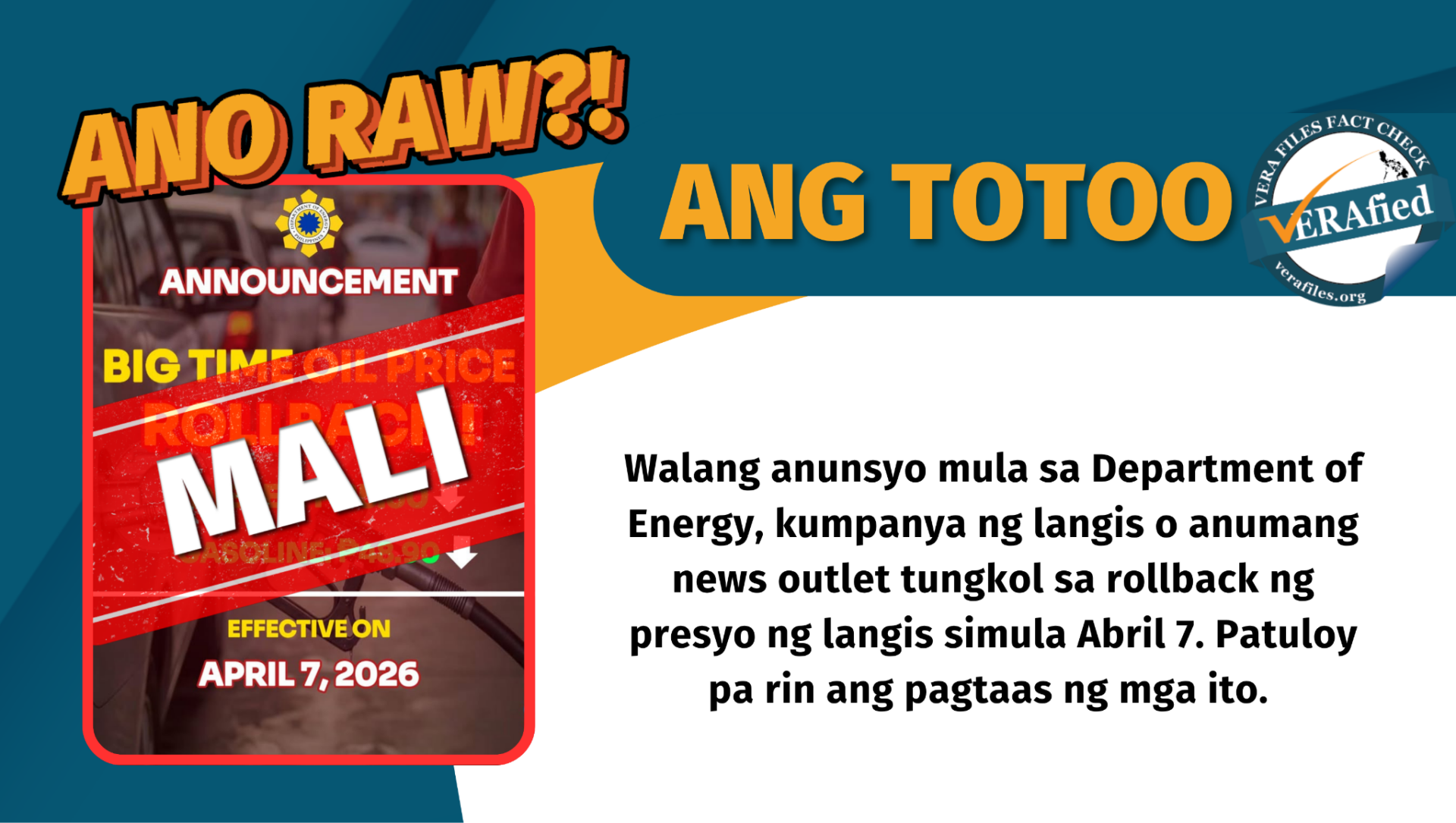
A fraudulent graphic circulating on Facebook falsely claims that a major oil price rollback will take effect on April 7, with diesel prices allegedly dropping to ₱85.50 per liter and gasoline to ₱48.90 per liter. The fabricated announcement, which bears the logos of the Department of Energy (DOE) and GMA Integrated News, has been debunked as misinformation.
The deceptive graphic was initially posted by a spurious news page on April 5, claiming: “ANNOUNCEMENT. BIG TIME OIL PRICE ROLLBACK! DIESEL: ₱85.50, GASOLINE: ₱48.90, EFFECTIVE ON APRIL 7, 2026.” Similar posts using identical graphics quickly proliferated across Facebook in the following days.
In stark contrast to these false claims, current fuel prices in Metro Manila remain significantly higher. As of April 6, gasoline prices range from ₱81.00 to ₱114.00 per liter, diesel from ₱110.00 to ₱144.90 per liter, and kerosene between ₱149.89 and ₱169.90 per liter.
Neither the Department of Energy, any oil company, nor GMA Integrated News has issued announcements regarding an impending price rollback. In fact, the situation is quite the opposite – oil companies have already announced another round of fuel price hikes this week, with diesel prices expected to increase by as much as ₱18.80 per liter.
The misinformation comes at a particularly sensitive time as the Philippines grapples with a severe energy crisis. The situation has deteriorated following military actions by the United States and Israel against Iran, which resulted in the closure of the Strait of Hormuz – a critical shipping lane that handles approximately 20% of global oil supply.
This disruption has hit the Philippines especially hard, as the country imports 98% of its oil from the Middle East. The severity of the crisis prompted President Ferdinand Marcos to declare a state of national energy emergency on March 24, highlighting the dire situation facing the nation’s energy sector.
The fabricated posts about price rollbacks appear designed to exploit the anxiety of Filipinos who are bracing for another round of fuel price increases set to take effect on April 7. Energy analysts suggest these continued price hikes could have cascading effects across the economy, potentially raising costs for transportation, food production, and manufacturing.
This isn’t the first time false information about fuel prices has circulated on social media. VERA Files Fact Check previously debunked similar hoaxes, including a false claim that LPG was being sold at ₱5,000 per tank. Fact-checkers note that the misappropriation of official logos from legitimate media outlets and government agencies is a common tactic used to lend credibility to fraudulent fuel price announcements.
The fake fuel rollback posts, published by Facebook pages like “PH News” (created in June 2025) and several individual users, have already accumulated substantial engagement, garnering over 650 reactions, 270 comments, and nearly 1,900 shares at the time of reporting.
Energy experts advise consumers to rely only on official announcements from the Department of Energy and legitimate oil companies regarding fuel price adjustments, particularly during this period of heightened market volatility and global supply constraints.
Fact Checker
Verify the accuracy of this article using The Disinformation Commission analysis and real-time sources.

14 Comments
While lower fuel prices would be very welcome, this announcement about a major rollback is simply not true. It’s concerning to see such blatantly false information circulating, especially when it uses official logos to appear legitimate.
The use of official-looking logos on this fabricated announcement is a clear tactic to make the misinformation appear more credible. However, as the article states, the actual fuel prices remain significantly higher than the false claims. Fact-checking is essential to combat the spread of such hoaxes.
This is clearly a case of misinformation spreading on social media. Fabricated graphics like this try to mislead people about actual fuel prices. It’s important to rely on official sources and fact-checking when it comes to oil and energy news.
Agreed, the public should be wary of such false claims, especially during an energy crisis when accurate information is crucial.
It’s disappointing to see fake news like this taking advantage of the current energy crisis. Spreading misinformation about fuel prices can only serve to further confuse and mislead the public. We need reliable, fact-based reporting on these issues.
This kind of fabricated announcement is clearly an attempt to create false hope about fuel prices. As the article states, the actual prices remain significantly higher than the bogus rollback claims. Fact-checking is crucial to combat misinformation.
Absolutely. With energy costs such a major concern, the public deserves accurate, up-to-date information from credible sources, not misleading graphics.
While lower fuel prices would be a welcome relief, this announcement about a major rollback is simply not true. It’s concerning to see such blatantly false information circulating, especially when it uses official logos to appear legitimate. Fact-checking is crucial to combat misinformation.
Agreed, the public should be very cautious about claims that seem too good to be true, especially when they involve the use of official branding. Relying on credible sources is key.
While lower fuel prices would be welcome relief, this announcement about a major rollback is simply not true. It’s concerning to see such blatantly false information circulating, especially when it uses official logos to appear legitimate.
You’re right, the use of official branding makes this misinformation all the more deceptive. Fact-checking is essential to combat the spread of these kinds of hoaxes.
This is a clear case of misinformation being spread on social media. Fraudulent graphics like this one try to mislead people about the real fuel prices, which remain significantly higher than the false claims. It’s important to always verify information from official, credible sources.
The use of official-looking branding on this fabricated announcement is a classic tactic of misinformation. It’s crucial that the public remains vigilant and verifies claims against credible sources, especially during times of crisis and uncertainty.
Agreed, fact-checking is essential to combat the spread of these kinds of hoaxes. Relying on official sources is the best way to stay informed about actual fuel prices and energy news.