


Listen to the article
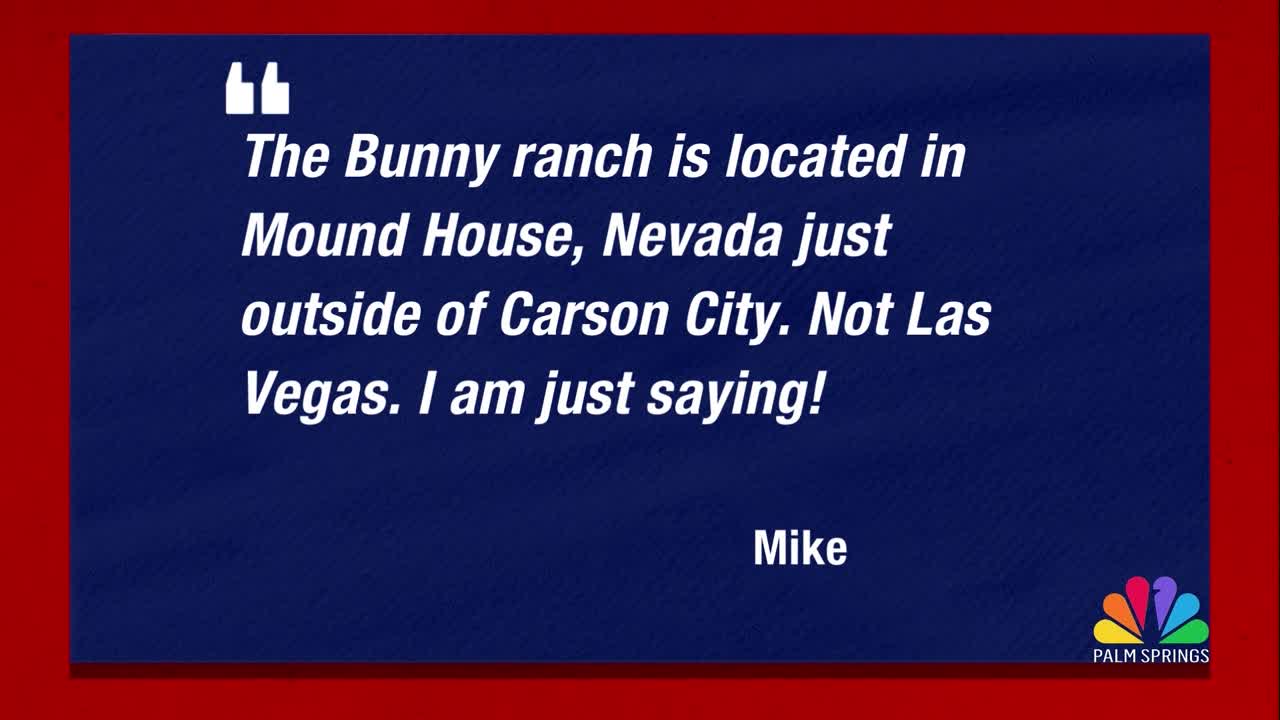
A recent NBC Palm Springs segment about Nevada brothels has drawn attention from viewers eager to correct geographical and historical inaccuracies presented in the broadcast.
The segment, which aimed to provide insight into Nevada’s legal prostitution industry, contained several factual errors that prompted immediate feedback from audience members familiar with the state’s regulations and brothel locations.
Viewers pointed out that contrary to what was reported, brothels are not legal throughout the entire state of Nevada. Rather, state law permits counties with populations under 700,000 to license brothels if they choose to do so. This population threshold effectively prohibits legal brothels in Clark County, home to Las Vegas, and Washoe County, where Reno is located – Nevada’s two most populous regions.
“Nevada has a complex patchwork of prostitution laws that vary significantly by county,” explained Dr. Barbara Brents, a sociology professor at the University of Nevada, Las Vegas who has extensively researched the state’s sex industry. “Currently, legal brothels operate in just seven of Nevada’s 16 counties, mostly in rural areas.”
The broadcast also incorrectly suggested that brothels operate on the Las Vegas Strip, a misconception common among tourists. In reality, the nearest legal establishments are in Nye County, more than an hour’s drive from the Las Vegas metropolitan area.
Historically, Nevada’s relationship with prostitution has evolved significantly over the decades. The state formally legalized brothels in 1971, though some establishments had operated under local tolerance policies for many years prior. This legal framework makes Nevada the only U.S. state with systems for licensed brothel prostitution.
The economic impact of Nevada’s brothel industry, while modest compared to gaming, remains significant in the rural counties where they operate. These businesses generate tax revenue, provide employment, and often contribute to local charitable causes. Industry estimates suggest the legal brothel sector generates approximately $75 million annually in Nevada.
“For many small Nevada communities, these establishments represent a consistent source of revenue in areas with limited economic opportunities,” noted Michael Green, associate professor of history at the University of Nevada, Las Vegas. “The relationship between brothels and their communities is far more complex than outsiders typically realize.”
The broadcast also failed to mention recent changes affecting the industry. The COVID-19 pandemic forced temporary closures of all Nevada brothels in 2020, with many struggling to recover even after restrictions lifted. Additionally, recent legislative sessions have seen renewed debates about potentially ending the practice statewide, reflecting evolving attitudes toward sex work.
Licensed Nevada brothels operate under strict regulations, including mandatory weekly STI testing for workers, condom requirements, and background checks. Workers are independent contractors who negotiate their own services and rates with clients, typically splitting proceeds with the house.
The most famous Nevada brothel, the Moonlite BunnyRanch in Lyon County, gained national attention through the HBO series “Cathouse” and its colorful former owner Dennis Hof, who died in 2018 shortly after winning a Republican primary for state assembly.
NBC Palm Springs has not yet issued a formal correction to the segment, though several viewers reported receiving responses acknowledging the geographical errors when they contacted the station directly.
Media misrepresentations of Nevada’s prostitution laws are not uncommon, industry observers note. The state’s unique position as the only place with legal prostitution in the United States frequently leads to oversimplification or sensationalism in coverage.
The incident highlights the valuable role viewers play in holding media outlets accountable for factual reporting, particularly on topics involving complex legal frameworks or regional distinctions. It also demonstrates the continued public interest in understanding Nevada’s distinctive approach to regulating prostitution – an approach that remains controversial even within the state itself.
Fact Checker
Verify the accuracy of this article using The Disinformation Commission analysis and real-time sources.
