


Listen to the article
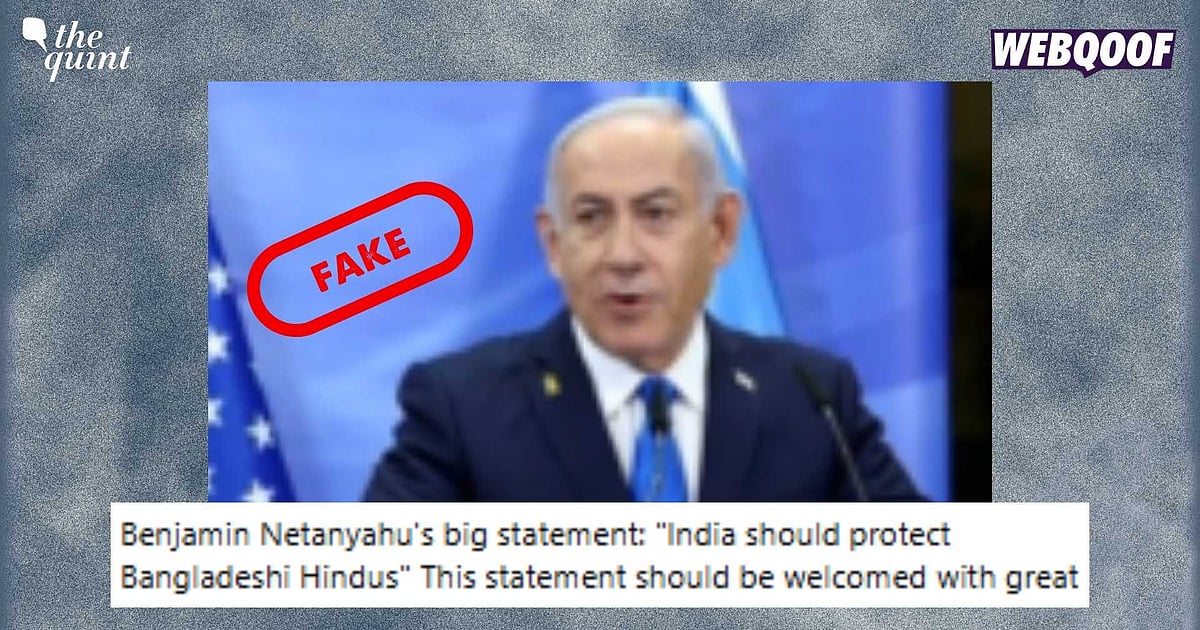
In a comprehensive search for evidence, no official statements from Israeli Prime Minister Benjamin Netanyahu regarding the situation of Hindus in Bangladesh have been found, contradicting claims circulating on social media platforms.
An extensive investigation conducted by fact-checking team WebQoof revealed no credible media reports, press releases, or official records documenting any comments from Netanyahu addressing the Hindu community in Bangladesh or their circumstances in the South Asian nation.
The fact-checkers expanded their investigation by conducting searches in Hebrew, examining Israeli media outlets for any potential coverage of such statements. These searches similarly yielded no results, further suggesting that the purported comments have no factual basis.
The diplomatic context between Israel and Bangladesh adds significant weight to the improbability of such statements. The two nations maintain no formal diplomatic relations, with Bangladesh consistently supporting Palestinian causes in international forums. This diplomatic stance has been a long-standing position for Bangladesh, which has historically aligned itself with other Muslim-majority nations on the Israeli-Palestinian conflict.
Bangladesh’s position toward Israel extends beyond mere diplomatic absence. The country maintains an active travel ban that prohibits its citizens from visiting Israel, reflecting the government’s official stance on relations with the Jewish state. Bangladeshi passports explicitly state they are valid for travel to all countries “except Israel,” a policy that has remained unchanged for decades.
Recent events further underscore the strained relationship between the countries. Following the death of Iran’s Supreme Leader Ayatollah Ali Khamenei in what were reported as joint U.S.-Israeli strikes, Bangladesh witnessed significant anti-Israel protests. These demonstrations reflected public sentiment in Bangladesh that remains largely sympathetic to Iran and Palestine while critical of Israeli policies in the Middle East.
The geopolitical reality makes it highly unlikely that Netanyahu would single out Hindus in Bangladesh for support, particularly given Israel’s careful diplomatic balancing in South Asia, where it maintains stronger ties with India while navigating complex regional dynamics.
Bangladesh’s domestic situation has drawn international attention in recent months, with reports of religious minorities, including Hindus, facing challenges. However, commentary on these issues has primarily come from human rights organizations, neighboring countries, and international bodies—not from Israeli leadership.
The Hindu population in Bangladesh constitutes approximately 8 percent of the country’s 170 million residents, making them the largest religious minority group. Their situation has occasionally been the subject of international concern, particularly during periods of political instability.
The circulation of unfounded claims attributing statements to world leaders represents a growing challenge in the information ecosystem, where fabricated quotes can rapidly spread across social media platforms without verification. Such misinformation can potentially inflame tensions or create false impressions about diplomatic positions between nations.
After thorough investigation across multiple languages, media platforms, and official channels, WebQoof concluded there is no evidence supporting claims that Prime Minister Netanyahu made any statements regarding the Hindu community in Bangladesh. The absence of diplomatic relations between the countries, Bangladesh’s pro-Palestine stance, and the lack of any credible documentation all point to the claim being unfounded.
Fact Checker
Verify the accuracy of this article using The Disinformation Commission analysis and real-time sources.

18 Comments
This fact check highlights the importance of critical thinking and not automatically accepting claims, even if they seem to align with existing narratives or biases. Maintaining objectivity is key.
Absolutely. Fact-checking is essential to counter the spread of misinformation, which can have serious consequences, especially in sensitive geopolitical contexts.
This fact check serves as a reminder to be wary of unverified claims, especially those that seem designed to stir up tensions or controversy. Thorough investigation is key to maintaining the integrity of news reporting.
Well said. Upholding journalistic standards by verifying information and presenting the facts objectively is essential in an era of increasing misinformation.
The report’s comprehensive approach, spanning multiple languages and sources, is commendable. It demonstrates the importance of robust fact-checking to combat the spread of misinformation.
Absolutely. This fact check sets a high standard for verifying claims and presenting the findings in a clear, objective manner. It’s an exemplary piece of journalism.
The lack of evidence for Netanyahu’s purported comments on Bangladeshi Hindus is quite telling. It underscores the need for reliable, well-researched journalism to cut through the noise of unsubstantiated claims.
Absolutely. This report demonstrates the diligence required to separate fact from fiction, particularly when it comes to sensitive political and diplomatic matters.
The comprehensive search for evidence and the lack of any credible sources supporting the claimed comments lend strong credibility to this fact check. It’s a solid example of rigorous reporting.
I agree. The detailed investigation, spanning multiple languages and media outlets, provides a robust basis for the conclusion that the purported comments are false.
The report’s emphasis on the improbability of such statements, given the diplomatic context, is a crucial point. It underscores the need to consider broader factors when evaluating the credibility of claims.
Agreed. The analysis of the political dynamics between Israel and Bangladesh adds valuable context and strengthens the conclusion that the purported comments are false.
This fact check highlights the importance of verifying statements, especially those involving international relations and sensitive geopolitical issues. It’s prudent to scrutinize claims thoroughly before sharing or amplifying them.
Agreed. Fact-checking is crucial to counter the spread of misinformation, especially on topics that could inflame tensions between nations.
This fact check serves as a reminder that verifying information, especially on sensitive topics, should be a standard practice in journalism. It’s heartening to see this level of diligence in reporting.
Well said. Upholding journalistic integrity by thoroughly investigating claims and presenting the facts objectively is crucial for maintaining public trust in the media.
The diplomatic context between Israel and Bangladesh adds an interesting layer to this story. It’s important to consider the broader geopolitical dynamics that may influence the plausibility of such statements.
Good point. The strained relations between the two nations make it highly unlikely that Netanyahu would have made such comments, highlighting the need for caution when evaluating claims involving international politics.