


Listen to the article
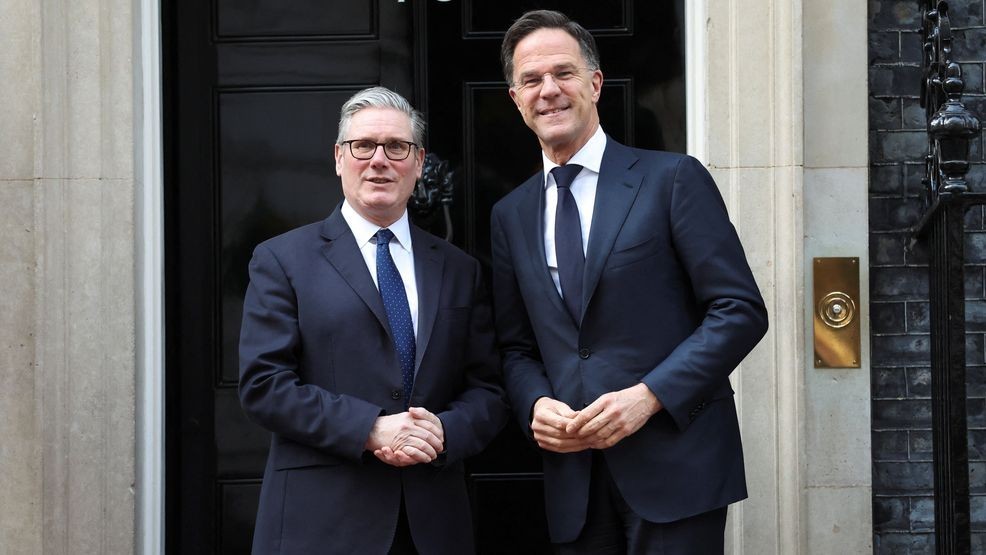
The Biden administration will host NATO Secretary General Mark Rutte at the White House amid increasing tensions over U.S. leadership in the alliance and European reluctance to support operations related to the Iran conflict. This meeting occurs at a critical juncture for NATO as questions about its strategic importance and internal cohesion come under renewed scrutiny.
NATO, established in 1949 as a bulwark against Soviet aggression following World War II, has evolved significantly in both structure and purpose over its nearly eight-decade existence. Recent discussions about the United States’ commitment to the alliance have prompted clarification about the mechanisms governing potential withdrawal.
Contrary to some perceptions, a U.S. president cannot unilaterally withdraw the country from NATO. Legislation passed in 2023 requires either a two-thirds Senate majority (60 votes) or full congressional approval before any withdrawal could proceed, creating a significant constitutional barrier to sudden policy shifts.
The financial aspects of NATO membership are frequently misrepresented in public discourse. The United States contributes approximately 15.8% to NATO’s annual common budget of $3.5 billion, which covers operational costs, staff, and shared infrastructure. This represents roughly one-sixth of the common budget, not two-thirds as sometimes claimed in social media posts and political rhetoric.
The more substantial U.S. commitment comes through its overall defense spending, which accounts for approximately $850 billion – representing about 60% of NATO members’ combined defense expenditures. This disparity largely reflects the unparalleled size and global reach of the U.S. military compared to other alliance members.
The widely discussed “2% rule” refers to a separate commitment that each NATO member should spend at least 2% of their GDP on defense – a target that many European members have historically struggled to meet, though progress has accelerated following Russia’s 2022 invasion of Ukraine.
Recent tensions have emerged regarding European cooperation with U.S. military operations related to Iran. Several European allies have imposed restrictions that have complicated American logistics and operations in the Middle East.
France has implemented a case-by-case review system for military overflight requests related to supplying Israel, declining some applications. Italy has prevented certain U.S. aircraft from landing at the strategically significant Sigonella Air Base in Sicily, citing domestic legal requirements. Spain has similarly restricted both airspace access and base utilization for operations connected to Iran.
Non-NATO members Austria and Switzerland have also rejected military overflight requests, maintaining their long-standing neutrality policies. These restrictions have created logistical challenges for U.S. operations and strained relationships within the alliance, particularly regarding critical Mediterranean operational hubs.
At the heart of NATO lies Article 5, which enshrines the principle of collective defense. The article states that “an armed attack against one or more of them in Europe or North America shall be considered an attack against them all,” committing members to assist in restoring security in the North Atlantic region.
This mutual defense clause has been activated only once in NATO’s history – following the September 11, 2001, terrorist attacks on the United States. However, Article 5 specifically applies when a member nation is attacked, not when a member initiates military action against another country. This distinction is critical in understanding why Article 5 does not automatically apply to U.S.-led operations against Iran or other nations.
The upcoming White House meeting between President Biden and Secretary General Rutte takes place against this complex backdrop. The discussions will likely address the delicate balance between maintaining alliance cohesion while respecting individual nations’ sovereignty and domestic policies regarding military engagement.
As geopolitical tensions persist in Eastern Europe and the Middle East, NATO’s ability to present a unified front while accommodating diverse member perspectives remains crucial to its continued relevance and effectiveness in global security affairs.
Fact Checker
Verify the accuracy of this article using The Disinformation Commission analysis and real-time sources.

32 Comments
The financial aspects of NATO membership are often misrepresented. The U.S. contribution of 15.8% to the common budget is not the full picture of its commitment. Broader defense spending is a more relevant metric.
That’s an important clarification. The overall defense spending by NATO members is a better gauge of the burden-sharing than just the common budget contributions.
Concerns over US leadership in NATO and European reluctance on Iran are significant issues that must be addressed. Maintaining a strong, unified alliance is essential for global stability.
As NATO evolves to address new global realities, the meeting between the White House and NATO leadership takes on added importance. Adapting the alliance’s purpose and structure will be critical.
Agreed. NATO must remain agile and responsive to emerging security challenges, while preserving its core transatlantic partnership.
Interesting development with the NATO leaders meeting the White House. Tensions with Iran seem to be driving a lot of geopolitical maneuvering lately. I’m curious to see if they can find a diplomatic solution to ease the conflict.
You raise a good point. Resolving the Iran issue through diplomacy rather than escalation would be the preferred outcome for NATO.
I’m glad to see the Biden administration taking a measured approach to NATO leadership and not pursuing any rash policy changes. Maintaining transatlantic unity is crucial, especially with the Russia-Ukraine war raging on.
Curious to see how the Biden administration will navigate this NATO meeting amid concerns over US leadership and European reluctance on Iran. Maintaining cohesion is critical.
Agreed. Balancing diverging interests within the alliance will require diplomatic skill and compromise from all sides.
This meeting comes at a critical juncture for NATO as questions about its strategic importance and internal cohesion arise. Navigating these challenges will test the alliance’s resilience.
It’s reassuring to see the legal barriers to unilateral US withdrawal from NATO. This helps ensure stability and continuity in transatlantic security cooperation.
Yes, the constitutional safeguards are an important check on sudden policy shifts that could undermine NATO’s foundations.
Tensions with Iran are a significant concern, and NATO’s response will be closely watched. Maintaining a united front is crucial for effective deterrence and conflict resolution.
Absolutely. Fractures within the alliance could embolden adversaries and undermine NATO’s ability to address regional threats.
The meeting between NATO and the White House comes at a critical juncture for the alliance. I hope they can reach an aligned position on the Iran issue and reinforce NATO’s continued relevance.
As NATO leadership meets with the White House, the focus on Iran tensions and withdrawal concerns highlights the complex challenges facing the alliance. Navigating these issues will require diplomatic skill and compromise.
The legal barriers to unilateral US withdrawal from NATO are an important safeguard. Preserving the alliance’s integrity is crucial, especially in times of heightened regional tensions.
Absolutely. Ensuring the alliance’s continuity through robust institutional mechanisms is key to its long-term viability.
Interesting to see NATO leadership meeting with the White House amid tensions over the Iran conflict. Maintaining a strong transatlantic alliance is crucial for addressing shared security challenges.
Agreed. NATO plays a vital role in global stability, and clarity around withdrawal mechanisms is important given recent discussions.
With the constitutional barriers to unilateral U.S. withdrawal from NATO, it seems unlikely we’ll see any sudden policy shifts on that front. But the internal cohesion of the alliance is still worth watching closely.
While the Iran conflict is driving much of the current NATO activity, it’s important not to lose sight of the alliance’s broader strategic importance. Its role as a bulwark against aggression remains vital.
The financial aspects of NATO membership are often misrepresented. It’s good to see the facts around the US contribution being clarified. Transparency is key for public understanding.
Absolutely. Misinformation about NATO funding can undermine support, so setting the record straight is important.
The evolution of NATO’s purpose and structure over the decades is a testament to the alliance’s adaptability. Continuing to evolve in response to new global realities will be essential for its future relevance.
Well said. NATO must remain agile and responsive to maintain its position as a cornerstone of transatlantic security cooperation.
Amidst the tensions, it’s reassuring to see the legal safeguards in place that prevent a U.S. president from unilaterally withdrawing from NATO. Maintaining that institutional stability is crucial.
The financial aspects of NATO membership are often misrepresented, so it’s good to see the facts being clarified. Transparency is essential for public understanding and trust.
As tensions with Iran continue to simmer, this NATO meeting takes on added significance. The alliance must remain united and coordinated in its response to regional instability.
The evolution of NATO’s purpose and structure over the decades is fascinating. It’ll be interesting to see how the alliance adapts to address emerging security challenges, especially in light of the Iran tensions.
The evolution of NATO’s purpose and structure over its nearly 80-year history is fascinating. Adapting to new global realities is essential for the alliance’s continued relevance.