


Listen to the article
Misleading Photo of Muslim Voters Circulating with False Claims About 2026 BMC Elections
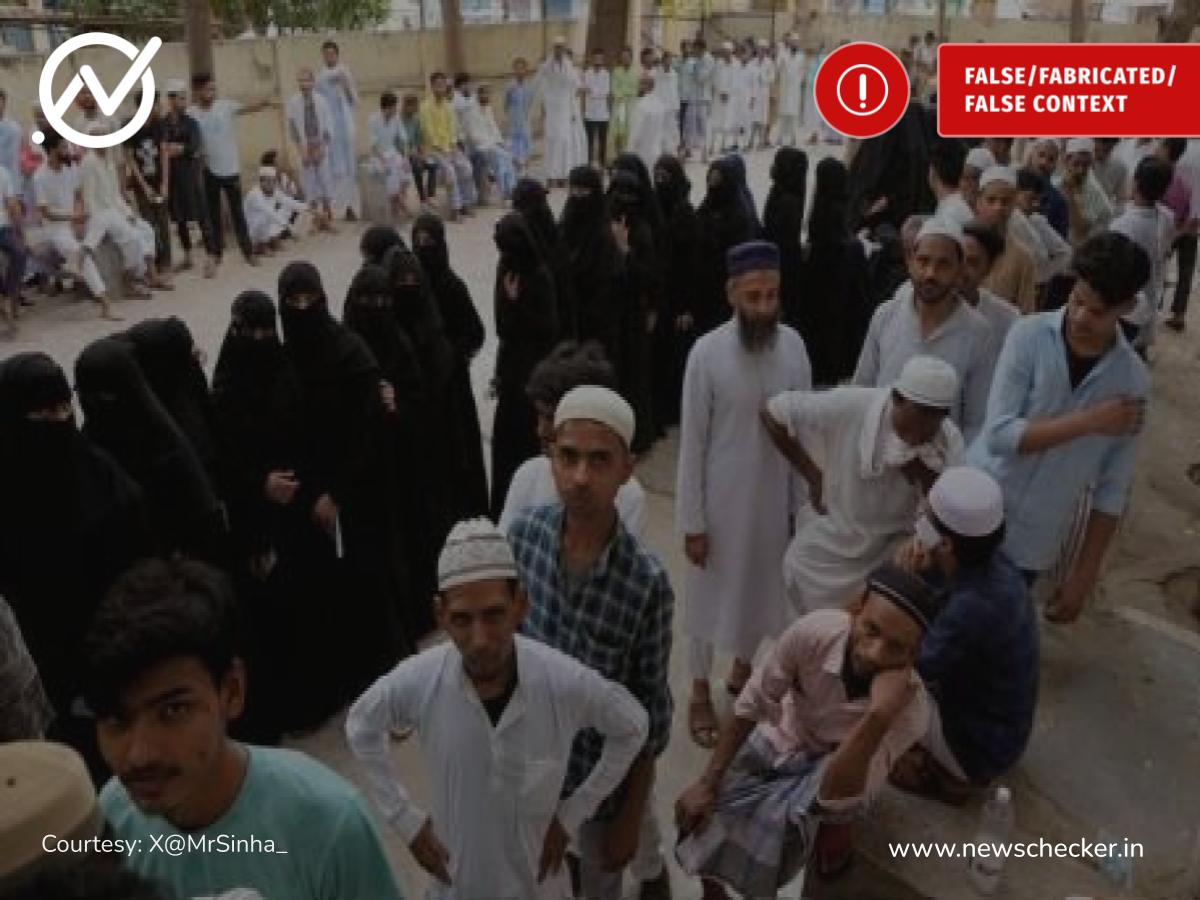
A viral social media image purporting to show Muslim voters queuing at a polling station during the recent Brihanmumbai Municipal Corporation (BMC) elections is spreading false information online, fact-checkers have confirmed.
The photograph, which depicts a large group of Muslim men and women standing in line to vote, has been circulating with captions falsely claiming it shows Muslim voters turning out en masse for candidates Uddhav Thackeray and Raj Thackeray during the January 15, 2026, BMC elections. The posts frequently include divisive rhetoric about “vote jihad,” seemingly attempting to stoke communal tensions.
Verification efforts have revealed the image actually dates back to the 2024 Indian general elections and was taken in Varanasi during the final phase of voting on June 1, 2024. The photograph was captured by Associated Press photographers and later featured in an Al Jazeera article about the national elections published on June 5, 2024.
The original AP caption clearly states: “Muslims stand in queues to cast their votes in the seventh and final phase of national elections, in Varanasi, India, Saturday, June 1, 2024. Indians began voting Saturday in the last round of a six-week-long national election that is a referendum on Hindu nationalist Prime Minister Narendra Modi’s decade in power.”
The same image can also be found on the stock photography platform Alamy, where it is properly cataloged as being from the 2024 Lok Sabha elections, not from any municipal contest.
The misleading posts appear designed to create a false narrative around voting patterns in the recently concluded BMC elections, where the BJP-led Mahayuti alliance secured a decisive victory. The coalition won 25 of 29 municipal corporations across Maharashtra, including the prestigious BMC, where they gained 118 seats in the 227-member body, comfortably crossing the majority threshold of 114.
This victory marked a significant political shift in Mumbai’s municipal governance, ending the Thackeray family’s nearly three-decade-long influence over the city’s civic body. The BMC, India’s richest municipal corporation with an annual budget exceeding Rs 45,000 crore, has long been considered a power center in Maharashtra politics.
Political analysts note that misleading social media campaigns often intensify after significant electoral shifts. “When traditional power structures change hands, we frequently see an uptick in divisive content online,” explained Dr. Sanjay Mehta, a political communication researcher at Mumbai University. “These fabricated narratives attempt to create simplified explanations for complex electoral outcomes by scapegoating specific communities.”
Digital rights activists have expressed concern about the increasing frequency of such misinformation. “Using old images from entirely different contexts to push communal narratives has become a common tactic,” said Priya Sharma, who leads a media literacy initiative in Mumbai. “It’s particularly troubling when these false narratives target religious minorities and attempt to portray their democratic participation in a negative light.”
This incident represents a broader pattern of election-related misinformation that has plagued Indian social media in recent years. Fact-checkers recommend that users verify images through reverse image searches before sharing politically charged content, especially when it contains communal overtones.
The circulation of such misleading content highlights the challenges facing voters, election authorities, and technology platforms in combating the spread of false information during and after electoral processes, and underscores the importance of media literacy in India’s digital ecosystem.
Fact Checker
Verify the accuracy of this article using The Disinformation Commission analysis and real-time sources.

14 Comments
This highlights the importance of media literacy and verifying information before sharing. I appreciate the diligence of the fact-checkers in tracing the origins of this misleading photo. Robust election integrity is vital for democracy.
Agreed. Fact-checking efforts like this help combat the spread of disinformation and ensure citizens have accurate information to make informed decisions at the ballot box.
The use of divisive rhetoric and attempts to sow communal tensions around elections are deeply concerning. I’m glad the fact-checkers were able to trace the origins of this misleading photo and debunk the false claims. Maintaining the integrity of the electoral process is crucial for a healthy democracy.
Well said. Addressing the spread of misinformation and ensuring fair, inclusive elections is an ongoing challenge. Robust fact-checking and public awareness campaigns are vital to counter such tactics and uphold democratic values.
Misinformation around elections is a serious concern that requires a multifaceted approach. Education, media literacy, and collaboration between platforms, fact-checkers, and election officials are all important in safeguarding the integrity of the democratic process.
Well said. Addressing the spread of election-related disinformation is a complex challenge that demands a coordinated effort from various stakeholders. Fact-checking is a crucial first step, but more comprehensive solutions are needed.
Interesting fact-check, it’s concerning how misinformation can spread so quickly online. I’m curious to learn more about the role of social media in influencing election narratives, especially around sensitive issues like voter turnout and community representation.
You raise a good point. Careful monitoring and fact-checking of social media posts during elections is crucial to prevent the spread of misleading information that could inflame tensions.
The use of divisive rhetoric around “vote jihad” is quite troubling. This type of inflammatory language can dangerously polarize communities and undermine the democratic process. It’s crucial that media outlets and platforms remain vigilant against such tactics.
Absolutely. Weaponizing language to sow discord is a tactic we’ve seen time and again. Maintaining impartiality and fostering mutual understanding is key to healthy democratic discourse.
This case highlights the challenges of verifying the authenticity of online content, especially around sensitive political issues. I’m glad the fact-checkers were able to trace the origins of this misleading photo and set the record straight.
Yes, the diligence of the fact-checking process is commendable. Identifying the original source and context of the image is critical to debunking misinformation and restoring public trust.
This incident underscores the need for vigilance and critical thinking when consuming online content, especially around sensitive political topics. I appreciate the detailed investigation by the fact-checkers to uncover the true origins of this misleading photo.
Absolutely. Fact-checking and media literacy are essential skills for citizens to navigate the information landscape and make informed decisions. Kudos to the disinformation commission for their thorough work on this case.