


Listen to the article
Growing tensions in Letterkenny have escalated on social media platforms as misleading claims about a “Mega Mosque” development circulate online, stoking community division and prompting officials to address widespread misinformation.
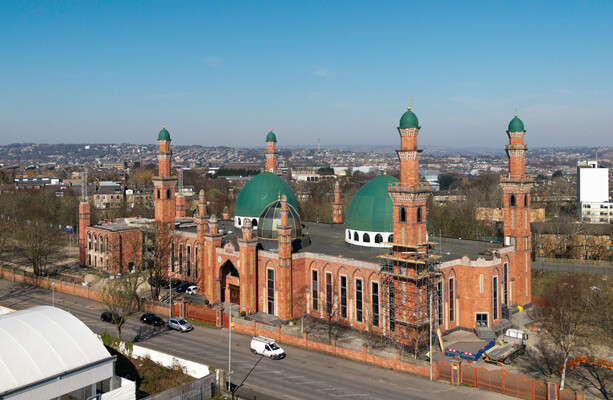
The controversy centers around plans submitted by the Donegal Islamic Association to develop a community center on the Port Road in Letterkenny. Multiple posts across Facebook and TikTok have characterized the project as a “Mega Mosque” that would fundamentally alter the character of the town, with some posts featuring manipulated images showing massive domed structures and minarets imposed on the Letterkenny skyline.
An investigation into the planning application reveals a significantly more modest proposal. Documents filed with Donegal County Council outline plans for a community center with prayer facilities rather than the large-scale religious complex portrayed in social media posts. The two-story building would include a community hall, prayer rooms, offices, and educational spaces—standard features in many community centers throughout Ireland.
“What we’re seeing is a deliberate mischaracterization of a community facility to generate fear and opposition,” explained Dr. Emma Walsh, a researcher specializing in media disinformation at Dublin City University. “The manipulated images showing massive structures with multiple domes bear no resemblance to the actual architectural plans submitted.”
The Donegal Islamic Association has maintained a presence in Letterkenny for over 15 years, with approximately 500 members currently using a converted house as their community space. The association cites overcrowding as the primary motivation for seeking new facilities.
Imam Hassan Ghafoor, representing the association, expressed concern about the misinformation campaign. “Our community has been part of Letterkenny for many years. We simply need appropriate space for our growing community to gather, pray, and hold educational and cultural events—just like any other community group would.”
Local politicians have stepped into the fray, with Councillor Michael McBride calling for calm and rational discussion. “It’s important that residents engage with the actual planning application rather than responding to exaggerated claims on social media. The council’s planning process is transparent and allows for legitimate concerns to be raised through proper channels.”
The controversy reflects broader tensions seen across Europe, where mosque developments have frequently become flashpoints for debates about immigration, integration, and religious freedom. Ireland has experienced significant demographic changes in recent decades, with the Muslim population growing from approximately 19,000 in 2002 to over 70,000 according to the 2016 census.
Urban planning experts note that religious buildings often face heightened scrutiny compared to other developments. “Places of worship, particularly for minority faiths, tend to attract disproportionate opposition,” said Professor Thomas Byrne of University College Dublin’s School of Architecture. “We see similar patterns across different countries, where standard planning considerations become politicized when connected to certain religious or cultural communities.”
The Donegal County Council is currently reviewing the application according to standard planning procedures, which include assessments of traffic impact, parking provisions, and compatibility with surrounding buildings. The council has received several objections to the development, along with statements of support.
Digital misinformation specialists have identified the controversy as following familiar patterns of online manipulation. “We often see local planning disputes amplified through social media with deliberate distortion,” noted Claire Higgins of the Irish Media Literacy Network. “Images are manipulated, scale is exaggerated, and the result is a false narrative that spreads rapidly through communities.”
Community leaders have called for dialogue between different groups in Letterkenny to address concerns and combat misinformation. Local interfaith initiatives are planning information sessions to facilitate understanding between different religious communities in the town.
As the planning process continues, authorities urge residents to consult official documents rather than relying on social media posts for information about the proposed development. The council’s decision is expected in the coming weeks, following standard evaluation procedures applied to all community development projects.
Fact Checker
Verify the accuracy of this article using The Disinformation Commission analysis and real-time sources.

10 Comments
It’s disappointing to see how easily false narratives can take hold these days. While people may have concerns, the facts indicate this is a fairly routine community center proposal, not the ‘mega mosque’ some are claiming. Constructive dialogue is better than inflaming tensions.
Agreed. Spreading misinformation, even inadvertently, can have real consequences in terms of community cohesion. It’s good the authorities are proactively addressing the false claims to provide accurate information.
Misinformation and exaggerated claims can be very damaging, especially when they involve community developments. It’s good to see the authorities clarifying the details of this modest community center proposal to counter the ‘mega mosque’ narrative.
Absolutely. Providing accurate information and context is essential to prevent unfounded rumors from taking hold and stoking unnecessary tensions. Responsible reporting and fact-checking are so important in these situations.
This story highlights the importance of responsible reporting and fact-checking, especially around sensitive community issues. The reality seems to be a modest community center proposal, not the ‘mega mosque’ portrayed in some social media posts.
You’re right. Distorted portrayals and unsubstantiated rumors can quickly spiral out of control online. Maintaining open and honest dialogue, based on facts, is crucial for addressing genuine community concerns constructively.
It’s concerning to see how misinformation can spread and escalate community tensions. The facts suggest the proposed development is a modest community center, not a ‘mega mosque’ as some have claimed. Fact-checking is important to avoid stoking unnecessary division.
Agreed. Misleading claims and manipulated images can really inflame emotions around sensitive issues like this. It’s good the authorities are addressing the misinformation directly.
This highlights the need for greater media literacy and fact-checking, especially around topics that can be politically charged. The reality seems to be a fairly standard community center proposal, not the grandiose ‘mega mosque’ portrayed online.
Absolutely. Social media amplifies misinformation very quickly, so it’s important to verify claims before reacting or spreading them further. Transparency from officials is key to countering unfounded rumors.