


Listen to the article
AI-Generated Image Falsely Claims to Show Plane Attack Following Cartel Leader’s Death
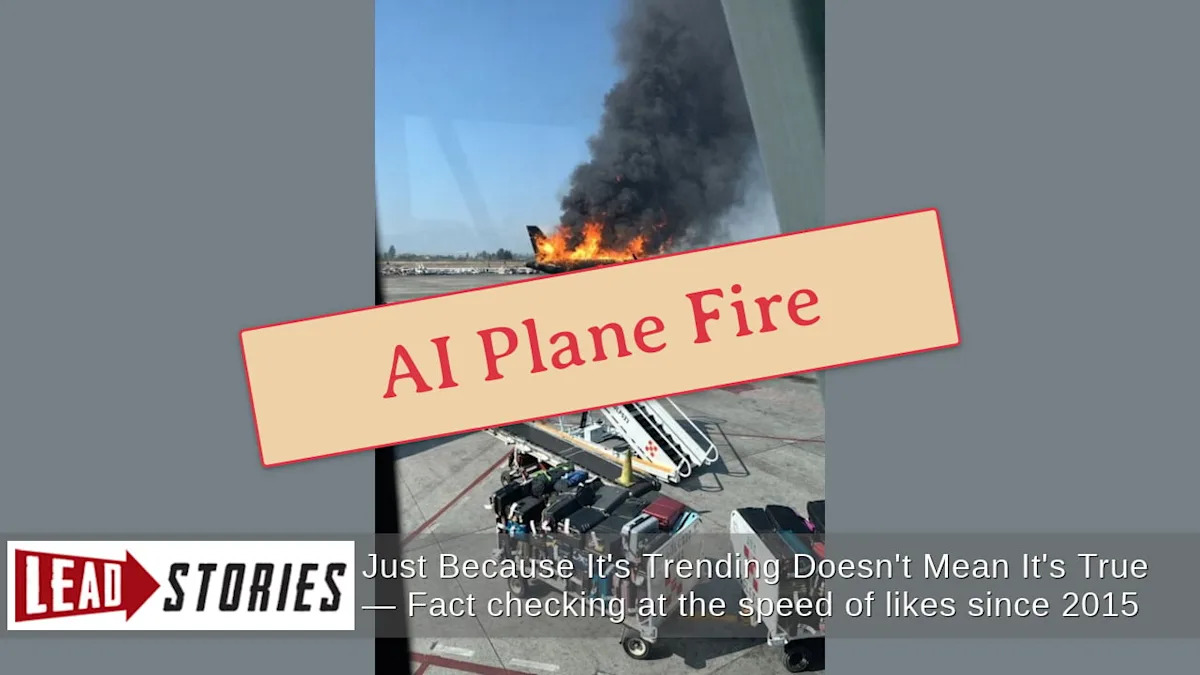
Reports of a plane being set on fire as retaliation for the killing of a Mexican cartel leader have been debunked as fabricated content. Analysis shows the widely shared image was almost certainly created using artificial intelligence, not a photograph of an actual incident.
Digital forensic examination of the purported photo—which claimed to show an airplane ablaze following the February 22 death of Jalisco New Generation Cartel leader Ruben “Mencho” Oseguera Cervantes—revealed its artificial origins. When processed through the Hive Moderation AI detection tool, the system determined with 93.2% certainty that the image was AI-generated.
The fabricated image spread rapidly across social media platforms, particularly on X (formerly Twitter), where it was shared with inflammatory captions suggesting it represented a terrorist attack by cartel members. One prominent post questioned: “Will this finally make them accept that drug traffickers are terrorists?”
The false claim emerged amid legitimate concerns about retaliatory violence following the Mexican military operation in Tapalpa, Jalisco, that resulted in Oseguera Cervantes’ death. Mexico’s National Secretary of Defense confirmed the operation on February 22, stating that four cartel members were killed during the confrontation, including Oseguera Cervantes, with three others dying from injuries while being transported to Mexico City.
The high-profile killing did trigger authentic retaliatory actions across parts of Mexico, primarily involving burned buses and roadblocks near several airports. However, Mexico’s Federal Civil Aviation Agency (AFAC) issued a statement confirming that while some international flights were diverted as a precautionary measure due to these disturbances, no commercial aircraft had been targeted or attacked.
“The airports continue to operate normally,” the AFAC stated, noting that security agencies were coordinating to “guarantee the safety of operations and all users.” The agency also confirmed that Emergency Operations Centers at each airport were following established security protocols.
The circulation of this AI-generated image highlights the growing challenge of misinformation during crisis events. Sophisticated AI image generation tools can now create highly convincing fake imagery that appears authentic to casual observers, particularly when shared alongside genuine news developments.
Law enforcement and aviation security experts have expressed concern about such fabrications, noting they can cause unnecessary public panic and complicate official response efforts during actual security incidents. The false claim also risked inflaming tensions during an already volatile situation following the cartel leader’s death.
The Jalisco New Generation Cartel, which Oseguera Cervantes led, has been one of Mexico’s most powerful and violent criminal organizations, controlling drug trafficking routes and engaging in numerous conflicts with rival cartels and government forces. The group’s activities have significantly contributed to Mexico’s ongoing struggle with organized crime and violence.
As authorities continue monitoring potential retaliation following the cartel leader’s death, officials have urged the public to rely on official information channels rather than unverified social media content, particularly during developing security situations where misinformation can spread rapidly.
Fact Checker
Verify the accuracy of this article using The Disinformation Commission analysis and real-time sources.

16 Comments
This incident underscores the importance of verifying the authenticity of online content, especially when it comes to sensitive issues like cartel violence. Responsible reporting and transparency from authorities are key to maintaining public trust.
Agreed. The ability to create realistic-looking AI-generated images poses new challenges, but developing robust digital forensic capabilities and promoting media literacy are crucial steps to combat the spread of disinformation.
The rapid spread of this fabricated image on social media highlights the ongoing challenge of combating the proliferation of disinformation online. Fact-checking and digital forensics are vital tools in these situations.
Indeed. As AI-generated content becomes more convincing, the need for enhanced media literacy and critical thinking skills among the public is paramount to avoid falling victim to manipulative misinformation campaigns.
The use of AI-generated imagery to spread false narratives is concerning. While technology can be a powerful tool, it’s vital that we remain vigilant and scrutinize online content, especially around issues of public safety and security.
Well said. The ability to create convincing fake images using AI is a double-edged sword that requires thoughtful responses from platforms, policymakers, and the public.
Disinformation around cartel-related violence is a serious concern, and the use of AI-generated imagery to spread false narratives is particularly troubling. Maintaining trust in information sources is crucial during these sensitive situations.
Absolutely. Responsible reporting and transparency from authorities are essential to counter the spread of misinformation and prevent further escalation of tensions.
Interesting to see how quickly misinformation can spread online, especially around sensitive topics like cartel violence. It’s important to verify claims and sources before sharing potentially inflammatory content.
Agreed. Digital forensics play a crucial role in debunking fabricated images and curbing the spread of disinformation. Fact-checking is essential in these cases.
This highlights the importance of critical thinking and media literacy in the digital age. Verifying information sources and being cautious about sensational claims is key to avoiding the spread of misinformation.
Absolutely. As technology advances, it’s crucial that we develop the skills to discern fact from fiction online. Fact-checking and source verification should be second nature.
The ability to create realistic-looking AI-generated images is a double-edged sword. While the technology has many beneficial applications, it also presents new challenges in verifying the authenticity of online content.
This incident demonstrates the need for robust digital forensic capabilities and proactive fact-checking to stay ahead of the curve as AI-based manipulation techniques become more sophisticated.
It’s concerning to see how easily fabricated images can go viral and potentially incite further violence or unrest. Responsible reporting and digital forensics are essential to combat the spread of disinformation.
Agreed. Fact-based journalism and transparency from authorities are crucial in these situations to prevent the propagation of false narratives that could escalate tensions.