


Listen to the article
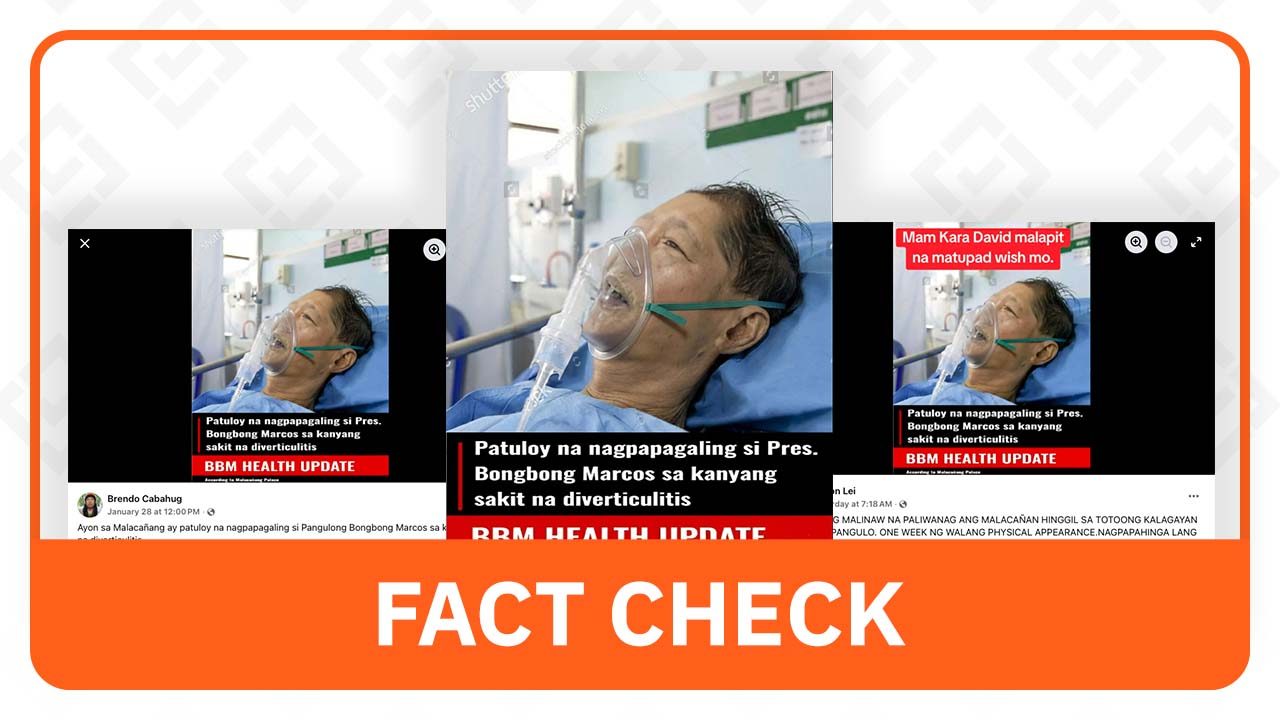
The image purportedly showing Philippine President Ferdinand Marcos Jr. on a ventilator has been confirmed as a fabrication, as health misinformation continues to spread on social media platforms amid legitimate concerns about the leader’s recent hospitalization.
A widely shared Facebook post claimed to show Marcos lying in a hospital bed connected to a ventilator, with accompanying text suggesting he was recovering from diverticulitis. The post, which garnered over 4,600 reactions and was shared more than 400 times, falsely implied the update came directly from Malacañang Palace.
Multiple AI detection tools, including Sensity and Sightengine, identified the image as artificial with confidence ratings of 98-99%, confirming suspicions that the photo had been digitally generated to create a false impression about the President’s condition.
The fabricated image began circulating shortly after Marcos’ brief hospitalization on January 21 at St. Luke’s Medical Center in Quezon City. While the President was indeed admitted for what officials described as “medical observation as a precautionary measure” following reports of discomfort, he was subsequently diagnosed with diverticulitis—an inflammation of pouches that can form in the intestinal wall—and was discharged shortly thereafter.
In response to the spreading misinformation, the Presidential Communications Office (PCO) released video footage on January 28 showing Marcos in good health, stating that he was “doing well in his recovery.” Palace officials have since confirmed that the President has resumed his duties, emphasizing there was “no cause for concern” that would necessitate issuing a formal medical bulletin.
This episode marks the latest in a series of false claims regarding Marcos’ health that have circulated on social media. St. Luke’s Medical Center also issued a public advisory denouncing purported medical documents about the President’s condition that appeared online, describing them as “fake and falsified.” The hospital emphasized its commitment to patient confidentiality and data privacy standards.
Health misinformation targeting political figures has become increasingly common globally, with AI-generated content presenting new challenges for fact-checkers and government communications teams. The sophisticated nature of such fabricated content can make it difficult for average social media users to distinguish between authentic and manipulated imagery.
The proliferation of such content highlights broader concerns about information integrity in the Philippines, where social media plays a significant role in shaping public discourse. Media literacy experts note that health-related misinformation can be particularly damaging, as it exploits legitimate public interest in leadership stability.
Government officials continue to urge citizens to verify information through official channels and remain vigilant against misleading content. The Presidential Communications Office maintains active social media accounts where official updates on the President’s activities and condition are regularly posted.
For Marcos’ administration, tackling this wave of health-related misinformation represents both a communications challenge and a reminder of the importance of transparent health disclosures for public officials, balancing privacy concerns with the public’s right to information about their leaders’ wellbeing.
Fact Checker
Verify the accuracy of this article using The Disinformation Commission analysis and real-time sources.

13 Comments
This is a concerning example of how AI-generated content can be used to mislead the public. It’s a good reminder to always verify the authenticity of information, especially when it comes to important matters like a leader’s health.
Absolutely. Spreading unverified claims can have serious consequences, so it’s crucial that we all strive to be responsible and discerning consumers of news and information.
While it’s understandable to be curious about a leader’s health, spreading unverified claims can do more harm than good. I’m glad the authorities were able to quickly debunk this fabricated image.
Agreed. In the age of misinformation, it’s crucial that we all strive to be responsible and discerning consumers of news and information, especially when it comes to sensitive topics like public health.
The use of AI-generated content to spread misinformation about the President’s health is concerning. It’s important to rely on official sources and verified information to avoid contributing to the spread of false claims.
This is a concerning example of how AI-generated content can be used to spread disinformation. It’s a good reminder to always verify the source and authenticity of any information, especially when it comes to public figures.
I’m glad the authorities were able to quickly identify this image as a fabrication. Spreading false information about a public figure’s health can have serious consequences, so it’s important to always fact-check before sharing.
Absolutely. In the age of misinformation, it’s crucial that we all strive to be responsible and discerning consumers of news and information, especially when it comes to sensitive topics like public health.
This is concerning that an AI-generated image was used to spread misinformation about the President’s health. It’s important to rely on official sources and verified information when it comes to public figures’ medical conditions.
Absolutely. Spreading unverified claims, especially related to someone’s health, can be very damaging. I’m glad the authorities were able to quickly debunk this fabricated image.
The fabrication of this hospital bed photo is concerning. While it’s understandable to be curious about a leader’s health, spreading unverified claims can do more harm than good.
It’s good that AI detection tools were able to identify this image as artificial. Spreading disinformation, especially about a leader’s wellbeing, is irresponsible and can erode public trust.
Agreed. With the rise of deepfakes and other AI-generated content, it’s crucial that we remain vigilant and rely on credible sources when it comes to important news and information.