


Listen to the article
Factory Construction Under Trump Shows Decline Despite Claims of 41% Growth
Manufacturing construction spending in the United States has fallen since President Donald Trump returned to office, contradicting his repeated public claims of a 41% increase in factory construction, according to data from the U.S. Census Bureau.
In a January 20 White House press conference, Trump declared, “Investment in American factories is up 41%. That’s a record. Nobody goes 41% up. You go 2% up, 1% up. You go down by 3%.” He repeated similar claims at the World Economic Forum in Davos, Switzerland the following day, positioning this purported growth as evidence of his administration’s economic success.
However, Census Bureau data tells a different story. Manufacturing construction spending has actually declined 6.7% under Trump, measuring from the last quarter of 2024 through the third quarter of 2025. Monthly data shows a 7.3% decline in spending from January through October 2025, the most recent period for which figures are available.
This downturn follows a remarkable surge during President Joe Biden’s administration. During Biden’s four years in office, manufacturing construction spending increased by more than 200%, rising from $75.5 billion to $235.6 billion on an annual average basis. The most dramatic jump came in 2023, when spending surged 62% year-over-year.
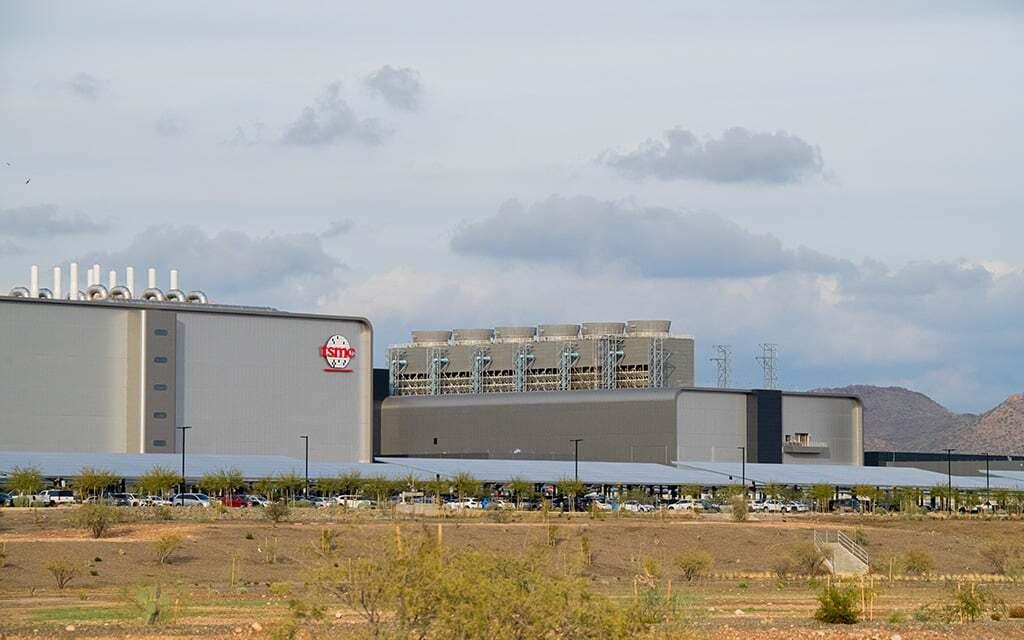
Analysts attribute Biden-era growth primarily to legislation designed to boost domestic manufacturing. The bipartisan CHIPS Act, signed in August 2022, provided $39 billion to fund semiconductor manufacturing facilities in the United States. This initiative sparked a wave of construction for “megaprojects” that continues to influence spending levels today.
“Supply chain disruptions at the start of the COVID-19 pandemic convinced many producers to reshore capacity, while a sudden and sharp increase in construction materials prices—which rose more than 40% during the early years of the pandemic—also boosted nominal construction spending,” explained Anirban Basu, chief economist for the Associated Builders and Contractors.
When asked to clarify the 41% statistic, the White House provided a methodology that compared the monthly average of January through August 2025 with the annual average of Biden’s entire four-year term. This approach fails to acknowledge that spending actually peaked under Biden and has been declining under Trump.
Industry experts anticipate this downward trend will continue. The American Institute of Architects’ consensus construction forecast, published in January, projects manufacturing construction spending will decline another 4% this year and 1% in 2027. Basu attributes this recent decline partly to Trump’s tariff policies, which have increased costs for materials like fabricated metal.
“With CHIPS Act-enabled megaprojects winding down and the stiff headwind of trade policy, manufacturing construction spending has fallen by nearly 10% over the past 12 months,” Basu noted in an industry press release.
The manufacturing employment picture adds further complexity. The economy lost 63,000 manufacturing jobs in Trump’s first 11 months, following a loss of 98,000 in the preceding 11 months, according to Bureau of Labor Statistics data.
Some analysts remain optimistic about future prospects. Morgan Stanley analyst Chris Snyder suggests Trump’s tariffs will eventually create incentives for domestic manufacturing growth. “What we’re seeing is the cost of imports have gone higher with tariffs, and now it’s more economically advisable for these companies to make the product in the United States,” Snyder said in a recent podcast.
However, a January Wall Street Journal article reported that Trump’s tariffs “haven’t worked, so far” and have instead increased manufacturers’ costs for foreign parts. The article described the administration’s “stop-and-start” tariff policy announcements as creating “what many executives view as a lost year for investment.”
Even Trump himself has acknowledged uncertainty about when promised investments might materialize. In a December interview, he stated, “I can’t tell you. I don’t know when all of this money is going to kick in,” suggesting results might appear in the second quarter of this year.
While the future trajectory of manufacturing construction remains uncertain, the current data contradicts claims of significant growth under Trump’s leadership. The 41% figure he cites relies on spending momentum created during the previous administration rather than reflecting current economic conditions.
Fact Checker
Verify the accuracy of this article using The Disinformation Commission analysis and real-time sources.

12 Comments
This article highlights the need to fact-check political statements, especially related to economic performance metrics. It’s crucial to have an impartial, data-driven understanding of the situation.
Absolutely. Fact-checking is essential to hold leaders accountable and ensure the public has access to reliable information.
This article is a good reminder that we should be wary of political rhetoric and instead focus on the objective data when evaluating economic performance. Fact-checking is essential for maintaining an accurate, unbiased understanding of the situation.
Agreed. It’s concerning when leaders make claims that are not supported by verifiable data. Transparency and accountability should be the priority when it comes to economic policy and outcomes.
This report underscores the value of objective, government-sourced data when analyzing economic performance. It’s a reminder not to blindly accept political claims, but to scrutinize them against credible statistical evidence.
Well said. Fact-checking and data-driven analysis should be the foundation for discussions around economic policy and outcomes.
Interesting to see the data contradicts Trump’s claims about manufacturing construction spending during his administration. It’s important to rely on objective government statistics rather than political rhetoric.
Agreed, the Census Bureau data provides a more accurate picture of the trends. It’s concerning when leaders make unsupported claims about the economy.
The discrepancy between Trump’s statements and the Census Bureau’s figures on manufacturing construction spending is concerning. It highlights the importance of verifying claims, especially those related to economic metrics, before accepting them as fact.
Absolutely. Relying on authoritative, nonpartisan data sources is crucial for understanding the true state of the economy and making informed decisions.
The decline in manufacturing construction spending during the Trump administration is an important data point, even if it contradicts the president’s rhetoric. I’m curious to learn more about the underlying factors behind this trend.
Good point. Understanding the broader economic context and drivers behind the spending decline would provide useful insights beyond just the headline numbers.