


Listen to the article
AI-Generated “Tongue Condom” Ad Sparks Confusion as Fake Product Goes Viral
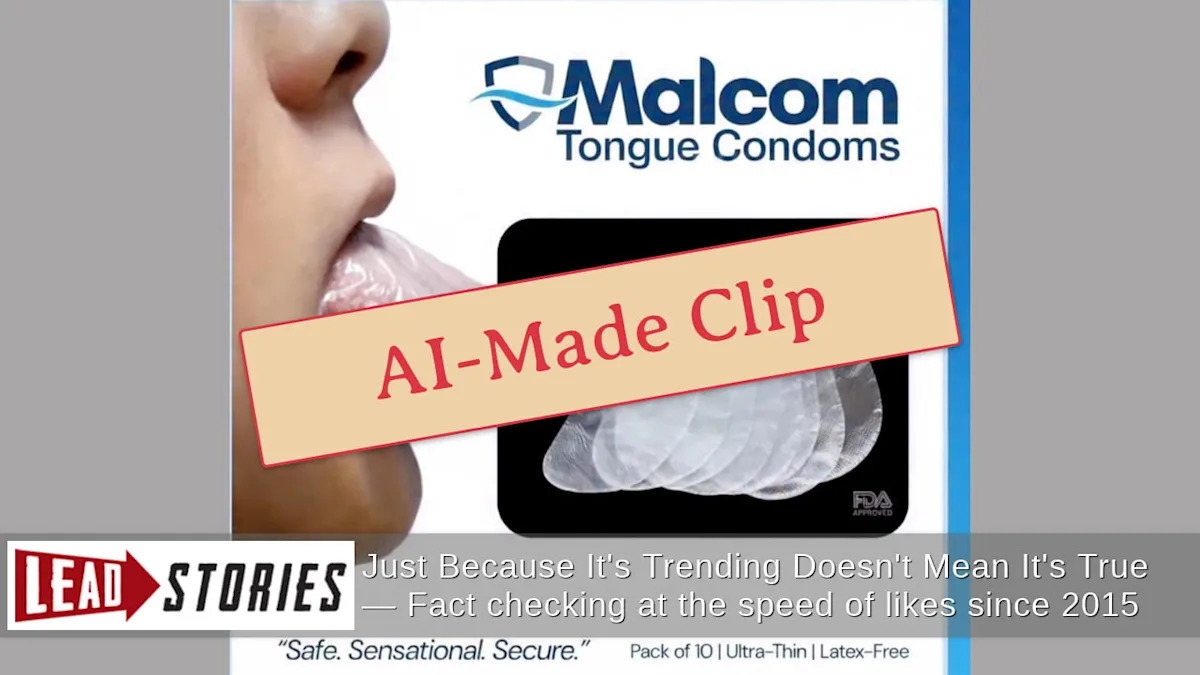
A video advertisement purporting to showcase “Malcom tongue condoms” has been circulating widely on social media platforms, prompting questions about the existence of such a product. Fact-checking efforts have confirmed that the ad is completely fabricated—an AI-generated creation with no basis in reality.
The video, which began spreading online in mid-March 2026, features a polished commercial-style presentation complete with a professional voiceover declaring: “Safe, sensational, secure. Malcom thin and high-tech [inaudible], they deliver maximum sensation. Available in packs of 10. Malcom tongue condoms — for confident intimacy.”
The clip caught attention when it was reshared with the caption: “Check out this ad for tongue condoms. A thin sheet of protective material placed between the mouth and the intimate area. They help reduce the risk of transmission of various sexually transmitted infections. Have you ever seen one of these?”
Multiple factors reveal the fraudulent nature of this supposed product launch. Most notably, the packaging shown briefly at the end of the video contains illegible gibberish text—a common telltale sign of AI-generated imagery. The video also features a small “FDA approved” watermark, despite no such product having ever received FDA clearance or being listed in the agency’s database of approved medical devices.
Sexual health experts point out that while oral barrier protection does exist in the form of dental dams—thin latex or polyurethane sheets placed over the genitals during oral sex—the specific product portrayed in the video does not exist on the market. In the United States, condoms are classified as medical devices requiring Food and Drug Administration clearance before they can be legally sold.
Multiple AI-detection tools have analyzed the video, with overwhelming consensus pointing to artificial generation. Hivemoderation.com’s analysis estimated a 76.1-99.8% likelihood the content was AI-generated. DeepFake-o-Meter placed the odds between 51.6-99.9%, while Sightengine rated it at 95% probability of being AI-created. When the audio was tested separately via InVid’s Hiya tool, results showed a 99% likelihood of artificial creation.
The original source of the misleading content has been traced to an Instagram account operating under the handle “am.malcom,” which is identified as a digital creator’s account rather than a legitimate condom manufacturer. The account published the initial version on March 13, 2026, followed by another variation two days later.
Public health officials express concern about the potential for such convincing fake advertisements to spread misinformation about sexual health. Dr. Elaine Chen, a public health researcher specializing in STI prevention, notes that “while dental dams are important barrier methods that deserve more awareness, fabricated products can create confusion about legitimate protection options available to consumers.”
The incident highlights the growing challenge of distinguishing between authentic product launches and sophisticated AI creations on social media. As AI-generated content becomes increasingly realistic, experts recommend consulting official FDA databases and legitimate sexual health organizations when encountering unfamiliar health products online.
For those seeking actual oral barrier protection, dental dams remain the FDA-approved option and are available through healthcare providers and many retailers that sell sexual health products.
Fact Checker
Verify the accuracy of this article using The Disinformation Commission analysis and real-time sources.

12 Comments
Well, that’s a new one. A “tongue condom” – what will they think of next? Glad the fact-checkers were able to quickly determine this is a completely fabricated product with no basis in reality.
Yeah, the level of detail in the ad is almost impressive, but the lack of any real information is a dead giveaway. Good work exposing this as a hoax before it could spread further.
Haha, a “tongue condom”? That’s a new one. Clearly an absurd product that no sane person would actually try to manufacture and sell. Good to see the truth was exposed on this one.
Absolutely. The whole concept is just laughable. Definitely a prime example of why we need vigilant fact-checking to identify and debunk these kinds of completely made-up viral stories.
Wow, a tongue condom? That’s one strange product I’ve never heard of before. Definitely sounds like a complete fabrication if no such item actually exists.
I agree, this seems to be a classic case of an AI-generated fake ad going viral. No legitimate company would market a product like that.
Wow, a “tongue condom” – that’s a new one! Definitely sounds like a complete fabrication, good thing the fact-checkers were on top of this and were able to confirm it’s not a real product.
Agreed, the name alone is a huge red flag. Kudos to the disinformation commission for looking into this and setting the record straight. Important to stay vigilant about these kinds of viral hoaxes.
I’m not surprised this turned out to be fake. Anything labeled as a “tongue condom” just sounds like a made-up, clickbait-y product. Appreciate the diligence in debunking these types of viral hoaxes.
Agreed, the name itself is a red flag. Glad the fact-checkers were able to confirm it’s completely fabricated with no basis in reality. Kudos to them for setting the record straight.
Good catch by the fact-checkers. It’s important to be skeptical of unusual products advertised online, especially when the details seem dubious. Glad they were able to confirm this is just a hoax.
Yeah, the ad looks very polished but the lack of any real information on the packaging is a dead giveaway that it’s not a real product. Curious how it managed to spread so far online though.