


Listen to the article
Lexington officials are defending their snow removal efforts after a complex winter storm left many city streets difficult to navigate. During yesterday’s council work session, Nancy Albright, commissioner of Environmental Quality and Public Works, explained that Lexington faced particularly challenging weather conditions compared to surrounding areas.
“Lexington has a lot more ice. If you went two counties south, they got more rain. If you went two counties to the north, it was almost entirely snow,” Albright told council members.
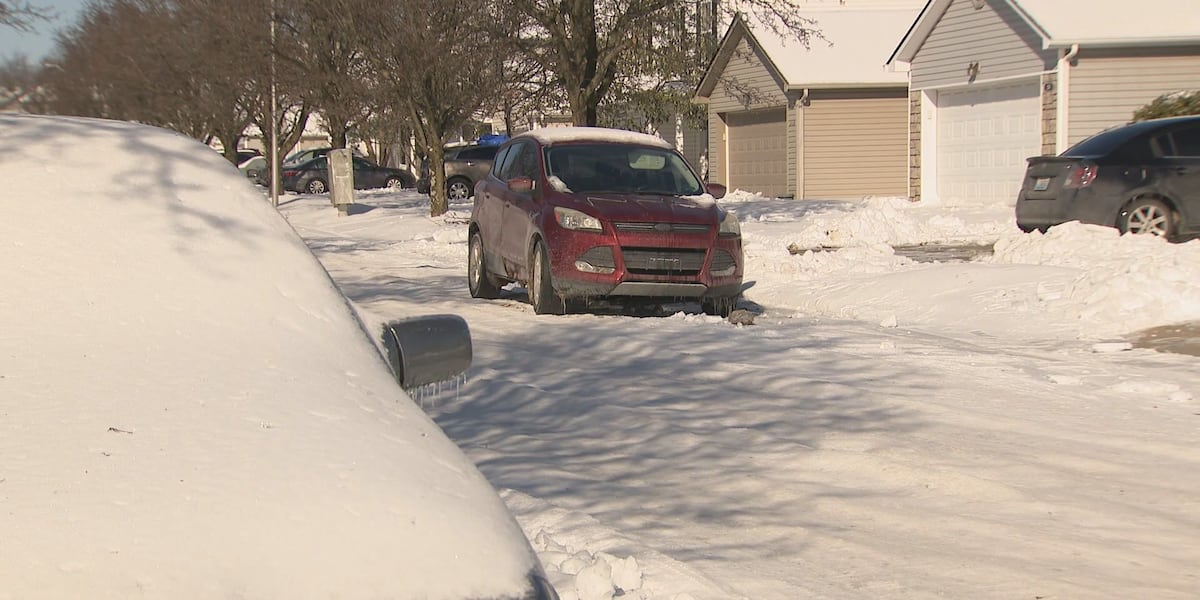
According to Albright, city crews have been battling what she described as one of the most difficult scenarios for road clearing operations – layers of snow and ice bonded together on roadways. This combination creates surfaces that are resistant to traditional plowing techniques and salt application methods.
First Alert Chief Meteorologist Chris Bailey provided weather data during the session to illustrate the storm’s varying impact across the region. Bailey’s graphics showed that Lexington experienced a mix of precipitation types, beginning with sleet and snow before transitioning to freezing rain – a sequence that created multiple frozen layers on roadways.
The meteorological data presented included a color-coded map highlighting areas that experienced a “true ice storm,” with Lexington falling within this critical zone. Bailey explained that the city received an initial round of sleet and snow before freezing rain coated these accumulations, creating a particularly challenging road treatment scenario.
However, the weather analysis presented some contradictions. While city officials emphasized that Lexington received more ice than neighboring counties, meteorological totals indicated that areas two counties south of Fayette County actually experienced greater freezing rain and ice accumulation. This discrepancy raised questions about the comparative difficulty of road clearing operations across the region.
The winter storm’s impact has been felt throughout central Kentucky, with many communities struggling to restore normal transportation conditions. Lexington’s response has drawn particular attention due to its position as the region’s largest urban center with significant commuter traffic and business activity.
Winter weather response has long been a sensitive political issue for municipal governments across Kentucky. Citizens often judge local leadership by how quickly life returns to normal after winter storms, and delays in road clearing can lead to public criticism and questions about resource allocation and preparedness.
Lexington maintains a fleet of snow removal equipment and follows a priority-based system for clearing roads, focusing first on major thoroughfares and emergency routes before addressing secondary and residential streets. The city typically stocks thousands of tons of salt before winter begins and can deploy dozens of vehicles during major weather events.
The layered nature of this particular storm complicated standard clearing procedures. When snow is covered by ice, plows cannot effectively scrape surfaces, and salt works more slowly and less efficiently, especially when temperatures remain below freezing for extended periods.
Weather forecasts indicate temperatures will gradually rise in the coming days, which should assist melting efforts. However, overnight refreezing remains a concern until consistent above-freezing temperatures return to the region.
City officials have asked residents to limit unnecessary travel while crews continue their clearing efforts, particularly on secondary and neighborhood streets that receive lower priority in the city’s snow removal protocol.
The council work session did not result in any specific policy changes regarding winter weather response, but several council members requested additional information about resource allocation and response protocols for future storms.
Fact Checker
Verify the accuracy of this article using The Disinformation Commission analysis and real-time sources.

7 Comments
Interesting to see how local weather conditions can vary so much within a relatively small region. The mix of precipitation types in Lexington does seem to have created some unique challenges for snow removal efforts there.
I’m curious to know more about the specific weather data and graphics that the meteorologist presented. Was there a clear visual illustration of the differences in precipitation types and accumulation between Lexington and the surrounding counties?
That’s a good point. Having detailed weather data and visuals would help provide more context around the unique challenges Lexington faced compared to nearby areas.
I appreciate the city officials being transparent about the challenges they faced and providing the weather data to illustrate the situation. It’s helpful for the public to understand the complexities involved in snow/ice removal efforts, especially during unusual storm conditions.
The news about Lexington experiencing higher ice accumulation than surrounding areas is a good reminder of how local weather patterns can vary significantly, even over relatively small geographic distances. This kind of hyperlocal weather data is important for understanding the unique challenges different communities face.
The differing precipitation patterns across the region, with Lexington experiencing more freezing rain and ice compared to neighboring areas, highlights the need for tailored snow/ice removal strategies. I wonder what best practices Lexington could share with other municipalities facing similar challenges.
It sounds like the combination of snow and ice on the roads in Lexington created a particularly difficult scenario for the city’s plowing and salting operations. I wonder what other techniques or equipment they might be able to utilize to better manage those conditions going forward.