


Listen to the article
CDC Autism Data Misrepresented by HHS Secretary Kennedy, Experts Say
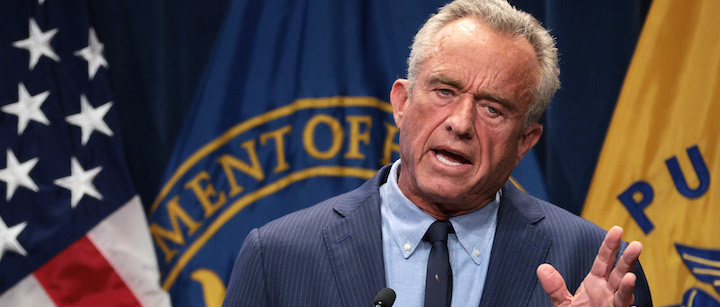
Health and Human Services Secretary Robert F. Kennedy Jr. distorted scientific research when presenting new autism prevalence data from the Centers for Disease Control and Prevention, claiming there is an “epidemic” of autism caused by an “environmental toxin.”
The CDC report released this month found that among 8-year-olds at selected study sites, 1 in 31 had autism in 2022, up from 1 in 36 in 2020. This continues a trend of increasing autism diagnoses over the past two decades.
However, researchers have consistently cautioned against interpreting these rising numbers as proof of a true increase in autism rates. While some actual increase may exist, experts point to broadening diagnostic criteria, increased awareness, universal autism screening by pediatricians, and improved service availability as significant factors driving the statistical rise.
Kennedy dismissed these scientific explanations as “epidemic denial” during his press conference. He made several misleading claims about historical autism studies, incorrectly asserting that a 1970 Wisconsin study had tested “all 900,000 children” in the state when researchers had actually reviewed clinical records using now-outdated diagnostic criteria.
“It’s completely absurd to compare that study’s estimate to current figures,” said Dr. Eric Fombonne, professor emeritus of psychiatry at Oregon Health & Science University. “Certain groups use this study often because it gives them a very low starting point and accentuates the trend.”
Kennedy similarly mischaracterized a 1987 North Dakota study, falsely claiming researchers had conducted “in-person assessments of the entire population of 180,000 children.” In reality, researchers had collected records of children identified with autistic symptoms and assessed approximately 200 children in person.
The HHS secretary also incorrectly claimed that only 10-25% of autism’s increased prevalence could be attributed to better recognition and diagnosis, insisting that “75% to 80% still are part of an epidemic.” Experts say this misrepresents the scientific literature, which has not quantified the cumulative impact of all factors affecting autism rates.
“No study has tried to account for all factors,” explained Maureen Durkin, professor at the University of Wisconsin-Madison School of Medicine and Public Health and co-author of the recent CDC report. She described attempts to precisely quantify these effects as a “dubious exercise.”
The CDC data itself reveals significant geographic disparities that undermine the “epidemic” narrative. In the 2022 data, approximately 1 in 19 children were recorded as having autism at a site in the San Diego area, while just 1 in 103 were recorded in Laredo, Texas.
“Autism doesn’t respect geopolitical borders,” said David Mandell, psychiatric epidemiologist and director of the Center for Mental Health at the University of Pennsylvania. “We are seeing the results of better identification and services in different places.”
Kennedy pointed to an increase in the proportion of autistic children with intellectual disability in recent CDC data as proof of a “real” epidemic. After declining from roughly 50% in 2000 to 31% in 2014, this figure has risen to nearly 40% in 2022.
However, Durkin noted this change “could well be due” to methodological changes in the CDC’s surveillance approach beginning in 2018, which may have captured more cases among populations with higher rates of intellectual disability.
What is clear from research is that autism has a strong genetic component. While certain environmental exposures during pregnancy may contribute to autism risk, and factors like increased parental age and very preterm births may account for some increase over time, experts strongly dispute Kennedy’s assertion that autism is a “preventable disease” caused by an environmental toxin.
“I disagree that the increase in prevalence rates must be due to an environmental toxin,” said psychologist Helen Tager-Flusberg, director of the Center for Autism Research Excellence at Boston University. “Demographic and other sociological factors along with changes in diagnostic criteria and substitution are major factors.”
Kennedy, who has previously promoted the debunked claim that vaccines cause autism, appears to be continuing a pattern of misrepresenting scientific data on the condition in his new role as HHS secretary.
Fact Checker
Verify the accuracy of this article using The Disinformation Commission analysis and real-time sources.

9 Comments
The rise in autism diagnoses is certainly an important trend to monitor, but it seems the factors behind it are more complex than a simple ‘epidemic.’ Broadening criteria, increased awareness, and better access to services all appear to be playing a role according to the experts.
Agree, the experts’ perspective on the multiple factors influencing autism reporting is crucial for understanding the data accurately. Simplistic claims about ‘environmental toxins’ don’t align with the scientific consensus.
Interesting to see the ongoing debate around autism prevalence and causes. While the data shows a rise in diagnoses, experts point to factors like broader criteria and increased screening rather than a true epidemic. Nuance is important when interpreting these complex public health trends.
Agreed, the complexities around autism diagnosis and reporting make it challenging to draw definitive conclusions. Appreciate the experts’ perspective on the various factors at play.
This is a sensitive and politically-charged issue. I’m glad to see the fact-checking focus on accurately representing the scientific evidence, rather than leaping to conclusions. Reliable data and analysis from experts is crucial for understanding trends in autism.
Well said. It’s important to cut through the rhetoric and focus on the nuanced, evidence-based explanations from the research community. Oversimplifying or politicizing these public health issues does a disservice.
While the increases in autism diagnoses are noteworthy, I appreciate the experts cautioning against interpreting them as proof of a true rise in autism rates. The scientific explanations around diagnostic criteria, awareness, and access to services seem more plausible based on the evidence.
Absolutely, nuance and careful analysis of the data are essential when it comes to public health trends like this. Dismissing the experts’ views as ‘epidemic denial’ is counterproductive and doesn’t advance our understanding.
This is a complex issue with a lot of moving parts. I’m glad to see the fact-checking focus on accurately representing the CDC data and the scientific community’s perspectives, rather than sensationalizing the findings. Objective analysis is key when it comes to public health issues.