


Listen to the article
Viral Kashmir Avalanche Video Exposed as AI-Generated Fake
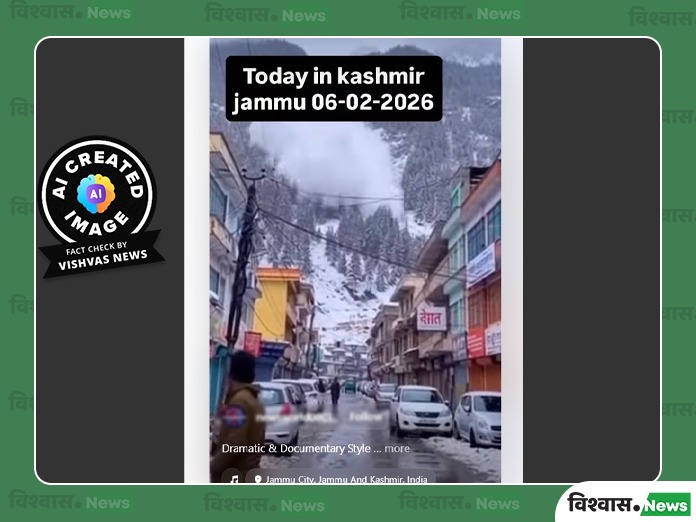
A dramatic video purportedly showing a massive avalanche engulfing people in Kashmir has been confirmed as entirely artificial, according to a thorough investigation by Vishvas News. The footage, which has gained significant traction across social media platforms, was created using artificial intelligence tools rather than capturing any real event.
The video was shared on Instagram by user ‘newsworld0001’ on February 7, 2026, claiming to show a recent avalanche disaster in Kashmir. With over 90,000 followers, the account’s post quickly spread across social media, causing concern among viewers who believed they were witnessing actual footage from a natural disaster.
While Kashmir did experience a real avalanche incident recently, this viral video has no connection to that event. According to NDTV reporting, an actual avalanche occurred in Sonamarg on January 27, 2026, affecting some buildings but fortunately resulting in no casualties. The genuine footage from that incident bears no resemblance to the viral AI-generated content.
Multiple elements in the video raised suspicion during the verification process. Fact-checkers noted that despite the apparent imminent danger of an approaching avalanche, people in the video move unnaturally slowly, showing none of the panic or urgent flight response that would be expected in such a life-threatening situation.
To confirm their suspicions of digital manipulation, investigators employed specialized AI detection tools. The Hive Moderation tool indicated a 99.9% probability that the video was AI-generated, while the Undetectable AI tool assessed a 79% likelihood of artificial creation. These technical analyses provided strong evidence of the video’s fabricated nature.
Further expert consultation removed any remaining doubt. Azhar Machwe, a specialist in artificial intelligence technology, examined the footage and confirmed that AI tools had indeed been used to create the deceptive content.
The spread of such convincingly fake disaster footage highlights growing concerns about AI-generated media in the information ecosystem. As artificial intelligence tools become more sophisticated and widely available, distinguishing between authentic and fabricated content becomes increasingly challenging for the average social media user.
This incident represents a troubling trend in misinformation, where AI-generated content is falsely presented as documentary evidence of real events. Such fabrications can cause unnecessary public alarm, undermine trust in legitimate news sources, and complicate emergency response efforts during actual disasters.
Media literacy experts recommend that viewers approach dramatic disaster footage with healthy skepticism, particularly when the content displays unusual elements or lacks verification from established news organizations. Checking multiple reliable sources before sharing dramatic videos can help prevent the further spread of AI-generated misinformation.
The Kashmir avalanche video joins a growing catalog of sophisticated AI fakes that have gone viral in recent months, demonstrating the evolving challenges facing fact-checkers, journalists, and social media platforms as they attempt to maintain information integrity in the digital age.
Vishvas News has categorically labeled the claim that the viral video shows a real Kashmir avalanche as “False” in their fact-checking assessment, adding another example to the growing body of AI-generated content being misrepresented as authentic footage on social media.
Fact Checker
Verify the accuracy of this article using The Disinformation Commission analysis and real-time sources.

6 Comments
While it’s understandable people would want to share dramatic footage, we have to be careful not to contribute to the spread of false information, even inadvertently. Fact-checking is key before reposting online.
This is a good reminder to always approach online content with a critical eye. Fact-checking is crucial, especially for sensitive topics that could cause undue alarm if the footage is not genuine.
Absolutely. Sharing unverified information, even if it seems dramatic, can have real consequences. I’m glad the authorities were able to confirm this was an AI-generated fake.
This is a concerning trend of AI-generated content being passed off as real. I’m glad the authorities were able to verify the authenticity and stop the spread of this particular piece of misinformation.
I appreciate the diligent investigation that exposed this as an AI-generated hoax. It’s important we stay vigilant against the spread of misinformation, even when the content seems convincing at first glance.
It’s troubling to see AI-generated content being spread as real footage, especially of a serious incident like an avalanche. We need to be vigilant about verifying the authenticity of viral media to avoid spreading misinformation.