


Listen to the article
New Jesus the Redeemer Statue Erected in Lebanon’s Bekaa Valley
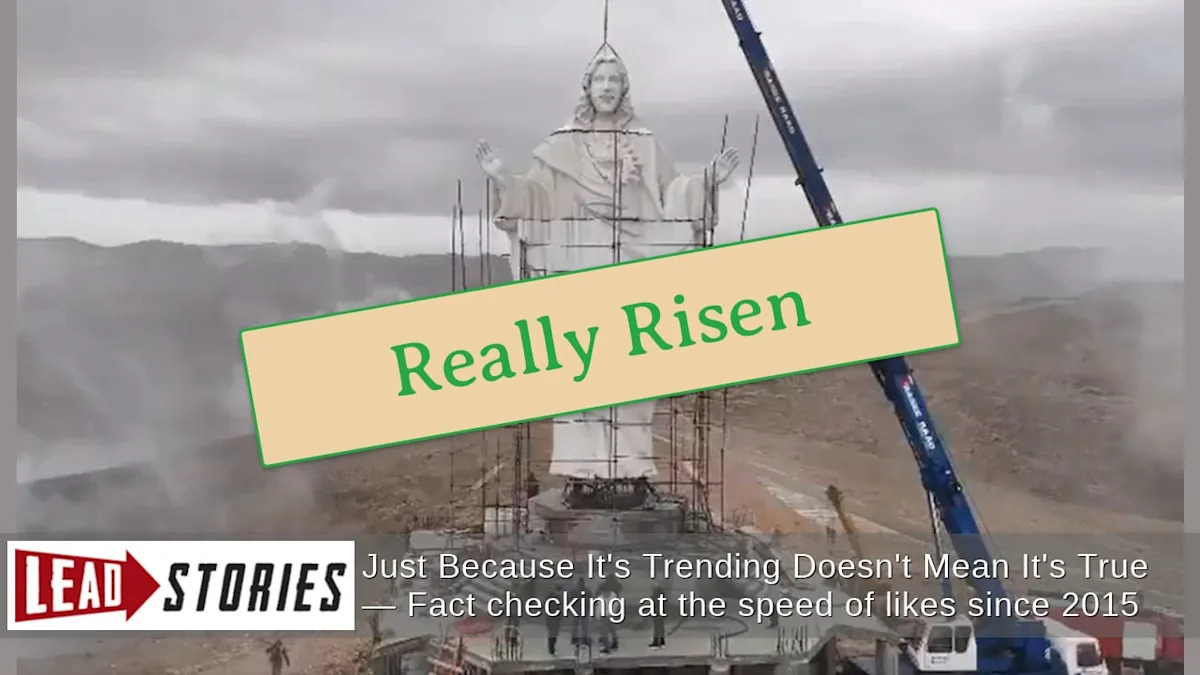
A new statue of Jesus the Redeemer now stands majestically on Mount of the Cross in Al-Qaa, Lebanon, overlooking the Bekaa Valley and neighboring Syrian territory. Video footage capturing the installation has been confirmed as authentic by multiple sources.
The statue was erected in March 2026 in the Lebanese village of Al-Qaa, located in the eastern Bekaa Valley near the Syrian border. The monument has quickly become a significant religious landmark in a region known for its religious diversity.
On March 14, the Al-Qaa municipality officially announced the statue’s completion through a post on its Facebook page, sharing images and video of the installation process. The footage shows a large crane carefully positioning the statue atop Jabal al-Salib (Mount of the Cross), with workers securing it to its foundation.
Lebanese media outlets have extensively covered the statue’s unveiling. OTV.com published a report on March 14 with the headline “A statue of Jesus the Redeemer rises on the Mount of the Cross in the valley.” Charity Radio TV featured the story a week earlier on March 7, while the prominent news outlet Annahar included embedded video of the installation in their March 15 coverage.
The timing of this religious monument’s installation carries particular significance for Lebanon’s Christian community, as it coincides with the Lenten season leading up to Easter celebrations. Al-Qaa has a predominantly Christian population and has been a site of religious significance in the region for generations.
The statue’s placement on Mount of the Cross provides a commanding view across the Bekaa Valley, one of Lebanon’s most fertile agricultural regions and an area with complex geopolitical dynamics due to its proximity to Syria. From its elevated position, the statue overlooks both Lebanese territory and parts of neighboring Syria.
Questions about the video’s authenticity had emerged on social media platforms, with some users suggesting the footage might be AI-generated. However, multiple verification tools have confirmed the video’s authenticity. Google’s Gemini platform, utilizing the SynthID watermarking tool, reported no evidence of AI manipulation using Google’s technology. Similarly, the Hive Moderation AI-Generated Content Detection tool rated the footage as “likely not AI-Generated” with an aggregated score of 0.0%, indicating a high probability of authentic content.
The statue bears a resemblance to the famous Christ the Redeemer statue in Rio de Janeiro, Brazil, with outstretched arms symbolizing peace and protection. However, the Lebanese version has its own distinctive characteristics adapted to the local landscape and cultural context.
Religious monuments like this often serve multiple purposes in Lebanon’s complex multi-faith society. Beyond their spiritual significance, they frequently become symbols of cultural identity and historical continuity for communities. Lebanon has a substantial Christian population, approximately 30-40% of its total citizens, making it one of the most religiously diverse countries in the Middle East.
Al-Qaa itself has experienced periods of tension and violence over the years due to its border location. In 2016, the village was targeted by suicide bombings attributed to ISIS militants. The statue may represent resilience and hope for the community following such difficult experiences.
As Lebanon continues to navigate economic challenges and political uncertainties, monuments like the Jesus the Redeemer statue can serve as rallying points for community identity and sources of tourism potential for small villages like Al-Qaa seeking economic revitalization.
Local religious leaders have expressed hope that the statue will become a destination for both Lebanese citizens and international visitors interested in religious tourism, potentially bringing economic benefits to the region while highlighting Lebanon’s religious heritage.
Fact Checker
Verify the accuracy of this article using The Disinformation Commission analysis and real-time sources.

9 Comments
I’m curious to learn more about the motivations behind erecting this statue. Was it a community-led initiative, or did a particular religious organization or government body drive this project?
Good question. The article mentions the Al-Qaa municipality was involved, so it seems this was likely a local government-backed effort to establish a new religious monument.
The placement of the Jesus the Redeemer statue on the Mount of the Cross is quite symbolic. I imagine it will become an important pilgrimage site for Christians in the area.
Agreed. The statue’s location on a prominent mountain overlooking the Bekaa Valley seems strategically chosen to make it a visible landmark.
It’s fascinating to see how religious symbolism and architecture continue to shape the landscapes of the Middle East. This Jesus the Redeemer statue is a striking addition to the Mount of the Cross in Lebanon.
Interesting development in Lebanon! I wonder what the local reaction has been to this new religious landmark. It’s always fascinating to see how different faiths and cultures coexist in the region.
Yes, the Bekaa Valley is known for its religious diversity, so it will be interesting to see how this statue is received by the local community.
The Bekaa Valley has historically been an important agricultural region, but this statue addition suggests it may be developing a stronger religious tourism element as well. I wonder how that might impact the local economy.
That’s an interesting point. A prominent religious landmark could certainly draw more pilgrims and visitors to the area, which could be a boon for local businesses.