


Listen to the article
Pakistan’s Prime Minister Clarifies False Claims of Netanyahu Meeting
Diplomatic circles were briefly thrown into turmoil this week following the circulation of images purportedly showing Pakistan’s Prime Minister Shehbaz Sharif meeting with Israeli Prime Minister Benjamin Netanyahu. The claims, which spread rapidly across social media platforms, triggered immediate backlash among Pakistani citizens and political observers, with some labeling the alleged encounter as “treason.”
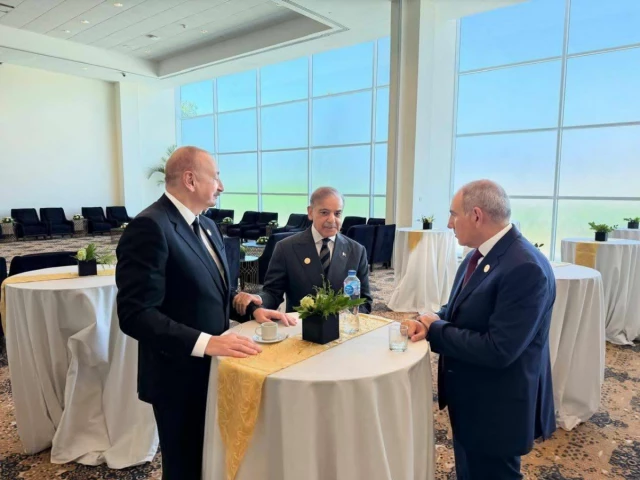
Government officials have now definitively confirmed that these allegations are false. The image in question actually depicts Prime Minister Sharif shaking hands with Armenian Prime Minister Nikol Pashinyan during the recent Sharm El-Sheikh Peace Summit in Egypt. Azerbaijan’s President Ilham Aliyev was also present at this diplomatic gathering.
The misinformation appears to have been deliberately fabricated through artificial intelligence technology, with an AI-generated image replacing the Armenian Prime Minister with Netanyahu’s likeness. This digital manipulation sparked unnecessary controversy regarding Pakistan’s longstanding position on Israel.
Prime Minister Sharif was in Egypt at the invitation of Egyptian President Abdel Fattah El-Sisi and US President Donald Trump to participate in the summit, where a peace agreement aimed at addressing the humanitarian crisis in Gaza was signed. Pakistan has historically maintained strong support for Palestinian self-determination, making Sharif’s participation consistent with the nation’s foreign policy priorities.
The summit represented a significant diplomatic initiative first conceived on the sidelines of the 80th United Nations General Assembly. Its objectives included facilitating Israeli withdrawal from occupied territories, protecting Palestinian civilians, securing the release of prisoners, ending displacement, and initiating Gaza’s reconstruction efforts. Critically, the summit also aimed to establish a framework for a political process toward an independent Palestinian state with Al-Quds Al-Sharif (Jerusalem) as its capital.
Video recordings from the summit have confirmed that Prime Minister Sharif’s interactions were entirely diplomatic in nature and did not include any meeting with Netanyahu.
The false claim gained particular traction after Pakistani politician Shandana Gulzar Khan initially shared it on social media. However, she later deleted her post, acknowledging that “the picture is not 100% clear.” Despite retracting the specific image claim, Khan continued to assert that a meeting between the two leaders had been arranged, promising to demand logs from Pakistan’s Foreign Office to support her allegation.
Journalist Alina Shigri was among the first to correct the mischaracterization, clarifying on social media that the image showed “actually the Armenian PM, not Netanyahu!”
The Pakistani government moved swiftly to address the confusion. Attaullah Tarar, a senior official, issued a public statement condemning attempts to “distort the video of this meeting and giving a totally false story.” Tarar’s statement emphasized that the image showed Sharif with the leaders of Armenia and Azerbaijan during the Egyptian summit.
The incident highlights the growing challenge of misinformation in international diplomacy, particularly as artificial intelligence tools become more sophisticated and accessible. Pakistan, which does not officially recognize Israel, has faced similar rumors in the past about potential diplomatic normalization, making such claims particularly sensitive in domestic politics.
For Pakistan, maintaining clear positions on the Palestinian issue remains a cornerstone of foreign policy, especially given the strong public sentiment supporting Palestinian rights. The rapid spread and subsequent debunking of this false claim demonstrates both the volatility of social media information and the continued significance of the Israeli-Palestinian conflict in regional diplomacy.
As the situation in Gaza continues to dominate international attention, the Sharm El-Sheikh Peace Summit represents one of several diplomatic efforts seeking to address the ongoing humanitarian crisis while working toward a sustainable political solution in the region.
Fact Checker
Verify the accuracy of this article using The Disinformation Commission analysis and real-time sources.

6 Comments
The fabricated image is a good example of how easily disinformation can spread these days. We need to be extra vigilant in verifying claims, especially those with visual ‘evidence’.
The use of AI-generated images to spread misinformation is concerning. Governments and tech platforms need to be vigilant in identifying and removing this type of manipulated content.
This summit in Egypt seems to have brought together some key regional players. I wonder what the discussions and outcomes were, beyond just the Netanyahu misinformation.
Pakistan’s stance on Israel is well-known, so the alleged meeting would have been quite surprising. I’m glad the authorities were quick to clarify and correct the record.
I appreciate the government’s prompt response to address the false claims. Maintaining transparency and public trust is crucial, especially on sensitive diplomatic matters.
Interesting to see the false claims around the Netanyahu meeting being debunked. It’s important to rely on official government sources and fact-checking to get the accurate information, rather than social media rumors.