


Listen to the article
In a dramatic shift in Middle East dynamics, President Donald Trump has stated that Iran’s emerging leadership appears open to dialogue with the United States, signaling his willingness to engage in talks. This development comes amid Israel’s sweeping claims about eliminating key Iranian leadership figures and those in Iran-aligned groups across the region.
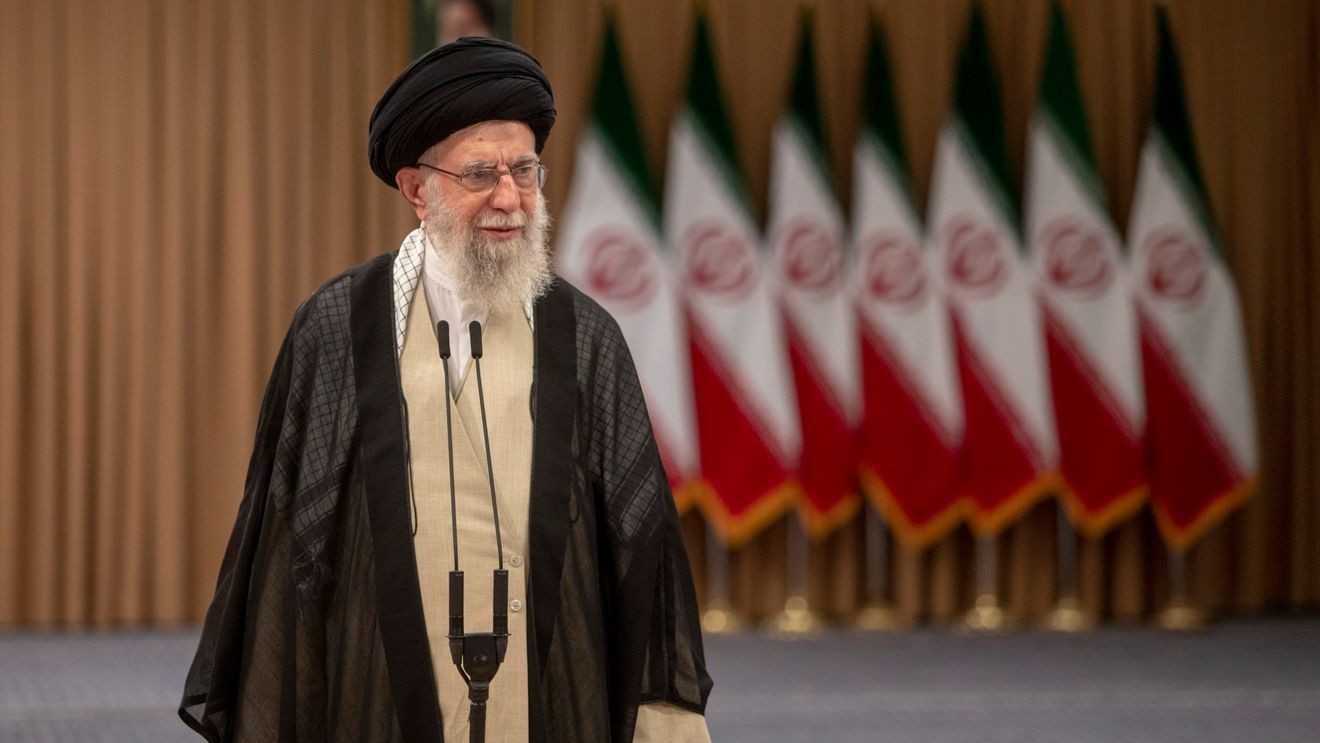
The situation has created unprecedented uncertainty about Iran’s power structure and raised critical questions about the succession process for the Supreme Leader position.
Israel’s military has made extensive claims about its recent operations against Iran and its regional proxies. The Israel Defense Forces (IDF) published a statement accompanied by an infographic on social media platform X, asserting that “all senior terrorist leaders of Iran’s Axis of Terror have been eliminated.” The Israeli claims appear broader than figures publicly cited by President Trump.
According to military analysts, the IDF statement encompasses leadership losses not only in Iran itself but also within Iran-backed organizations including Hezbollah, Hamas, and the Houthi movement in Yemen. However, some clarification is necessary, as several of the leadership casualties were reported in earlier operations rather than in the most recent strikes.
Reuters had previously confirmed the deaths of Hezbollah leader Hassan Nasrallah and senior commanders Fuad Shukr and Ibrahim Aqil in 2024. Similarly, Yemen’s Houthi movement acknowledged that their chief of staff Muhammad al-Ghamari was killed in early 2025.
The current leadership vacuum in Iran has triggered constitutional mechanisms designed for such emergencies. According to ABC News, following the reported death of Supreme Leader Ayatollah Ali Khamenei, Iran has established an interim three-person leadership council comprising President Masoud Pezeshkian, Judiciary chief Gholam-Hossein Mohseni-Ejei, and cleric Ayatollah Alireza Arafi, who represents the Guardian Council.
Iran’s constitutional framework provides clear guidelines for selecting a new Supreme Leader. Article 107 of Iran’s constitution specifies that the authority to appoint the Leader rests with “experts elected by the people” – the 88-member Assembly of Experts, a clerical body responsible for selecting a Supreme Leader when the position becomes vacant.
The timeline for this critical decision appears accelerated, with Iran’s foreign minister suggesting a new Supreme Leader could be chosen within days, according to Al Jazeera.
Despite this extraordinary moment of transition, experts caution that these developments do not necessarily indicate imminent regime change in Iran. The Islamic Revolutionary Guard Corps (IRGC) maintains its position as a central power broker within the Iranian system, regardless of who emerges as the next Supreme Leader.
The Council on Foreign Relations characterizes the IRGC as “one of the most powerful and feared organizations in Iran,” with extensive influence across military operations, internal security, and significant sectors of the economy. As the succession process unfolds, major media outlets are describing the current situation as a power vacuum in which the IRGC could play a decisive role in determining Iran’s future leadership and policy direction.
Regional security analysts note that this period of transition creates both risk and opportunity in the volatile Middle East. While the diplomatic opening suggested by President Trump could potentially lead to de-escalation, the internal power dynamics within Iran’s complex governance system make the outcome highly unpredictable.
Financial markets have responded to the uncertainty with increased volatility in oil prices, reflecting concerns about potential disruptions to global energy supplies should the situation deteriorate further.
Fact Checker
Verify the accuracy of this article using The Disinformation Commission analysis and real-time sources.

8 Comments
The uncertainty around Iran’s leadership succession process is concerning. Maintaining stability and avoiding power vacuums will be critical to regional security.
Absolutely. A smooth and transparent transition of power in Iran could help prevent further instability in the region.
This situation highlights the delicate and complex nature of power dynamics in the Middle East. A measured, diplomatic approach focused on de-escalation would be prudent at this stage.
It will be interesting to see how the reported elimination of Iranian-linked terrorist leaders impacts the balance of power in the region. Careful analysis of the situation is warranted.
The claims about eliminating Iranian terrorist leaders seem quite broad. I wonder how credible and verifiable those assertions are, and what the implications could be on the ground.
That’s a fair point. It’s important to scrutinize such claims and seek independent confirmation before drawing conclusions about the situation in Iran.
Interesting to see the evolving dynamics between Iran, the US, and Israel. It will be crucial to monitor how the leadership transitions unfold in Iran and their impact on regional stability.
Agreed, the shifting power dynamics could have significant geopolitical ramifications. Transparency and open dialogue will be key to reducing tensions.