


Listen to the article
Iranian leadership stands at a pivotal crossroads following recent strikes, with President Trump suggesting the potential new leadership is open to diplomatic engagement with the United States. Meanwhile, Israel has made sweeping claims about eliminating key figures across Iran’s allied networks, creating uncertainty about who currently holds power in Tehran.
The Israel Defense Forces (IDF) published a statement on social media platform X declaring that “all senior terrorist leaders of Iran’s Axis of Terror have been eliminated.” This assertion appears more extensive than figures previously cited by President Trump and encompasses leaders from Iran-backed groups including Hezbollah, Hamas, and the Houthis.
Some context is necessary when evaluating these claims. Several high-profile casualties among Iran-aligned groups occurred prior to recent military actions. Reuters had previously confirmed the deaths of Hezbollah leader Hassan Nasrallah and senior commanders Fuad Shukr and Ibrahim Aqil in 2024. Similarly, Yemen’s Houthi movement acknowledged their chief of staff Muhammad al-Ghamari was killed in 2025.
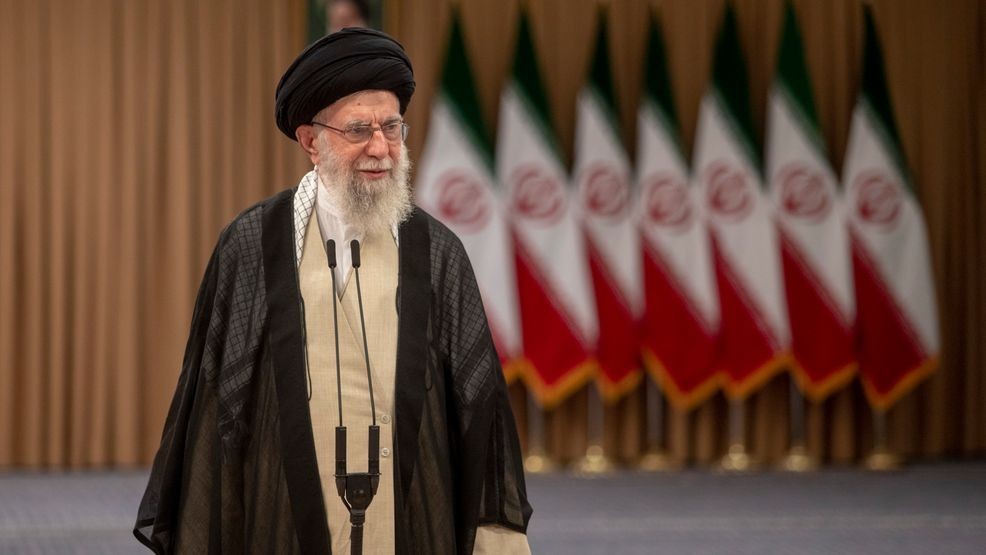
The constitutional framework for leadership transition in Iran is now under intense scrutiny. Following the reported death of Supreme Leader Ayatollah Ali Khamenei, Iran has established a three-person interim leadership council, according to ABC News. This transitional body comprises President Masoud Pezeshkian, Judiciary chief Gholam-Hossein Mohseni-Ejei, and cleric Ayatollah Alireza Arafi, who represents the Guardian Council.
Iran’s constitutional process for selecting a new Supreme Leader lies with the Assembly of Experts, an 88-member clerical body elected by Iranian voters. Article 107 of Iran’s constitution explicitly grants this assembly the authority to appoint a new Leader when the position becomes vacant. Iran’s foreign minister has indicated this selection process could conclude within days, according to Al Jazeera’s reporting.
The current situation does not automatically signal regime change in Iran. The Islamic Revolutionary Guard Corps (IRGC) remains a formidable power broker within the country’s political structure, even during this transition period. The Council on Foreign Relations characterizes the IRGC as “one of the most powerful and feared organizations in Iran,” wielding significant influence across multiple domains including national security, foreign policy, and economic affairs.
This transition arrives at a particularly delicate moment in regional geopolitics. The power vacuum created by recent events could reshape Iran’s internal power dynamics, with the IRGC potentially playing a decisive role in determining the country’s future direction. Major news outlets are closely monitoring how this military-political organization positions itself during the succession process.
President Trump’s assertion about Iran’s willingness to engage diplomatically represents a potential shift in relations between Washington and Tehran, which have been characterized by heightened tensions in recent years. However, the practical implications remain uncertain as Iran navigates this complex leadership transition.
Regional stability now hinges on several critical factors: who emerges as Iran’s next Supreme Leader, what policy direction they pursue, and how the IRGC and other power centers respond to this transition. The outcome will have profound implications not only for Iran’s domestic politics but also for its relationships with regional neighbors and global powers.
As events unfold, international observers are watching closely to determine whether this moment represents a continuation of Iran’s existing political framework or marks the beginning of a more substantial transformation in the country’s governance and foreign policy orientation.
Fact Checker
Verify the accuracy of this article using The Disinformation Commission analysis and real-time sources.

16 Comments
The potential for diplomatic engagement between Iran and the US, as suggested by President Trump, is intriguing. If such a path materializes, it could have far-reaching implications for geopolitics, energy markets, and global affairs.
That’s a good point. Any shift towards diplomacy could open new avenues for resolving longstanding tensions, but the details and implementation would be crucial.
Interesting to see the shifting power dynamics in Iran and the complex web of affiliated groups. It will be important to closely monitor developments and verify claims as the situation unfolds.
Indeed, the assertions from Israel about eliminating key figures seem quite sweeping. Careful analysis of the facts on the ground will be crucial to understand the current realities.
This is a complex and rapidly evolving situation that will require careful monitoring and analysis. The energy and commodity sectors, in particular, will be watching closely for any developments that could impact supply, demand, and pricing.
Absolutely. Given the potential for disruptions in key industries and markets, stakeholders will need to stay vigilant and responsive to changes on the ground in Iran and the wider region.
The elimination of senior figures across Iran’s allied networks, as claimed by Israel, could have significant ripple effects in the region. However, verifying the full extent of these claims will be important before drawing conclusions.
Agreed. Extraordinary claims require extraordinary evidence, so it will be prudent to approach these assertions with caution and seek independent confirmation.
This is a complex and rapidly evolving situation. I’m curious to see how the constitutional framework for leadership transition in Iran will be tested and what implications it may have for the country’s domestic and foreign policies.
Yes, the constitutional mechanisms will be crucial. It will be interesting to see how Iran navigates this period of uncertainty and potential power shifts.
The claims made by Israel about eliminating key figures in Iran’s allied networks are certainly significant, if true. However, given the high stakes involved, it will be essential to verify these assertions through multiple credible sources before drawing any firm conclusions.
Absolutely. Extraordinary claims require extraordinary evidence, as they say. Caution and due diligence will be crucial in evaluating the veracity of these claims and their potential impacts.
The energy and commodity sectors are closely watching these geopolitical shifts, as Iran’s leadership and its regional influence can have significant impacts on global markets. Transparency and reliable information will be vital.
Absolutely. Any instability or power vacuums in Iran could disrupt energy and commodity supply chains, so stakeholders will be closely monitoring the situation.
The constitutional framework for leadership transition in Iran will be a crucial factor to watch as this situation unfolds. Ensuring a stable and legitimate transfer of power, if necessary, will be vital for the country’s stability and its relationships with the international community.
That’s a very good point. The constitutional mechanisms and their application will be a key determinant of how this situation evolves and what implications it may have for Iran’s domestic and foreign policies.