


Listen to the article
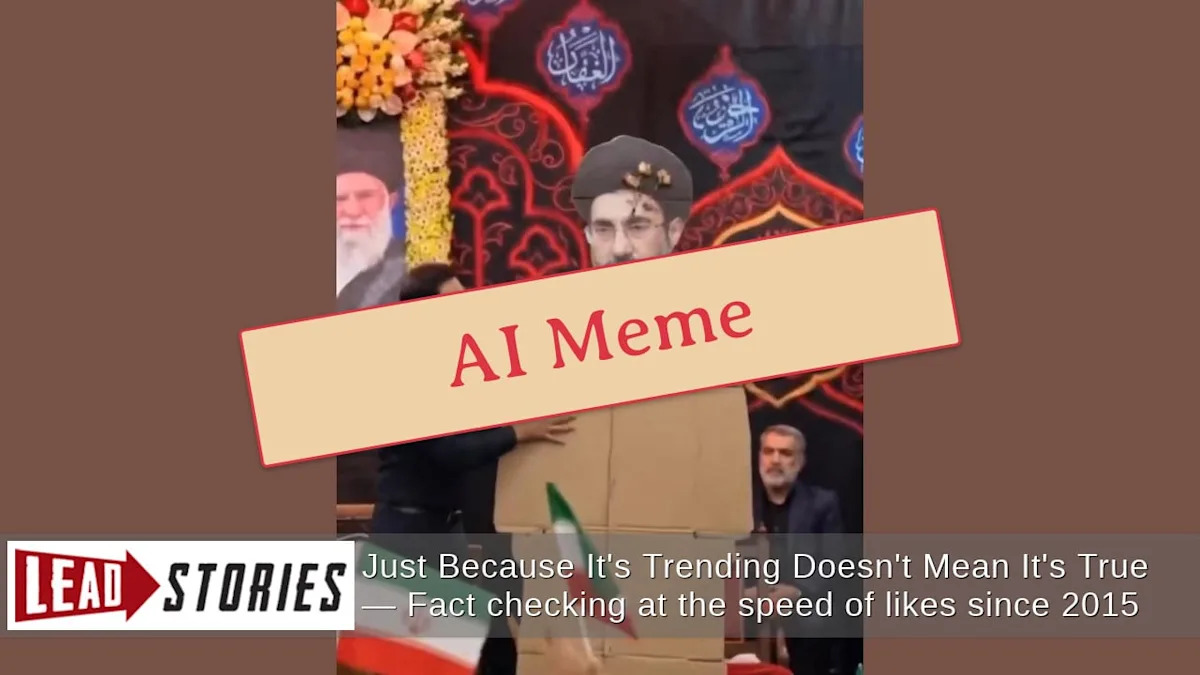
The viral video purporting to show Iran announcing its new leader with a cardboard cutout of Ayatollah Mojtaba Hosseini Khamenei is fabricated, according to an investigation of the source material. The manipulated footage has been widely shared amid heightened tensions between the United States and Iran.
The falsified clip began circulating on March 10, 2026, when X (formerly Twitter) user @MahyarTousi posted it with the caption: “Mojtaba Khamenei couldn’t turn up so they had to use his cardboard cutout. Why is his head so big and why did they use a photo of him that looks so miserable?” The post quickly gained traction across social media platforms.
Analysis of the original footage from Iranian state news agency SNN reveals a significantly different scene. The authentic video, posted on SNN’s official X account @snntv_fa, shows officials presenting a framed photograph of Ayatollah Khamenei during the leadership announcement ceremony, not a cardboard cutout as claimed in the viral version.
The original ceremony took place at the holy shrine of Fatima Masumeh, where Khamenei was officially named the third leader of the Islamic Republic of Iran. The state media footage shows a solemn, dignified presentation of the framed portrait—markedly different from the awkward, oversized cutout depicted in the manipulated version.
Technical analysis further confirms the video’s inauthenticity. When subjected to the Hive Moderation AI-Generated Content Detection tool, the altered footage registered as 73.5% likely to be AI-generated. This high score indicates significant digital manipulation of the original material.
This fabrication emerges amid a wave of misinformation surrounding Iran’s leadership transition. The cardboard Ayatollah meme has been particularly persistent on social media, with variations appearing in different contexts. Fact-checkers have already debunked a related claim suggesting President Trump unveiled a cardboard Ayatollah in the Oval Office.
Digital manipulation of political imagery has become increasingly sophisticated and prevalent in recent years. The Iran leadership announcement presented a prime target for such alterations, given its significance in regional geopolitics and international relations.
The spread of such doctored content highlights the challenges facing social media platforms and news consumers in distinguishing authentic footage from skillfully altered material. As AI tools become more accessible and sophisticated, the ability to create convincing fake videos continues to outpace detection capabilities.
The timing of this misinformation coincides with heightened U.S.-Iran tensions, potentially serving to undermine the legitimacy of Iran’s leadership transition or ridicule the new leadership. Such manipulations can contribute to diplomatic misunderstandings and complicate already strained international relationships.
Media literacy experts recommend verifying content through official sources before sharing potentially misleading material. In this case, consulting Iranian state media directly would have quickly revealed the discrepancy between the actual ceremony footage and the manipulated version circulating online.
As the situation between the United States and Iran continues to evolve, distinguishing fact from fiction in media coverage becomes increasingly crucial for accurate public understanding of this complex geopolitical relationship.
Fact Checker
Verify the accuracy of this article using The Disinformation Commission analysis and real-time sources.

15 Comments
This is a concerning example of how social media can be weaponized to spread misinformation. I hope this incident prompts renewed efforts to combat the proliferation of fake news, especially around geopolitical issues.
While I appreciate the desire to present a unified front, the use of a cardboard cutout in an official government ceremony is quite concerning. It suggests a level of dishonesty and lack of transparency that undermines the credibility of the entire proceedings. I hope this incident leads to greater scrutiny and accountability for state media narratives.
This is a prime example of how social media can be used to amplify and spread disinformation. I hope the investigation into the origins of this fabricated video helps shed light on the tactics used to manipulate public opinion.
While I don’t support the Iranian regime, I believe it’s important to report on these matters accurately and without bias. Spreading false narratives, even if they align with one’s own views, can be counterproductive and erode trust in the media.
The use of a cardboard cutout in an official leadership announcement ceremony is quite bizarre and raises serious questions about the legitimacy of the proceedings. I wonder if this is part of a broader propaganda effort to project an image of strength and unity that doesn’t reflect reality on the ground.
That’s a good point. Authoritarian regimes often resort to theatrical displays to create an illusion of stability and control, even when the underlying situation is quite precarious. Careful analysis of these kinds of incidents can help expose the cracks in their veneer of power.
Interesting to see how disinformation can spread so quickly on social media these days. I wonder what the motivation was behind this fabricated video and if it’s part of a broader propaganda campaign.
While it’s troubling to see such blatant misinformation being spread, I’m glad that fact-checkers were able to uncover the truth about the origins of this video. Maintaining a healthy skepticism towards state media and carefully verifying claims is crucial, especially in times of heightened geopolitical tensions.
This seems like a clear case of propaganda and disinformation. I’m always skeptical of state-controlled media narratives, especially when they involve such blatant visual manipulation. Curious to see what independent fact-checkers uncover about the origins of this doctored footage.
Agreed, it’s important to critically analyze media content, especially when it comes from authoritarian regimes. This kind of deception erodes public trust and makes it harder to get accurate information.
This incident highlights the importance of media literacy and the need to approach all information, especially from authoritarian regimes, with a critical eye. I hope this serves as a wake-up call for the public to be more discerning consumers of news and to seek out reliable, independent sources.
Absolutely. In the age of social media, it’s easier than ever for misinformation to spread rapidly. Developing the skills to identify and counter such propaganda is an essential civic responsibility.
While I’m no fan of the Iranian regime, it’s important to report on these matters accurately and objectively. Spreading false narratives, even if they fit a certain agenda, can be counterproductive and erode trust.
I’m curious to know more about the investigation process that uncovered the truth behind this viral video. Understanding how such manipulations are identified could help people better scrutinize online content in the future.
This is a good reminder to always verify the source and authenticity of online content, especially when it relates to sensitive political issues. Fact-checking is crucial to avoid falling for manipulated information.