


Listen to the article
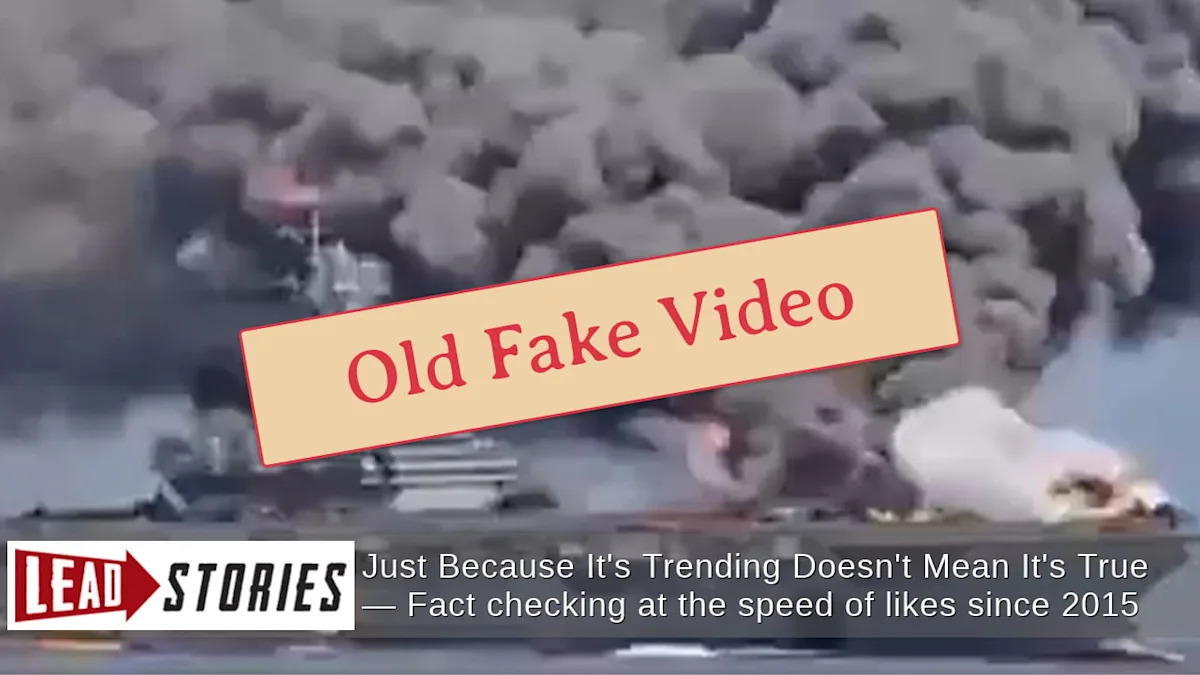
False Video Claims to Show USS Abraham Lincoln Hit by Iranian Missiles
A viral video circulating on social media falsely claims to show the USS Abraham Lincoln aircraft carrier burning in the Red Sea after being struck by Iranian missiles. The footage, which gained traction amid recent tensions between the United States and Iran, has been debunked as fabricated content likely created using a video game.
The 13-second clip first appeared online in June 2025 during the “Twelve-Day War” between Iran, Israel, and the United States. It has now resurfaced with new claims tied to the current conflict that began on February 28, 2026.
The video was shared by X user @almohamadawi31 with the caption: “Targeting the aircraft carrier Abraham Lincoln, which America and its agents were boasting about… 4 ballistic missiles were enough for it!” This post appeared on March 1, 2026, amid heightened regional tensions and military exchanges.
U.S. Central Command quickly issued a definitive statement refuting the claim. “Iran’s IRGC claims to have struck USS Abraham Lincoln with ballistic missiles. LIE,” the military command posted on its official X account. “The Lincoln was not hit. The missiles launched didn’t even come close. The Lincoln continues to launch aircraft in support of CENTCOM’s relentless campaign to defend the American people by eliminating threats from the Iranian regime.”
Digital forensics experts examining the footage believe it was likely created using Arma 3, a popular military simulation video game known for its realistic graphics. Bohemia Interactive, the studio behind Arma 3, has previously acknowledged that footage from their game has been misused as purported evidence in real-world conflicts.
The game developer even published a blog post titled “Arma 3 footage being used as Fake News,” which provides guidance on identifying simulated footage falsely presented as authentic combat documentation. The realistic rendering capabilities of modern video games make it increasingly difficult for casual viewers to distinguish between genuine and fabricated footage, especially when shared in low-resolution formats on social media platforms.
This incident highlights a troubling pattern in modern information warfare: the recycling of fabricated content during successive crises. The same video was used to make nearly identical false claims during two separate conflicts eight months apart, demonstrating how misinformation can be repurposed to fit new narratives.
Military analysts note that the USS Abraham Lincoln, a Nimitz-class aircraft carrier with a displacement of over 100,000 tons, represents one of America’s most formidable naval assets. The carrier and its accompanying strike group play a crucial role in projecting U.S. power in strategic waterways, including the Red Sea, which has become increasingly volatile in recent years due to regional conflicts.
The spreading of such misinformation during active conflicts can significantly impact public perception and potentially influence geopolitical decisions. Social media platforms continue to struggle with the rapid proliferation of misleading content during breaking news events, when verification processes are most challenging but also most essential.
The incident underscores the importance of critical media literacy in the digital age, particularly during periods of international tension when misinformation can spread rapidly and potentially escalate conflicts. Experts advise social media users to verify information through multiple credible sources before sharing content related to ongoing military operations.
Fact Checker
Verify the accuracy of this article using The Disinformation Commission analysis and real-time sources.

9 Comments
Kudos to the U.S. Central Command for the swift and definitive response. Identifying misinformation early helps prevent the spread of dangerous propaganda.
Interesting that this false video resurfaced after initially appearing during a previous conflict. Glad it was quickly called out as fabricated gaming footage rather than real events.
This incident highlights the need for heightened scrutiny of online content, especially during periods of geopolitical uncertainty. Fact-checking is essential to prevent the spread of dangerous falsehoods.
Interesting to see the facts come out on this one. Glad the U.S. military was quick to debunk the false claims. Spreading misinformation during times of tension is never a good idea.
This just goes to show the importance of verifying information, especially when it involves military matters and potential conflicts. It’s good the real facts were identified and shared.
Absolutely. Fact-checking and debunking false claims is crucial, especially on sensitive geopolitical issues like this.
It’s concerning to see how quickly misinformation can spread, even when it’s been previously identified as false. Ongoing vigilance is needed to counter these kinds of claims.
Good to see the military taking a firm stance against these kinds of false claims. Responsible reporting and transparency are important, especially in high-tension situations.
Agreed. Debunking misinformation is crucial to maintaining public trust and preventing further escalation.