


Listen to the article
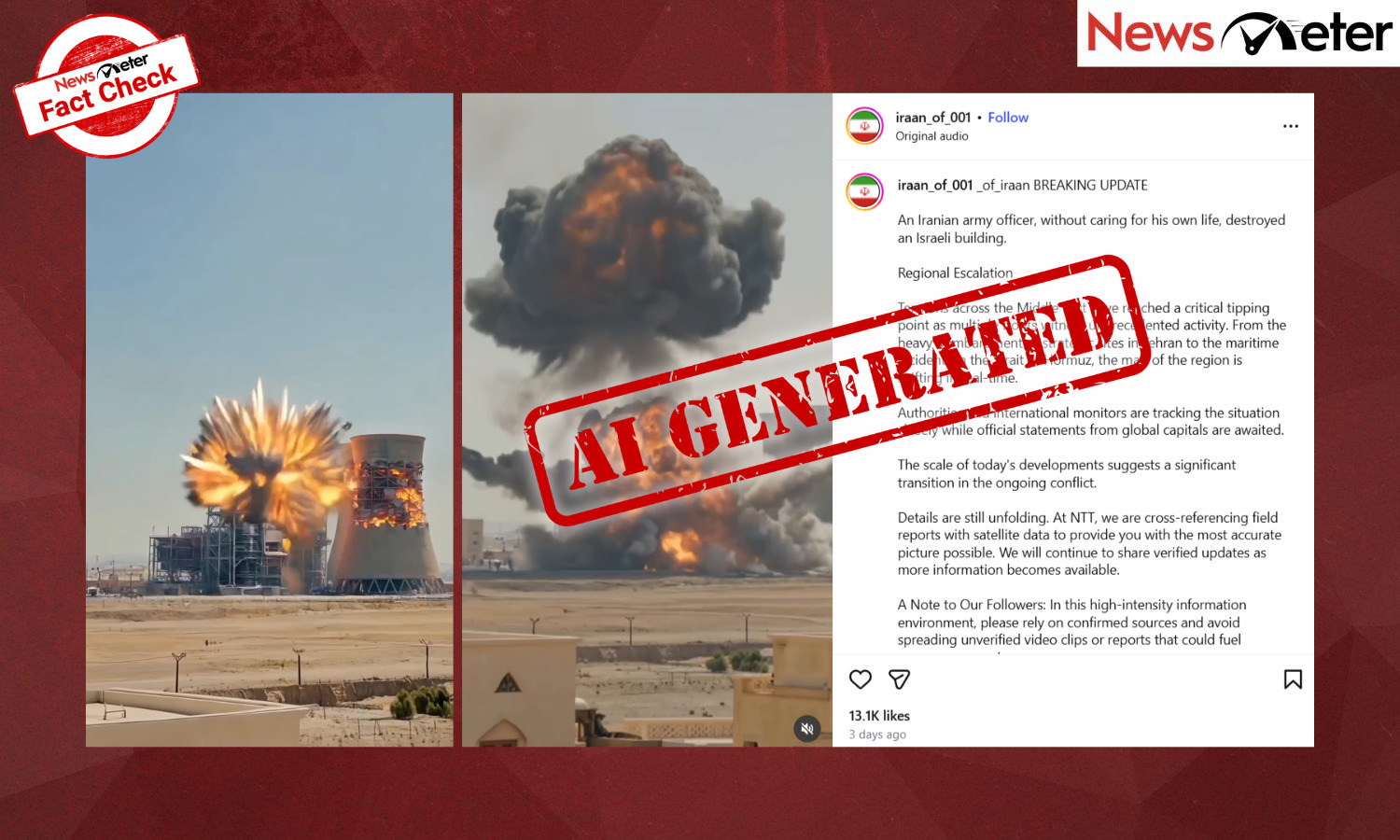
In a concerning development amid ongoing Middle East tensions, a viral video claiming to show an Iranian missile striking an Israeli power plant has been debunked as AI-generated misinformation.
The manipulated footage, which has garnered over 625,000 views and 13,000 likes on Instagram, depicts a missile hitting what appears to be a power facility, resulting in a dramatic explosion. The post included an extensive caption describing escalating regional hostilities, specifically claiming that “an Iranian army officer, without caring for his own life, destroyed an Israeli building.”
Analysis by NewsMeter revealed multiple telltale signs of artificial generation. The explosion displays unnatural characteristics with repetitive textures and perfectly formed mushroom clouds that appear synthetic rather than authentic. Fire and smoke in the video fail to interact realistically with the surrounding environment, while structural inconsistencies show buildings changing shape and debris that appears to float unnaturally instead of falling as expected under normal physics.
Technical verification through AI detection software confirmed these suspicions. The tool Hive Moderation identified the video as AI-generated with 99.9% certainty, flagging most frames as artificially created. Additional analysis using Deepfake-O-Meter yielded similar results, providing strong indicators of digital manipulation.
The timing of the misinformation coincides with actual diplomatic developments in the region. According to a CNN report dated March 24, U.S. President Donald Trump claimed an agreement had been reached between the United States and Iran, announcing a five-day delay on planned military strikes. Iran’s foreign ministry, however, promptly denied these assertions, stating that no dialogue with Washington had taken place.
No credible news organizations or defense monitors have reported any Iranian missile strikes against Israeli infrastructure. The Israeli power grid remains fully operational, with no emergency announcements from Israeli authorities regarding damaged energy facilities.
This incident highlights the growing challenge of AI-generated misinformation during international conflicts. As tensions between Iran, Israel, and the United States continue to simmer, falsified content can potentially inflame public sentiment and complicate diplomatic efforts toward de-escalation.
The social media post containing the fake footage ironically concluded with a note cautioning users to “rely on confirmed sources and avoid spreading unverified video clips or reports that could fuel unnecessary panic” – advice that contradicted the post’s own sharing of manipulated content.
Media literacy experts recommend several strategies for identifying AI-generated videos, including looking for unnatural lighting, inconsistent physics, strange textures, and unrealistic movements. When encountering dramatic footage of breaking news events, verification through established news sources remains essential before sharing.
This case underscores the critical importance of fact-checking in an era where sophisticated AI tools can create increasingly convincing fake videos. As artificial intelligence technology continues advancing, the challenge of distinguishing authentic from fabricated content will likely intensify, particularly during geopolitical crises when accurate information is most crucial.
Fact Checker
Verify the accuracy of this article using The Disinformation Commission analysis and real-time sources.

8 Comments
Fascinating how AI-generated videos can spread misinformation so quickly. Glad this one was debunked – we need to stay vigilant against fake news, especially around sensitive geopolitical issues.
Agreed. AI technology is advancing rapidly, and we must be cautious about verifying the authenticity of online content before sharing or believing it.
It’s alarming to see how quickly a video like this can gain traction, even when it’s clearly fabricated. Kudos to the fact-checkers for exposing this as AI-generated misinformation. We need more efforts to combat the spread of fake news.
I agree. As AI technology becomes more advanced, the potential for it to be misused for disinformation campaigns is only going to increase. We must stay informed and critical to prevent the spread of these false narratives.
The use of AI to create fake videos is a concerning trend. I’m glad the authorities were able to identify this as manipulated footage and debunk the false claims. We must stay vigilant against such deceptive tactics.
This is a prime example of why we should always verify the authenticity of online content, especially when it involves sensitive geopolitical issues. The AI-generated nature of this video is a concerning development.
This is a good reminder of the importance of critical thinking and fact-checking, even when it comes to visually compelling content. Spreading unverified claims, even inadvertently, can have serious consequences.
Absolutely. In today’s information landscape, we all have a responsibility to be discerning consumers of media and to help curb the spread of misinformation.