


Listen to the article
U.S. and Israel Launch Military Strikes Against Iran Over Nuclear Concerns
The United States and Israel conducted joint military strikes against Iran on February 28, marking a significant escalation in tensions between the longtime adversaries. President Donald Trump authorized the bombing operation, citing intelligence that Iran was actively developing nuclear weapons.
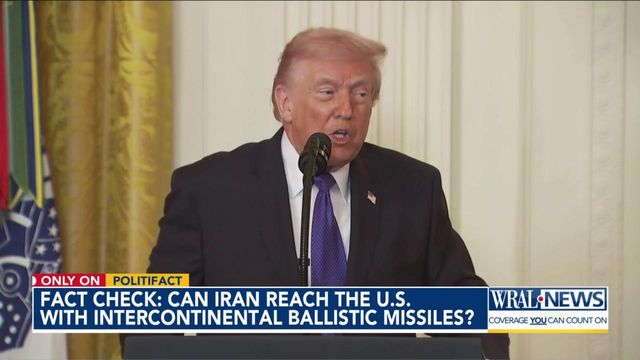
In a statement following the strikes, Trump emphasized the perceived threat to both regional stability and American security. “Iran’s nuclear program represents a clear and present danger to our allies in the Middle East,” the president said. He further claimed that Iranian weapons capabilities could “soon” extend to reach the continental United States.
The bombing campaign targeted what U.S. officials described as key nuclear research and development facilities. While specific details about the locations and extent of damage remain classified, Pentagon sources indicated the operation was “precise and strategic” in nature.
The joint military action represents the most direct confrontation between Iran and the U.S.-Israel alliance in decades. Relations between Washington and Tehran have deteriorated steadily since the U.S. withdrew from the 2015 nuclear agreement during Trump’s first term, but this marks the first direct military engagement specifically targeting Iran’s nuclear infrastructure.
Israeli Prime Minister Benjamin Netanyahu defended the operation as “necessary and justified,” stating that Israel had repeatedly warned about the advancement of Iran’s nuclear program. “We cannot allow a regime that has threatened our existence to possess nuclear weapons,” Netanyahu said in a televised address.
Iranian officials immediately condemned the strikes as “an act of war” and vowed retaliation. Iran’s Supreme Leader Ayatollah Ali Khamenei called for unity among Islamic nations against what he termed “Western and Zionist aggression.” Iran has consistently maintained that its nuclear program is for peaceful energy purposes only.
International reaction has been mixed, with traditional U.S. allies expressing cautious support while Russia and China strongly condemned the action at an emergency United Nations Security Council meeting. European Union officials called for “maximum restraint” from all parties and urged a return to diplomatic solutions.
Oil prices surged following news of the strikes, with Brent crude jumping nearly 8% to $98 per barrel in early trading, reflecting market concerns about potential disruptions to Middle East oil supplies. Energy analysts warn that any Iranian retaliation targeting oil infrastructure in the region could push prices above $100.
The military action comes after months of escalating tensions following intelligence reports that Iran had significantly accelerated its uranium enrichment activities. Last month, the International Atomic Energy Agency (IAEA) reported that Iran had begun enriching uranium to 60% purity at its Fordow facility, a level far beyond what’s necessary for civilian uses and approaching the 90% threshold needed for weapons.
Defense experts remain divided on how much the strikes might have set back Iran’s nuclear program. “These types of facilities are often hardened, underground, and dispersed,” said Michael Eisenstadt, director of the Military and Security Studies Program at The Washington Institute. “The question isn’t whether we can bomb them, but whether bombing them achieves our strategic objectives.”
Regional specialists worry about broader destabilization across the Middle East. “This action opens a new and dangerous chapter in an already volatile region,” said Suzanne Maloney, Director of Foreign Policy at the Brookings Institution. “We should expect asymmetric responses from Iran through its proxies in Lebanon, Syria, Iraq, and Yemen.”
Congressional leaders have been briefed on the operation, with reactions splitting largely along party lines. Republican lawmakers praised the president’s “decisive action,” while many Democrats questioned the legality of the strikes without prior congressional authorization.
As tensions continue to escalate, the Pentagon has ordered additional naval assets to the region, including the USS Abraham Lincoln carrier strike group, and placed U.S. forces throughout the Middle East on heightened alert status.
Fact Checker
Verify the accuracy of this article using The Disinformation Commission analysis and real-time sources.

5 Comments
This is certainly an alarming development. We’ll need to watch the situation closely to see how Iran and its adversaries respond. Escalating military tensions in the region could have far-reaching consequences.
Agreed, the risk of miscalculation or unintended escalation is high. Diplomatic efforts to de-escalate the situation should be the priority.
Concerns over Iran’s nuclear program are understandable, but military strikes may only serve to harden positions on both sides. A negotiated solution that addresses the security concerns of all parties would be the ideal outcome.
You raise a good point. Past military interventions in the region have often had unintended consequences. A diplomatic approach focused on risk reduction and conflict resolution seems prudent here.
This is a complex and high-stakes situation. While the threat of Iranian missiles is concerning, the long-term implications of a military confrontation could be destabilizing for the entire Middle East. I hope cooler heads prevail and all sides explore diplomatic offramps.