


Listen to the article
War Powers Debate Intensifies as Middle East Conflict Grows
WASHINGTON — As conflict escalates across the Middle East, a constitutional battle is unfolding in Washington over a fundamental question: Who has the authority to declare war, Congress or the president?
The debate centers on the War Powers Resolution, a 1973 law designed to prevent prolonged military conflicts without congressional approval. Lawmakers passed the measure in the aftermath of the Vietnam War to reclaim authority they believed had shifted too heavily toward the executive branch.
The resolution establishes clear boundaries for presidential military action. Under the law, a president can deploy forces into hostilities only under three specific conditions: if Congress has formally declared war, passed a specific authorization for military force, or if the United States has come under attack.
The law also imposes strict timelines. Presidents must notify Congress within 48 hours of deploying U.S. forces into hostile situations. This notification triggers a 60-day window during which Congress must approve the military action, or troops must be withdrawn – with an additional 30-day withdrawal period permitted.
“The resolution was intended as a check on executive power,” explained Dr. Sarah Kreps, professor of government at Cornell University, in a recent analysis. “But presidential administrations have consistently found ways to interpret the law that preserves their flexibility.”
The constitutional roots of this tension are embedded in America’s founding document. Article I, Section 8 explicitly grants Congress – not the president – the power “to declare War.” Meanwhile, Article II, Section 2 designates the president as Commander-in-Chief of the armed forces.
This intentional division of authority reflects the Founders’ concerns about concentrating war-making powers in a single individual – likely influenced by their experience with British monarchy. However, the practical application of these principles has proven far more complex than the text suggests.
“The framers created a system where Congress decides whether to go to war, while the president directs military operations once engaged,” said constitutional scholar Elizabeth Wydra. “But modern warfare doesn’t always fit neatly into these categories.”
Since 1973, presidents from both parties have consistently stretched the boundaries of the War Powers Resolution. Ronald Reagan ordered the invasion of Grenada in 1983 without prior congressional approval. Bill Clinton directed the 1999 NATO campaign in Kosovo despite failed authorization attempts in Congress. Barack Obama maintained that the 2011 Libya intervention didn’t trigger the resolution’s full requirements due to its limited nature.
The Trump administration has continued this pattern, arguing that short-term strikes or limited military actions against Iran don’t necessarily trigger the full 60-day clock, especially when characterized as defensive measures or responses to immediate security threats. In some instances, the White House has relied on existing Authorizations for Use of Military Force (AUMFs) rather than seeking fresh congressional approval.
Public sentiment regarding the recent military engagement with Iran shows significant skepticism. A Reuters/Ipsos poll found only 27% of Americans support the U.S. and allied strikes on Iran, while 43% disapprove and 29% remain uncertain. Similarly, a CNN/SSRS poll indicated nearly 60% of citizens disapprove of these actions, with a comparable proportion believing President Trump should seek congressional authorization for further military steps.
The conflict has sparked internal congressional deliberations, with lawmakers from both parties pushing for votes on war powers resolutions that would constrain or require authorization for additional military action against Iran. Previous attempts at similar restraints have faltered, highlighting deep partisan divisions and the challenges of enforcing the War Powers Resolution.
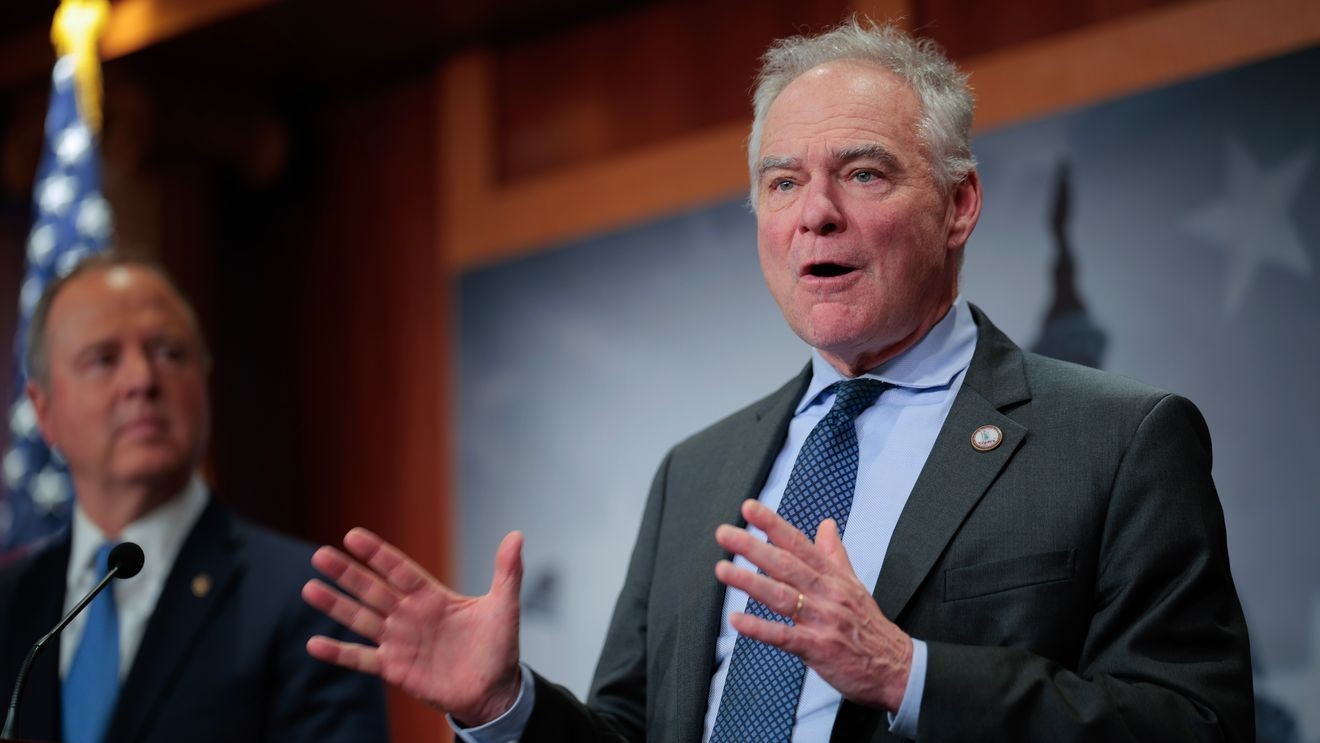
“This is a critical constitutional moment,” said Senator Tim Kaine (D-VA), who has introduced legislation to limit further escalation without congressional approval. “The American people deserve a voice through their representatives before we commit to another potential long-term conflict in the Middle East.”
As tensions continue to rise in the region, this decades-old constitutional question remains unresolved, leaving the boundaries of presidential war powers ambiguous in an increasingly complex global security environment.
Fact Checker
Verify the accuracy of this article using The Disinformation Commission analysis and real-time sources.

15 Comments
This is a timely and important discussion. The War Powers Resolution was intended to constrain presidential authority, but it seems there’s still a lot of ambiguity around its interpretation and application. I hope Congress and the White House can find a way to work together constructively on this issue.
Absolutely. Clarity and cooperation between the branches of government are essential, especially on matters of war and peace that can have such significant geopolitical and economic implications.
This is a complex and sensitive issue that gets to the heart of the balance of power between the executive and legislative branches. I’m curious to see how this debate evolves and what the implications could be for future military actions and the global geopolitical landscape.
Agreed, this is an important constitutional question with far-reaching consequences. It will be interesting to see if this latest dispute leads to any meaningful reforms or clarifications around the War Powers Resolution.
This is a complex and sensitive issue. The debate over the president’s war powers is an important constitutional question that Congress and the executive branch have grappled with for decades. It’s crucial that the process is handled carefully and within the bounds of the law.
Agreed, this is a delicate balance between the branches of government. Both sides need to work together to find a solution that upholds the rule of law.
The War Powers Resolution was meant to be a check on presidential authority, but it seems like there’s still a lot of debate over how it should be interpreted and applied. I hope Congress and the White House can find a way to work together on this.
As a metals and mining investor, I’m watching this closely. Geopolitical tensions in the Middle East can have significant impacts on commodity markets, especially for strategic minerals like uranium and rare earths. Stable policy is crucial for industry planning.
That’s a good point. Uncertainty over war powers could create volatility in the natural resources sector. Investors will be looking for clarity and consistency from policymakers.
This is a complex and nuanced issue that goes to the heart of the separation of powers in the US government. I’m curious to see how this plays out and what the implications could be for future military actions and the global geopolitical landscape.
Agreed, the balance of power between the executive and legislative branches on matters of war and peace is an ongoing challenge. It will be interesting to see if this latest debate leads to any meaningful reforms or clarifications.
Interesting to see how this develops. The War Powers Resolution was intended to limit presidential authority, but there’s still a lot of gray area. I’m curious to hear more perspectives on how this could impact future military actions.
Yes, the ambiguity in the law leaves room for interpretation. It will be important for Congress and the president to establish clearer guidelines to avoid future conflicts.
As someone who follows the mining and energy sectors, I’m very interested in how this debate over war powers could impact commodity markets and supply chains. Geopolitical stability is crucial for long-term investment and development in these industries.
As an investor in mining and energy equities, I’m closely monitoring this debate over war powers. Geopolitical tensions can create uncertainty and volatility in commodity markets, so it’s crucial that policymakers provide a stable and predictable environment.