


Listen to the article
As tensions continue to rise in the Middle East, social media has become flooded with unverified content purporting to show escalating military actions between regional powers. One such video has gained significant traction in recent days, allegedly depicting Iranian missile strikes against Israeli targets.
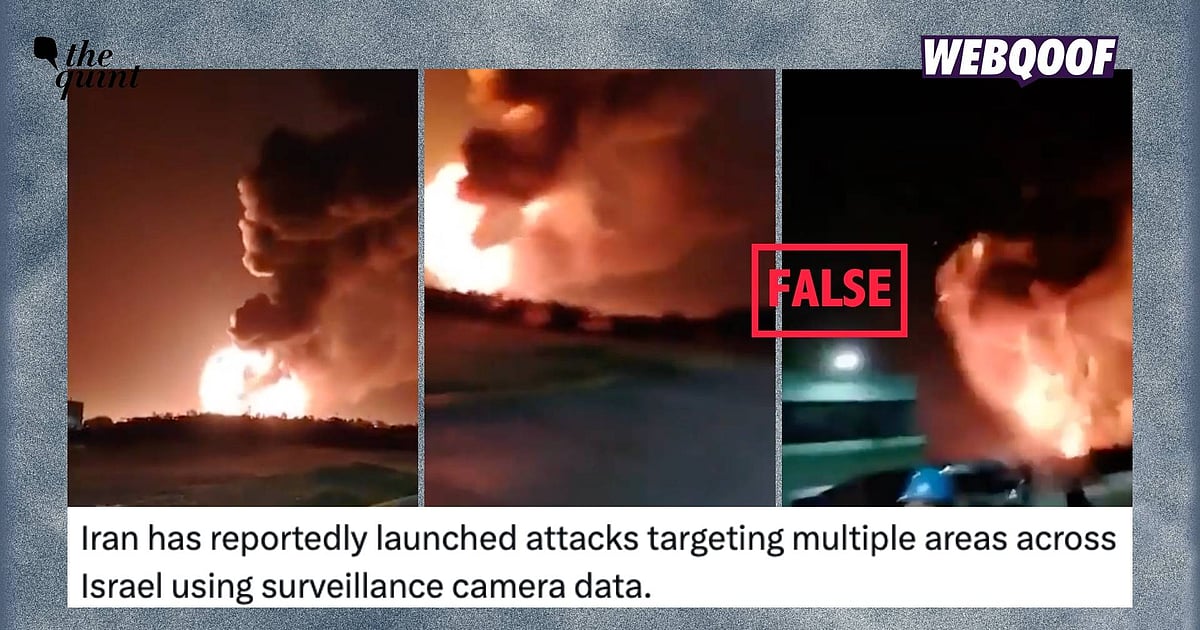
The widely circulated footage shows what appears to be a massive nighttime explosion viewed from a distance, with civilians visibly fleeing the blast site. Accompanying text claims: “Iran has reportedly launched attacks targeting multiple areas across Israel using surveillance camera data.” More specific allegations suggest the purported strikes targeted Israeli intelligence headquarters, oil tankers, military barracks, and fortified bunkers.
However, a thorough investigation has determined these claims to be entirely false. The video does not show recent or current Iranian military action against Israel, despite being shared across multiple platforms and garnering thousands of views and shares.
The spread of this misinformation comes at a particularly volatile moment in Middle East relations. In recent months, tensions between Iran and Israel have reached concerning levels, with diplomatic channels strained and military posturing from both sides drawing international attention. This environment has created fertile ground for misinformation to spread rapidly online.
Digital forensics experts note that the circulation of misleading or falsely labeled conflict footage has become increasingly common during geopolitical crises. “During periods of heightened tension, we often see old footage, video from entirely different conflicts, or even clips from video games being presented as current events,” explains Dr. Samantha Goldstein, a specialist in digital misinformation at Columbia University.
The Israel-Iran relationship has long been characterized by mutual suspicion and occasional indirect confrontations, but a direct, large-scale attack as depicted in the viral footage would represent a significant escalation that would dominate legitimate news coverage worldwide. No such attack has been confirmed by official sources, international monitoring organizations, or credible media outlets.
The Israeli Defense Forces (IDF) have not reported any such incoming attacks on their territory, and Iranian state media has made no announcements claiming responsibility for strikes of this nature. International monitoring groups that track military activities in the region have similarly reported no evidence of such an attack.
Social media platforms have struggled to contain the spread of this and similar false claims, despite policies designed to flag or remove misinformation. The video continues to circulate, often reposted with slight variations in accompanying text to evade detection algorithms.
Military analysts point out that a genuine attack of the scale suggested in the claims would trigger immediate international responses, emergency United Nations Security Council meetings, and comprehensive media coverage from established news organizations.
“What we’re seeing is a classic example of conflict misinformation,” notes Reza Fahimi, a Middle East security analyst with the International Crisis Group. “These false claims can heighten public anxiety, influence political discourse, and potentially even impact decision-making if they reach individuals in positions of power who don’t verify their authenticity.”
The spread of such content underscores the importance of media literacy and source verification during international crises. Experts recommend that social media users cross-reference extraordinary claims against reports from established news agencies and official government or military statements before sharing potentially inflammatory content.
As regional tensions continue, both government officials and technology platforms face mounting pressure to address the proliferation of misleading content that could further inflame an already precarious situation.
The origin of the actual footage remains unconfirmed, but digital forensics suggests it may be from an entirely different conflict or incident, repurposed to support a false narrative about current events in the Middle East.
Fact Checker
Verify the accuracy of this article using The Disinformation Commission analysis and real-time sources.

13 Comments
It’s troubling to see how quickly unverified content can gain momentum and influence public perception. Fact-checking is crucial in these situations.
Fact-checking and responsible reporting are essential to prevent the further escalation of tensions. Relying on verified information is key.
Agreed. Spreading unverified claims, even inadvertently, can have serious consequences in volatile geopolitical situations.
This is a good example of why it’s so important to be skeptical of unverified social media content, especially around sensitive topics like military actions.
The spread of misinformation, even if unintentional, can be very damaging. Fact-checking and responsible reporting are critical in these situations.
Absolutely. It’s crucial that we all strive to consume and share information responsibly, especially during times of heightened tensions.
Interesting development. It’s important to verify claims, especially during heightened tensions. Sharing unverified footage can escalate conflicts and spread misinformation.
Absolutely, fact-checking is crucial in these sensitive situations. Jumping to conclusions based on unverified videos could have serious consequences.
It’s concerning to see unverified footage gain so much traction online. Responsible reporting and fact-checking are essential to prevent the escalation of tensions.
This highlights the need for greater media literacy and critical thinking when consuming information online, especially around sensitive geopolitical topics.
Absolutely. We must be vigilant about verifying claims and sources to avoid inadvertently contributing to the spread of misinformation.
This is a good reminder to be cautious with social media content, especially related to military and geopolitical events. Reliable sources are key to understanding the facts.
Agreed. The spread of misinformation can be very damaging, so it’s critical to rely on verified information from reputable outlets.