


Listen to the article
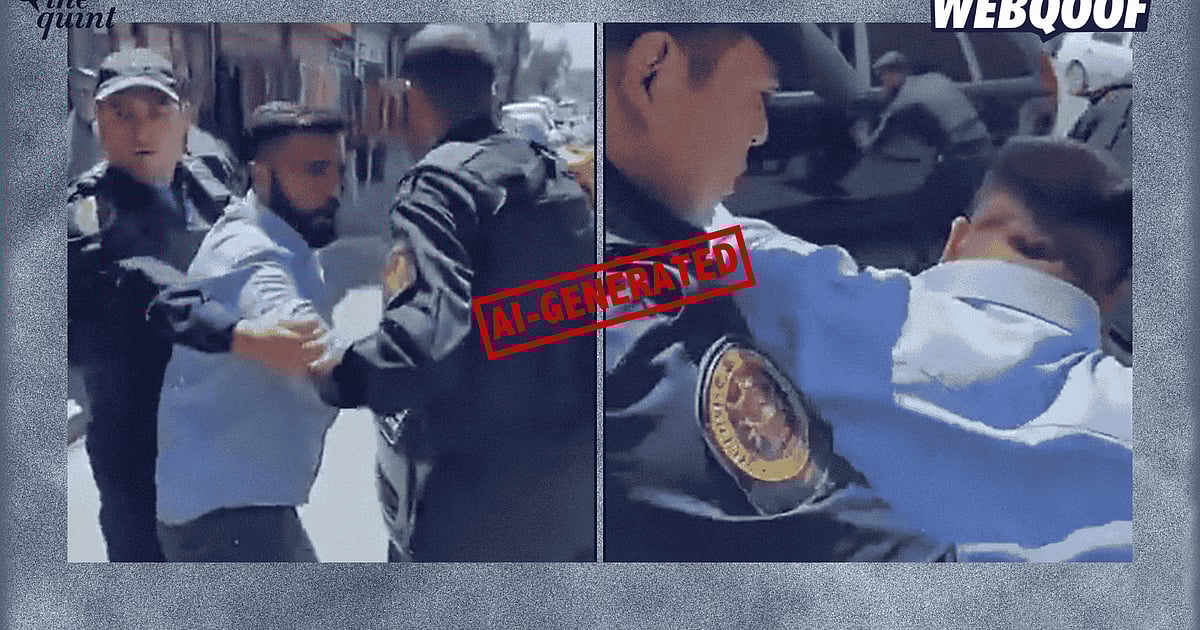
In a wave of misleading content circulating across social media platforms, users have been sharing a video purportedly showing an Indian national being detained by Iranian security forces on espionage charges. The footage, which depicts a man pleading with officers to release him as they forcibly restrain him, has gained significant traction amid ongoing geopolitical tensions between the two nations.
The video emerges at a particularly sensitive time in Iran-India relations, following recent diplomatic strains and international scrutiny of Iran’s internal security measures. Several social media accounts have amplified the footage, claiming it provides evidence of Indian espionage operations in Tehran, the Iranian capital.
However, a thorough analysis of the video reveals that the footage is entirely fabricated. Digital forensics experts have confirmed the content was generated using artificial intelligence technology, rather than being authentic documentation of an actual detention. The video exhibits several telltale signs of AI generation, including inconsistent lighting, unnatural movements, and visual artifacts that typically appear in synthetic media.
This incident highlights the growing challenge of AI-generated disinformation in international affairs. As artificial intelligence tools become more sophisticated and widely accessible, the potential for creating convincing fake videos that can influence public opinion or exacerbate diplomatic tensions continues to increase.
The fabricated detention video gained particular momentum on platforms like Twitter and Telegram, where it was shared thousands of times before fact-checkers could intervene. Many accounts sharing the content added inflammatory captions suggesting a broader pattern of Indian espionage in Iran, despite the lack of credible evidence supporting such claims.
Relations between India and Iran have generally been stable in recent years, with both countries maintaining diplomatic and trade partnerships despite complex regional dynamics. India has significant interests in Iran’s Chabahar Port, which provides vital access to Afghanistan and Central Asian markets, bypassing Pakistan. The two nations also share energy partnerships, with Iran being a historical supplier of oil to India before international sanctions complicated these arrangements.
Cybersecurity analysts note that the timing of this disinformation coincides with increased international attention on Iran following regional conflicts and ongoing nuclear negotiations. False narratives about foreign espionage can serve to distract from internal issues or justify heightened security measures against genuine foreign nationals in the country.
“This represents a dangerous evolution in disinformation tactics,” said Dr. Meena Sharma, a digital media expert at the Center for Information Integrity. “When AI-generated content is deployed in sensitive geopolitical contexts, it can create diplomatic incidents or even endanger real people who might face suspicion or harassment based on false narratives.”
Both Indian and Iranian officials have not commented specifically on the fake video, but the Indian Ministry of External Affairs routinely advises citizens to verify information from official sources, particularly regarding international incidents involving Indian nationals abroad.
Media literacy experts recommend that users exercise caution when encountering dramatic footage on social media, especially content that seems designed to provoke strong emotional responses. Verifying information through multiple reliable sources, checking official statements, and looking for fact-check reports can help identify synthetic or manipulated media.
This incident serves as a reminder of the evolving challenges in the information landscape, where the line between authentic and artificial content continues to blur. As AI technology advances, distinguishing truth from fiction will require increased vigilance from both institutions and individual social media users.
The circulation of this fake detention video also underscores broader concerns about how AI-generated content can be weaponized to influence public opinion or international relations, highlighting the need for enhanced detection tools and regulatory frameworks to address synthetic media.
Fact Checker
Verify the accuracy of this article using The Disinformation Commission analysis and real-time sources.

10 Comments
While tensions between nations can run high, falsifying evidence is never acceptable. I’m glad the authorities were able to identify this video as AI-generated. It’s a sobering reminder of the need for increased media literacy and robust fact-checking across social platforms.
Agreed. Spreading unverified claims, even if they align with certain political narratives, only serves to further inflame tensions and erode public discourse. Responsible reporting and critical thinking are essential to navigating these complex geopolitical issues.
It’s deeply concerning to see AI-generated content being used to spread disinformation, especially on such a sensitive geopolitical topic. Kudos to the digital forensics experts for uncovering the truth behind this fabricated video. Maintaining media literacy and fact-checking is crucial in the face of increasingly sophisticated synthetic media.
Absolutely. The proliferation of AI-generated misinformation is a significant challenge that requires a multi-pronged approach. Strengthening digital literacy, investing in detection tools, and promoting responsible AI development are all essential to combating this threat to informed public discourse.
This is a concerning case of AI-generated disinformation. It’s critical that we remain vigilant and verify the authenticity of media, especially regarding sensitive geopolitical issues. Fact-checking and digital forensics are essential to exposing synthetic content and preventing the spread of misinformation.
Absolutely. The ability to create realistic-looking yet entirely fabricated videos is worrying. Rigorous verification processes are crucial to upholding journalistic integrity and maintaining public trust.
This is a troubling example of how AI can be misused to create convincing yet entirely fabricated content. It’s a sobering reminder of the importance of critical thinking and verification, especially when it comes to sensitive geopolitical issues. Kudos to the fact-checkers for exposing this deception.
Agreed. The ability to generate realistic-looking videos using AI is a double-edged sword. While the technology holds promise, it must be wielded responsibly to avoid fueling misinformation and undermining trust in media. Rigorous verification protocols are essential.
The use of AI to create this kind of deceptive content is deeply concerning. It’s a stark reminder of the potential for synthetic media to be weaponized and used to sow discord. Kudos to the experts who were able to uncover the truth behind this video.
Absolutely. The proliferation of AI-generated misinformation poses a significant challenge to maintaining trust in online content. Continued research and development of detection methods are crucial to combating this threat to informed public discourse.