


Listen to the article
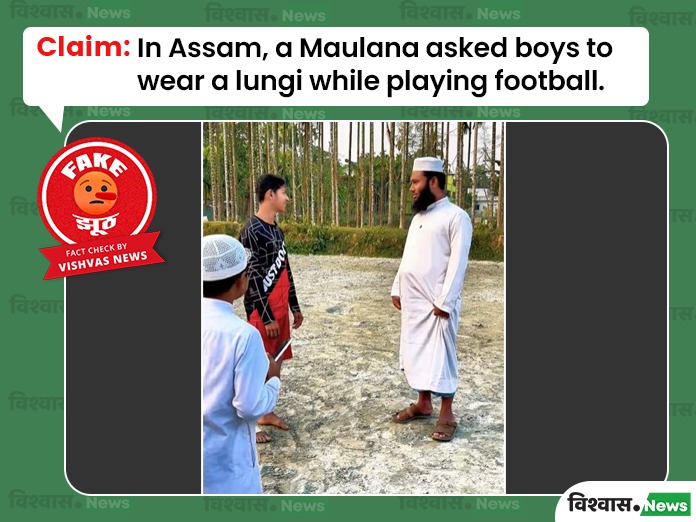
The viral video circulating on social media that allegedly shows a Muslim man in Assam, India, prohibiting boys from wearing shorts while playing football has been debunked by fact-checkers at Vishvas News. Their investigation reveals the footage originates from Bangladesh and has no connection to India.
The video, which began circulating widely in late January, shows a man in traditional attire confronting young boys on a football field. According to posts sharing the footage, the man was supposedly banning shorts because they “expose bodies” and insisting the boys play in lungis instead. One Facebook user, “Shrimati শিবানন্দ দাস,” shared the video on January 30 with a caption specifically claiming the incident occurred in Assam.
Investigators at Vishvas News began by analyzing the Bengali-language audio in the video. Using transcription tools, they determined the man was indeed instructing boys to wear clothing that covered their knees, suggesting they change into pajamas or “suitable clothes” rather than half pants or lungis.
Further investigation using Google Lens led researchers to discover the video had been uploaded to a Bangladeshi Facebook page called “Throw In” on January 31. The full video was also found on a verified YouTube channel “Mk Rahman Official,” where it had been uploaded several days earlier on January 28.
Additional evidence confirming the video’s Bangladesh origins came from examining the YouTube channel’s profile. Investigators found numerous other videos featuring the same man, as well as links to a Facebook page called “Best of Time,” which explicitly stated it operated from Bangladesh.
Vishvas News also consulted Bangladeshi journalist Sadiqur Rahman, who confirmed, “This video went viral recently. It’s from Bangladesh. In it, a madrasa teacher is reprimanding a child for not wearing shorts.”
This misattribution represents a pattern of false information being shared across social media platforms that attempts to inflame religious and regional tensions in India. The original Facebook post that began the viral spread has approximately 14,000 followers, indicating its potential reach.
The fact-checking investigation underscores the importance of verifying social media claims, particularly those involving cultural or religious practices that could provoke community tensions. Vishvas News has categorically rated the claim that the video shows a Muslim man in Assam prohibiting boys from wearing shorts as “False.”
This case highlights how easily videos can be taken out of context and repurposed to spread misinformation across borders, potentially exacerbating social divisions. Vishvas News continues to monitor such claims and encourages the public to verify information before sharing content that makes divisive claims about religious or cultural practices.
Fact Checker
Verify the accuracy of this article using The Disinformation Commission analysis and real-time sources.

7 Comments
Glad to see this misleading claim debunked. It’s a good reminder that we should always be skeptical of viral content and take the time to verify the facts before sharing. Kudos to the journalists for their diligent work.
Good to see journalists investigating the origins of this video and debunking the false claims. It’s a reminder that we need to be cautious about blindly sharing content on social media without confirming the facts first.
Absolutely. Fact-checking is an important part of responsible journalism and helps combat the spread of disinformation. This case shows how even a seemingly straightforward video can be misrepresented if the context isn’t properly verified.
I appreciate the thorough investigation done by Vishvas News to trace the video back to its true source in Bangladesh. It’s a good example of how fact-checkers can help separate truth from fiction online.
Interesting fact-check on the viral video from Bangladesh being falsely linked to Assam. It’s important to verify information and not spread misinformation, even unintentionally. Curious to learn more about the cultural and religious context behind the incident.
Agreed, verifying facts is crucial these days with so much misinformation spreading online. This case highlights how context and location are important when interpreting these kinds of videos.
This is an important fact-check, as it shows how easy it is for information to be taken out of context and spread as misinformation. I’m curious to learn more about the cultural and religious factors behind the incident in Bangladesh.