


Listen to the article
The recent blockade of the Strait of Hormuz by Iran has sent ripples through global oil markets, contradicting former President Donald Trump’s claim that the disruption “doesn’t really affect” the United States.
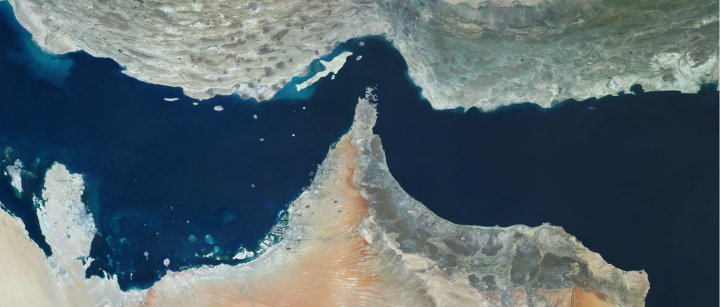
Iran has effectively shut down the strategic waterway in retaliation for joint U.S.-Israeli airstrikes that began on February 28. The nation has threatened military action against vessels attempting to navigate the narrow passage between Iran and Oman, which connects the Persian Gulf to the Gulf of Oman and the Arabian Sea.
The impact has been immediate and significant. About 20 million barrels of crude oil and related products typically flow through the strait daily, but this has dwindled “to a trickle” since the conflict began, according to the International Energy Agency (IEA). As a result, oil prices have surged by double-digit percentages, contributing to more than a 50-cent increase in U.S. gasoline prices.
“The US is definitely affected,” said Mark Finley, a nonresident fellow in energy and global oil at Rice University’s Baker Institute. “If something goes wrong anywhere, the price goes up everywhere,” he explained, highlighting the interconnected nature of global oil markets.
While addressing the situation at a March 9 press conference, Trump suggested offering “risk insurance” to tankers in the region, possibly with U.S. Navy escorts. However, he then downplayed the impact on America, stating, “It affects other countries much more than it does the United States. It doesn’t really affect us. We have so much oil.”
The former president’s assessment contains some truth. Only about 8% of U.S. crude oil imports—approximately 490,000 barrels daily—came from Persian Gulf countries last year. In contrast, Canada and Mexico supplied roughly 70% of America’s imported crude, with Canada alone accounting for over 63%, according to the U.S. Energy Information Administration.
By comparison, Asian nations rely heavily on Persian Gulf oil. The IEA reports that about 80% of oil and petroleum products moving through the strait in 2025 were destined for Asia, with China, India, and Japan being the primary importers. China specifically receives between 45% and 50% of its oil imports through the waterway.
However, energy experts emphasize that Americans are not insulated from the price effects. Abhi Rajendran, director of Oil Markets Research at Energy Intelligence, noted, “It insulates us in the sense that we’re not going to have a hard time finding supply, but the prices are global, so prices go up anyway.”
The U.S. still relies on some imports because many domestic refineries were designed for heavier crude oils than those typically produced in American oil fields. This configuration explains why the U.S. simultaneously exports much of its domestically produced light crude while importing heavier varieties.
Since the airstrikes began, West Texas Intermediate crude, the U.S. benchmark, has surged about 41% to nearly $95 per barrel. Brent crude, the international standard, has risen approximately 32% to just over $94 per barrel. These increases have pushed the average price for regular gasoline in the U.S. to $3.50 per gallon—a jump of about 56 cents, or 19%, since late February.
In response to the crisis, on March 11, the 32 member nations of the International Energy Agency, including the United States, announced plans to make 400 million barrels from their oil reserves available for purchase. Trump authorized releasing 172 million barrels from the U.S. Strategic Petroleum Reserve over several weeks.
Whether these releases will stabilize markets depends on how quickly the crude can be distributed and how long the conflict persists. Rajendran believes the strategy “will help…as long as the conflict doesn’t drag on past early to mid-April.” Beyond that timeframe, countries may need to draw more heavily from reserves or implement other measures to address demand.
The situation underscores the global nature of oil markets and demonstrates that even as the world’s largest oil producer, the United States remains vulnerable to international supply disruptions and price shocks triggered by geopolitical conflicts half a world away.
Fact Checker
Verify the accuracy of this article using The Disinformation Commission analysis and real-time sources.

32 Comments
The Strait of Hormuz is a critical global energy chokepoint, so Iran’s actions there are bound to have significant ripple effects. Even if the US tries to downplay the impact, the data suggests higher oil prices and gasoline costs are being felt across the country. A complex geopolitical situation with high stakes.
The cost guidance is better than expected. If they deliver, the stock could rerate.
Good point. Watching costs and grades closely.
Interesting update on Impact of Iran’s Strait of Hormuz Blockade on the United States. Curious how the grades will trend next quarter.
Good point. Watching costs and grades closely.
Good point. Watching costs and grades closely.
Interesting update on Impact of Iran’s Strait of Hormuz Blockade on the United States. Curious how the grades will trend next quarter.
Good point. Watching costs and grades closely.
An interesting geopolitical development. The US may be affected more than it would like to admit, as oil prices and gasoline costs rise due to the blockade. The interconnected nature of global energy markets means ripple effects are unavoidable.
You make a good point. The US is not immune to global oil market shocks, even if it tries to downplay the impact. Keeping a close eye on how this situation evolves will be crucial.
Interesting to see how this geopolitical situation unfolds. The Strait of Hormuz is a crucial chokepoint, and Iran’s actions there could have far-reaching consequences for the US and the global economy. Curious to see the diplomatic and market responses in the coming weeks.
Silver leverage is strong here; beta cuts both ways though.
Good point. Watching costs and grades closely.
Good point. Watching costs and grades closely.
The cost guidance is better than expected. If they deliver, the stock could rerate.
Good point. Watching costs and grades closely.
Good point. Watching costs and grades closely.
Interesting update on Impact of Iran’s Strait of Hormuz Blockade on the United States. Curious how the grades will trend next quarter.
Good point. Watching costs and grades closely.
Nice to see insider buying—usually a good signal in this space.
Fascinating to see how the Strait of Hormuz blockade is impacting global oil markets and the US economy. Despite claims to the contrary, it seems the US is not immune to the fallout, with rising prices at the pump. Will be interesting to see how policymakers respond to this evolving situation.
Production mix shifting toward Fact Check might help margins if metals stay firm.
The Strait of Hormuz blockade by Iran is certainly causing global oil market disruptions, despite Trump’s claims. With about 20 million barrels per day typically flowing through the strait, any disruption will have far-reaching impacts, even on the US.
While Trump may wish to dismiss the impact, the data suggests the US is indeed feeling the effects of the Strait of Hormuz blockade through higher oil prices and gasoline costs. The interconnected nature of global energy markets makes the US vulnerable, despite its domestic production.
The Strait of Hormuz blockade by Iran is certainly causing disruptions, even if the US wants to downplay the impact. With about 20 million barrels per day typically flowing through the strait, any disruption is bound to have far-reaching consequences, including higher oil prices and gasoline costs for American consumers.
This seems like a complex issue with no easy solutions. I’m curious to see how the US and other major players respond to Iran’s actions in the Strait of Hormuz. The potential for further escalation and market volatility is concerning.
The cost guidance is better than expected. If they deliver, the stock could rerate.
Good point. Watching costs and grades closely.
Geopolitical developments in the Strait of Hormuz are clearly impacting global energy markets, despite claims from the US that it is unaffected. The interconnected nature of these markets means the US is not immune to the fallout, as evidenced by rising oil prices and gasoline costs. A complex situation worth monitoring closely.
This is a concerning development that highlights the fragility of global oil supply chains. The US may be more exposed to the fallout from the Strait of Hormuz blockade than it would like to admit, given the interconnected nature of energy markets. It will be important to monitor how this situation evolves.
If AISC keeps dropping, this becomes investable for me.
Good point. Watching costs and grades closely.