


Listen to the article
No Evidence ICE Agents Receive Financial Rewards for Arrests
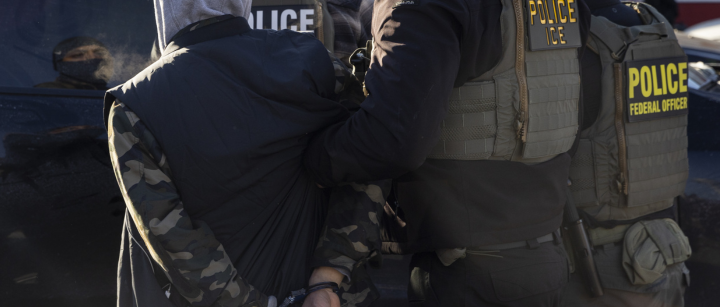
Immigration and Customs Enforcement agents do not receive bonuses for each person they arrest, according to the Department of Homeland Security, despite persistent claims circulating on social media suggesting otherwise.
The rumors, which have gained traction online in recent months, often cite a January Wall Street Journal article that reported ICE officers were “under pressure” to meet daily arrest quotas and were “rewarded for making arrests.” Some social media users interpreted this to mean agents receive financial incentives—with specific claims mentioning figures like $1,500 or $3,000 per arrest.
However, a Department of Homeland Security spokesperson has explicitly denied these allegations, telling fact-checkers at Snopes that “this policy has never and never was in effect.”
The Migration Policy Institute, a nonpartisan think tank focused on immigration issues, corroborated this statement. Michelle Mittelstadt, MPI’s director of communications and public affairs, said, “We do not believe these claims regarding bonuses for arrests are accurate. ICE and its parent agency, DHS, have never indicated that they would set up a bonus payment structure rewarding personnel per arrest.”
While the Wall Street Journal did report that officers are “rewarded for making arrests,” the article provided no details about the nature of these rewards, making no mention of financial incentives or bonus structures tied to individual arrests.
The confusion may stem partly from an aborted ICE initiative reported by the New York Times in August. According to internal documents reviewed by the Times, ICE briefly proposed a pilot program offering $100 and $200 bonuses to agents who could expedite deportations within one or two weeks of arrest. However, this program was canceled within hours of being announced and never implemented. Importantly, it pertained to deportation speed, not the number of arrests.
Some social media posts appear to have conflated the Biden administration’s stated goal of 3,000 ICE arrests per day nationwide with a supposed “$3,000 bonus” for each arrest. Senior White House adviser Stephen Miller publicly acknowledged the 3,000 daily arrest target in May, stating on Fox News that the administration was “looking to set a goal of a minimum of 3,000 arrests for ICE every day.”
DHS does offer legitimate financial incentives related to immigration enforcement, but none tied to individual arrests. For recruitment and retention purposes, new ICE hires can receive signing bonuses of up to $50,000 if they commit to serving for five years. Similarly, existing agents can receive bonuses for agreeing to extend their service by two years. The Republicans’ 2025 budget bill allocated $858 million specifically for these signing bonuses.
Additionally, DHS announced a separate program last year offering quarterly performance-based bonuses to state and local law enforcement agencies that partner with ICE. These bonuses, ranging from $500 to $1,000 per “eligible task force officer,” are awarded based on overall assistance with locating undocumented immigrants, not on a per-arrest basis.
The administration’s emphasis on immigration enforcement has certainly placed pressure on ICE agents to increase arrest numbers. However, claims of direct financial rewards for individual arrests remain unsubstantiated and have been explicitly denied by official sources.
As immigration policies continue to be a focal point of political debate, distinguishing between enforcement goals and the mechanisms used to achieve them remains essential for accurate public discourse.
Fact Checker
Verify the accuracy of this article using The Disinformation Commission analysis and real-time sources.

10 Comments
While the initial WSJ report may have been open to interpretation, I’m glad to see the DHS and other nonpartisan sources clearly refuting the specific claims of arrest bonuses. Fact-checking is crucial for maintaining trust in government.
While the initial WSJ report may have been interpreted in misleading ways, I’m glad to see the DHS and MPI clearly denying the existence of arrest bonus policies. Fact-checking is critical for informed public discourse.
Agreed, it’s important to avoid spreading unverified claims, no matter how plausible they may seem. Kudos to the fact-checkers for digging into the details here.
Interesting to see the facts around these bonus claims debunked. It’s important to carefully examine such allegations and not spread unverified information, even if it fits a particular narrative. Transparency and accountability from government agencies is critical.
Agreed, fact-checking is so important these days with the amount of misinformation circulating online. Good to see the DHS and other nonpartisan sources refuting these specific claims.
This issue highlights the need for rigorous, impartial fact-checking on sensitive topics like immigration enforcement. I appreciate the effort to get to the truth and clarify the policy, rather than jumping to conclusions.
Absolutely. Maintaining public trust requires government agencies to be transparent and correct the record when false claims start spreading.
This fact check provides a valuable clarification on the immigration enforcement bonus allegations. It’s a helpful lesson in the importance of distinguishing between reported pressure and actual financial incentives, which appear to be unfounded.
Absolutely, nuance and precision are key when examining sensitive policy issues. Kudos to the fact-checkers for their diligence in getting to the bottom of this.
Appreciate the thorough fact-checking on this issue. It’s a good reminder that we should be cautious about accepting social media rumors at face value, even if they align with our preconceptions. Verifying claims is crucial.