


Listen to the article
International Criminal Court Proceeds with Duterte’s Confirmation Hearings Despite Disinformation Campaign
The International Criminal Court (ICC) is currently holding confirmation of charges hearings for former Philippine President Rodrigo Duterte, who faces crimes against humanity allegations related to his administration’s controversial drug war. The proceedings, which began on February 23 and will conclude on February 27, will determine whether there is sufficient evidence to move forward with a full trial.
During the first day of hearings, prosecutors presented detailed arguments alleging Duterte orchestrated extrajudicial killings and operated the infamous Davao Death Squad. They cited numerous public statements by the former president that allegedly encouraged violence against drug suspects. Representatives of victims described ongoing threats faced by families and discussed what they characterized as a persistent culture of impunity in the Philippines.
Duterte’s defense team countered these claims, arguing that his rhetoric was lawful and intended to enforce law and order rather than commit crimes. They maintained that his statements were part of legitimate governance efforts to address drug-related issues in the country.
On the second day of hearings, prosecutors introduced witness accounts and video evidence they claim demonstrates Duterte’s awareness and encouragement of extrajudicial killings. This included evidence related to the high-profile case of 17-year-old Kian delos Santos, whose death became emblematic of alleged abuses during the drug war. Victims’ lawyers emphasized the human toll of the campaign, highlighting families living in fear and denied justice in the Philippine legal system.
By the third day, Duterte’s lawyer, Nicholas Kaufman, mounted a challenge to the prosecution’s case by questioning the credibility of self-confessed Davao Death Squad witnesses. Kaufman argued their limited immunity arrangements compromised their testimony, describing their statements as having “negligible evidentiary weight.”
The hearings are scheduled to conclude on February 27 with closing statements from all parties. Following the proceedings, the ICC pre-trial chamber will have 60 days to determine whether to confirm all, some, or none of the charges against the former president.
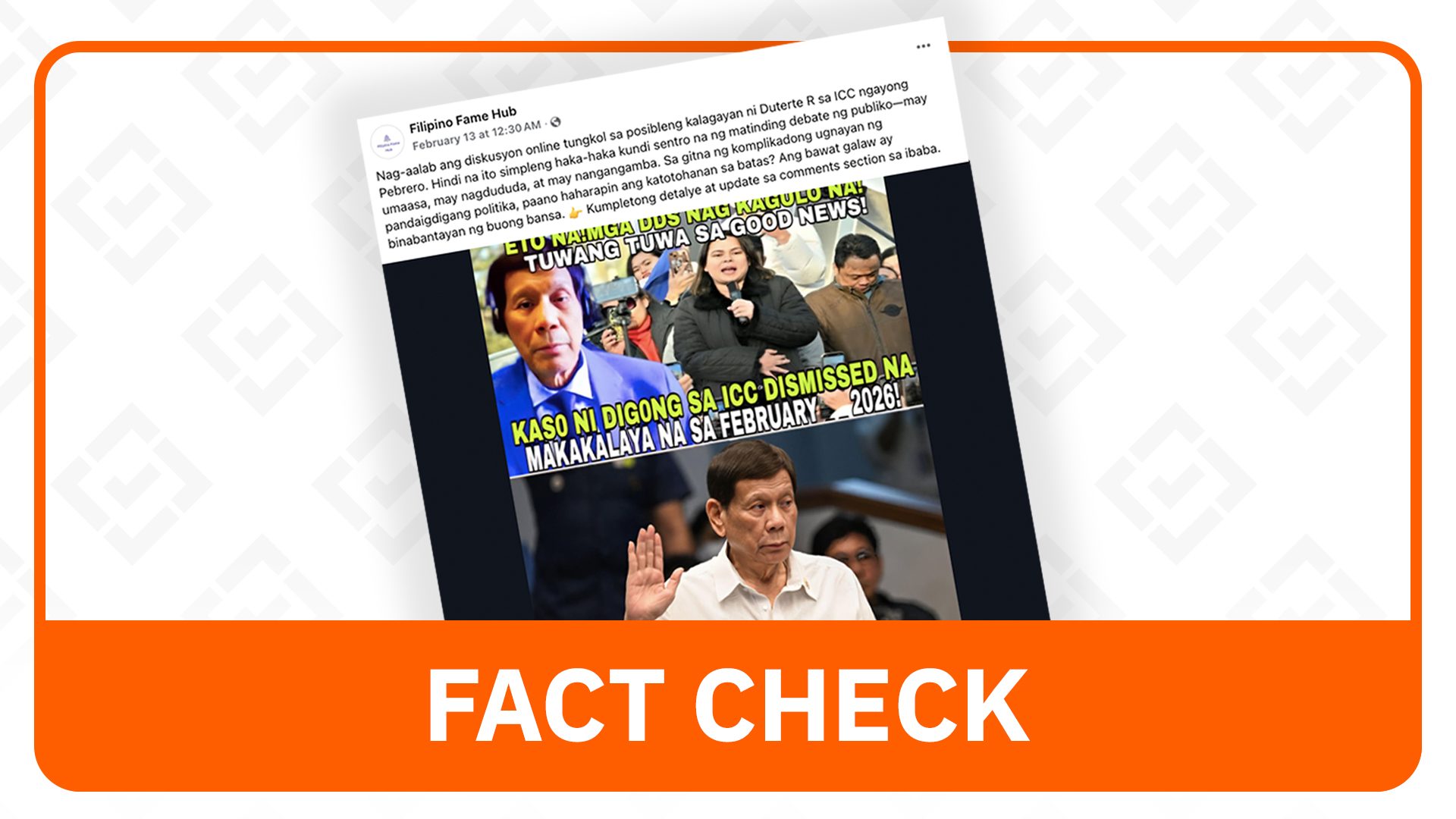
The case has triggered a wave of disinformation on social media platforms. Since the ICC issued an arrest warrant for Duterte on March 11, 2025, numerous false claims have circulated, including that his case has been dismissed and he would be released in February 2026. Other fabrications include reports of his early return to Davao, supposed death, or inability to attend hearings due to health issues—despite medical assessments confirming his fitness for the pre-trial process.
According to fact-checking organizations, these misleading narratives have proliferated across platforms that present themselves as legitimate news sources. The disinformation campaign has also targeted families of drug war victims, with deepfakes and AI-generated content attempting to portray them as paid operatives speaking against the former president.
Research indicates that between March 2025 and February 2026, over 100 fact-checks have specifically addressed false information regarding Duterte’s ICC case, highlighting the scale of the disinformation campaign surrounding these proceedings.
The ICC’s decision, expected within two months after the hearings conclude, will mark a significant milestone in one of the most closely watched international criminal proceedings involving a former head of state in recent years, with profound implications for accountability regarding the Philippine drug war that claimed thousands of lives during Duterte’s presidency.
Fact Checker
Verify the accuracy of this article using The Disinformation Commission analysis and real-time sources.

8 Comments
Duterte’s controversial drug war has been widely criticized for human rights abuses. The ICC confirmation hearings will be crucial in determining if he should face trial for crimes against humanity.
Agreed. The victims and their families deserve accountability, but the process must also be fair and impartial.
This case highlights the complex challenges in holding high-level officials accountable for human rights abuses. The ICC’s decision will have significant implications for the Philippines and beyond.
Duterte’s defense team claims his rhetoric was part of legitimate governance efforts. However, the prosecutors’ allegations of extrajudicial killings and a ‘culture of impunity’ deserve serious consideration.
I’m curious to see how the ICC weighs the competing narratives and evidence presented during these confirmation hearings.
This is an important case that deserves close scrutiny. The ICC must thoroughly examine the allegations against Duterte and ensure justice is served, regardless of political pressure.
It’s concerning to see reports of an ongoing ‘disinformation campaign’ around this case. The ICC must remain independent and resist any attempts to undermine the proceedings.
Exactly. Transparency and adherence to the rule of law will be critical in ensuring the legitimacy of the ICC’s findings.