


Listen to the article
Government Shutdown Puts Critical Food Aid Program at Risk, Sparks Political Blame Game
The federal government shutdown has thrust a vital nutrition program serving nearly 7 million vulnerable Americans into financial jeopardy, triggering a heated blame game between Republicans and Democrats as officials scramble for solutions.
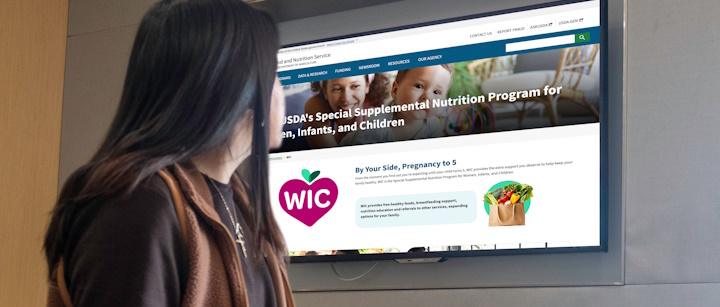
The Special Supplemental Nutrition Program for Women, Infants, and Children, commonly known as WIC, provides food assistance, breastfeeding support, and nutritional services to eligible low-income pregnant and postpartum women, as well as children under 5 who are at nutritional risk. As of May, approximately 6.9 million individuals were receiving these benefits, according to the most recent USDA data.
Unlike Social Security and other mandatory spending programs that continue paying benefits during a shutdown, WIC relies on discretionary federal funding appropriated by Congress and distributed to state and tribal agencies by the USDA. The program cost about $7.3 billion in fiscal year 2024, with Congress approving $7.6 billion for fiscal year 2025, which ended September 30.
Both sides of the political aisle have been quick to assign blame for the program’s precarious situation.
“There’s a low-income food program, the WIC program, that my mom actually used when I was a baby. That program is about to be underfunded and it’s about to get cut off because Chuck Schumer won’t open the government,” Vice President JD Vance said during an October 9 Cabinet meeting, pointing to the Senate Democratic leader.
Democrats have fired back with equal intensity. Representative Sarah McBride of Delaware wrote on Facebook: “Funding for WIC is running out because of the government shutdown. American women and children will lose food assistance as a direct result of Republicans’ partisan policies. Cruelty knows no bounds in this administration.”
The government shutdown began after September 30 when Congress failed to pass funding legislation for the fiscal year that started October 1. House Republicans, along with one Democrat, passed a continuing budget resolution to keep the government running through November 21. However, most Senate Democrats rejected this plan, holding out for a funding package that would extend expiring Affordable Care Act marketplace subsidies and reverse certain Medicaid changes in Republican legislation that became law in July.
As the crisis deepened, the Trump administration announced an emergency measure on October 7, describing it as a “creative solution” to provide additional money for WIC. Officials plan to distribute $300 million in unused tariff revenue from imported foreign goods to states, helping keep the program funded through October.
“The Trump White House will not allow impoverished mothers and their babies to go hungry because of the Democrats’ political games,” White House Press Secretary Karoline Leavitt stated, according to Axios. A USDA spokesperson confirmed that the department “will utilize tariff revenue to fund WIC for the foreseeable future.”
Experts note that WIC faces unique challenges during this shutdown compared to previous government closures. Nell Menefee-Libey, senior public policy manager for the National WIC Association, explained that the program is in a more difficult position this time around.
“We’re at the beginning of a new fiscal year, so Congress has not yet appropriated any FY26 funds to support continued operations,” she said, adding that participation in WIC has been growing, meaning state agency budgets “were already tight,” and “generally everything is really expensive right now, so food funds aren’t going as far.”
This contrasts with previous shutdowns where WIC remained largely unaffected. During the 35-day shutdown between December 2018 and January 2019, the program continued operating without issue because it had already received some funding through a previously passed continuing resolution.
While the National WIC Association welcomed the administration’s use of tariff revenue as a temporary lifeline, its leadership emphasized this is not a permanent solution.
“There is no substitute for Congress doing its job,” said Georgia Machell, the association’s president and CEO. “WIC needs full-year funding, not just temporary lifelines. It’s imperative that leaders in Washington come together and act immediately.”
As the political impasse continues, House Democrats have proposed legislation that would fund WIC and convert it to a mandatory federal program, protecting it from future shutdowns. Meanwhile, House Speaker Mike Johnson warned on October 13 that the country is “barreling toward one of the longest shutdowns in American history” unless Democrats drop their healthcare demands and pass a “clean, no-strings-attached budget.”
For millions of vulnerable families relying on this crucial nutrition assistance, the political standoff represents more than just partisan politics—it threatens their ability to access essential food and support services they depend on daily.
Fact Checker
Verify the accuracy of this article using The Disinformation Commission analysis and real-time sources.

24 Comments
Interesting update on House Leaders Clash Over WIC Program Funding Amid Shutdown Threat. Curious how the grades will trend next quarter.
Good point. Watching costs and grades closely.
Good point. Watching costs and grades closely.
Silver leverage is strong here; beta cuts both ways though.
Good point. Watching costs and grades closely.
Nice to see insider buying—usually a good signal in this space.
Good point. Watching costs and grades closely.
Good point. Watching costs and grades closely.
Silver leverage is strong here; beta cuts both ways though.
Nice to see insider buying—usually a good signal in this space.
Exploration results look promising, but permitting will be the key risk.
Silver leverage is strong here; beta cuts both ways though.
I like the balance sheet here—less leverage than peers.
Interesting update on House Leaders Clash Over WIC Program Funding Amid Shutdown Threat. Curious how the grades will trend next quarter.
Silver leverage is strong here; beta cuts both ways though.
Good point. Watching costs and grades closely.
Uranium names keep pushing higher—supply still tight into 2026.
Good point. Watching costs and grades closely.
Good point. Watching costs and grades closely.
Uranium names keep pushing higher—supply still tight into 2026.
Good point. Watching costs and grades closely.
Good point. Watching costs and grades closely.
Uranium names keep pushing higher—supply still tight into 2026.
Good point. Watching costs and grades closely.