


Listen to the article
Oklahoma Governor’s Final State Address Faces Fact-Check Scrutiny
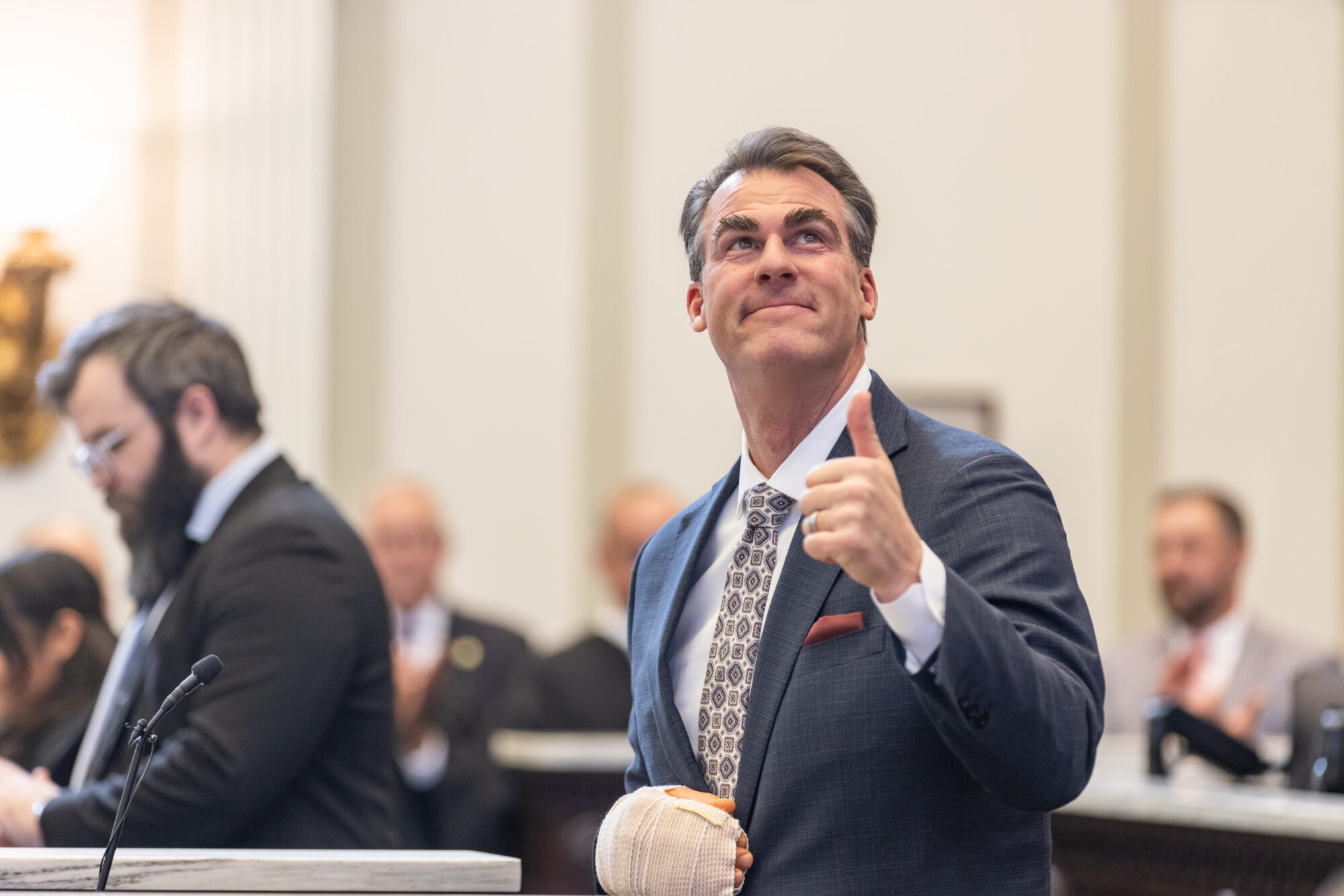
Governor Kevin Stitt delivered his final State of the State address Monday, making several claims about Oklahoma’s fiscal health, Medicaid spending, and marijuana industry challenges that required careful verification. A detailed fact-check by The Frontier revealed mixed results regarding the accuracy of the governor’s statements.
In his address, Stitt incorrectly attributed a quote to Ronald Reagan, saying, “Like Ronald Reagan said, you eventually run out of other people’s money.” This statement was rated mostly false, as there’s no record of Reagan making this statement. The quote closely resembles one from former British Prime Minister Margaret Thatcher, who in a 1975 Conservative Party Conference speech referred to the “usual Socialist disease — they’ve run out of other people’s money.”
Stitt’s claim that Oklahoma had “no money in reserve” when he took office in 2019 was also rated mostly false. State records show Oklahoma actually had $451 million in its Rainy Day Fund at that time, according to the Office of Management and Enterprise Services. While it’s true the state has significantly increased its savings to approximately $4.3 billion since Stitt took office, his characterization of starting from zero was inaccurate.
On Medicaid spending, the governor’s assertion that the program would consume 37% of the state’s annual budget within a decade received a mixed rating. While health care experts do anticipate rising Medicaid costs nationwide—particularly after federal funding cuts included in last summer’s Congressional legislation—the Oklahoma Health Care Authority hasn’t calculated official projections for the next decade. Stitt’s office indicated the $6 billion figure came from internal calculations based on current budget trends.
The governor’s controversial statements about Oklahoma’s marijuana industry received varying assessments. His claim that dispensaries “hide an industry that enables cartel activity, human trafficking, and foreign influence” was rated mixed. While investigations have confirmed organized crime networks operate illegal marijuana farms in Oklahoma, with documented cases of human trafficking and foreign national involvement, evidence linking licensed dispensaries to these activities remains limited.
However, Stitt’s assertion that the state’s illegal marijuana industry remains “out of control” and “nearly impossible to rein in” was rated true. Despite previous claims of success in cracking down on illegal operations, recent congressional testimony revealed the estimated value of marijuana trafficked out of Oklahoma exceeded $150 billion in 2025, and former DEA officials have stated the industry remains far from under control.
The governor’s economic claim about rising incomes was rated “true but misleading.” While Oklahoma’s median household income did increase by approximately $11,000 during Stitt’s tenure, this growth still lagged behind the national average. Oklahoma currently ranks 46th in median household income nationally, and a recent United Way report found nearly half of Oklahoma households struggle to afford basic necessities despite income growth.
As Stitt enters his final year in office, these fact-checks provide important context to his administration’s accomplishments and remaining challenges. The varied accuracy of his statements highlights the complex realities facing Oklahoma’s economy, healthcare system, and ongoing struggle with illegal marijuana cultivation.
Fact Checker
Verify the accuracy of this article using The Disinformation Commission analysis and real-time sources.

9 Comments
Interesting fact-check on Governor Stitt’s State of the State address. It’s important to verify claims, especially those attributed to historical figures. Transparent governance and accountability are crucial for building public trust.
I agree, fact-checking is essential to ensure accuracy and prevent the spread of misinformation. It’s good to see media outlets taking the time to thoroughly vet political statements.
As an Oklahoman, I’m curious to learn more about the challenges facing the state’s marijuana industry that were mentioned. Fact-based discussions around policy issues can help inform better decision-making.
Good point. Understanding the specific challenges in the state’s cannabis sector could shed light on regulatory or operational hurdles that need to be addressed. Fact-checking helps uncover the nuances.
The article highlights some discrepancies between Stitt’s claims and the actual financial data. Prudent fiscal management and transparency around budget reserves are important for any state administration.
You’re right, the details around the state’s Rainy Day Fund balance seem to contradict the governor’s statements. It’s crucial for public officials to provide accurate information to the electorate.
Overall, this fact-check provides a balanced and thorough examination of the governor’s statements. Robust, nonpartisan analysis is crucial for citizens to make informed decisions about their elected representatives.
The article’s fact-check on the Reagan quote attribution is a good example of the importance of verifying sources. Misattributing statements can undermine the credibility of public officials’ claims.
Absolutely. Proper sourcing and context are essential when invoking historical figures or quotes. Fact-checkers play a vital role in maintaining accountability and transparency in the political process.