


Listen to the article
WASHINGTON — As the Department of Homeland Security enters its fifth week without funding during the partial government shutdown, Senate procedures have taken center stage in the political drama unfolding on Capitol Hill, particularly the contentious filibuster rule that could determine the fate of key legislation.
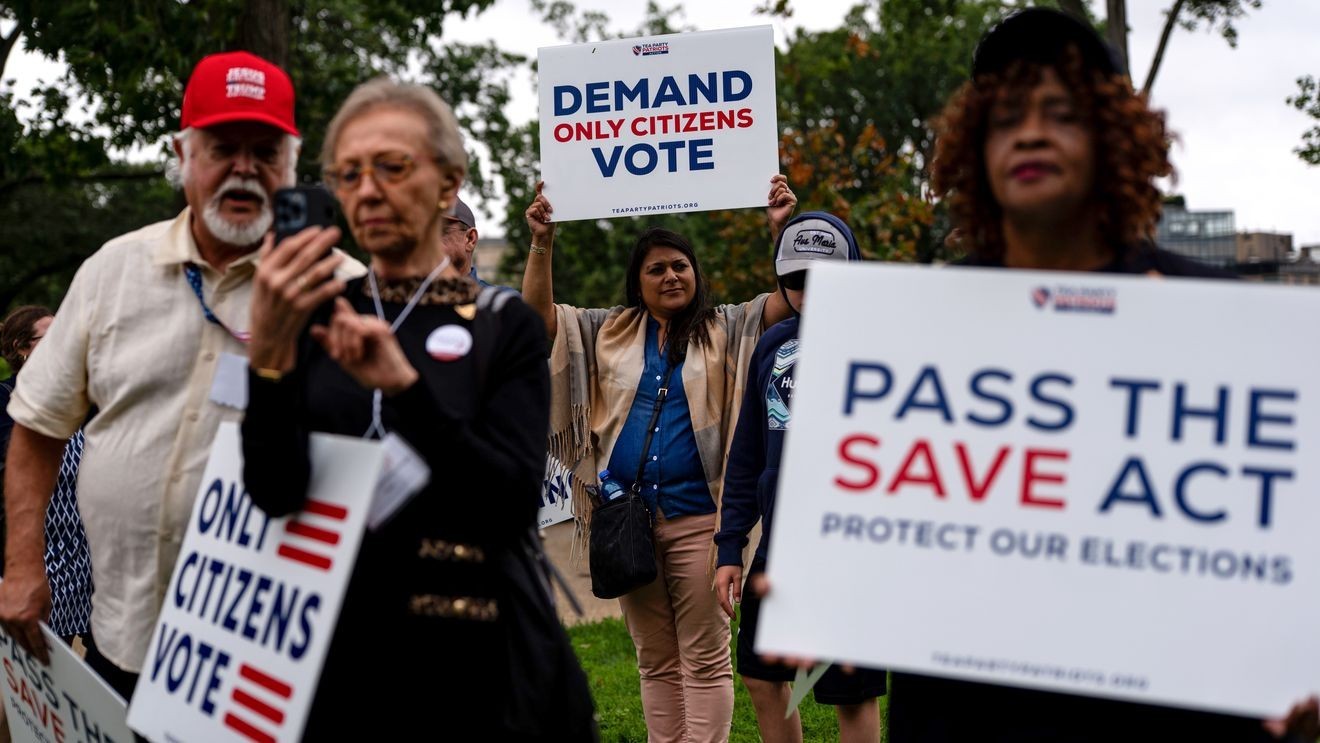
President Donald Trump has increased pressure on Republican lawmakers to do “whatever it takes” to pass the SAVE Act, legislation that would require proof of U.S. citizenship to vote in federal elections. While the bill successfully passed through the House of Representatives, it now faces significant procedural hurdles in the Senate.
The filibuster, a Senate procedure dating back to the 19th century, allows senators to delay or block legislation by extending debate indefinitely. To overcome a filibuster and proceed to a final vote, the Senate must invoke “cloture,” which requires a supermajority of 60 votes—a threshold that has become increasingly difficult to reach in today’s polarized political environment.
Senate historians have documented a dramatic rise in the use of filibusters over the past five decades, coinciding with intensifying partisan gridlock in Congress. What was once a rarely used procedural tactic has transformed into a routine obstacle for major legislation.
Modern filibusters come in two distinct forms. The traditional “talking filibuster” requires a senator to physically hold the Senate floor while speaking continuously—a tactic that has produced some memorable moments in legislative history. In 2013, Senator Ted Cruz famously read from Dr. Seuss’s “Green Eggs and Ham” during a marathon speech opposing the Affordable Care Act.
However, today’s Senate operates primarily under the “silent filibuster” system, where merely signaling an intent to filibuster forces leadership to secure 60 votes to proceed, even without prolonged floor speeches. This evolution has effectively transformed the Senate from a simple-majority body into one requiring a supermajority for most significant legislation.
With the SAVE Act stalled, some Republican lawmakers are now urging Senate Majority Leader John Thune to revert to traditional talking filibuster rules, which would require opposing senators to maintain physical presence and continuous speaking on the Senate floor to block the vote.
The filibuster has a complex and sometimes troubling history in American politics. During the civil rights era, Southern senators notoriously employed marathon filibusters to obstruct civil rights legislation. Senate historical records indicate these tactics delayed critical civil rights bills for decades. Senator Strom Thurmond set the record for the longest individual filibuster, speaking for 24 hours and 18 minutes in opposition to a civil rights bill.
The Civil Rights Act of 1964 faced approximately 60 days of filibustering before the Senate finally invoked cloture and passed the landmark legislation, according to National Archives documentation. The Archives defines the filibuster as “a time-delaying tactic used by a minority in an effort to prevent a vote on a bill or amendment that probably would pass if voted on directly.”
Congress has created alternative pathways for certain legislation to bypass the filibuster. The budget reconciliation process, established as part of congressional budgetary reforms, allows specific tax and spending bills to pass with a simple majority rather than the 60-vote threshold typically required.
The Congressional Research Service has described reconciliation as “the most potent budget enforcement tool available to Congress for a large portion of the budget.” This procedural mechanism has been used to pass several major laws in recent years, including significant tax reform and pandemic relief packages, specifically because it circumvents the Senate’s supermajority requirement.
As the shutdown continues to affect thousands of DHS employees and contractors, the fate of the SAVE Act—and potentially the resolution of the broader funding impasse—may ultimately depend on how Senate leadership decides to navigate these complex procedural waters in the coming days.
Fact Checker
Verify the accuracy of this article using The Disinformation Commission analysis and real-time sources.
